
What Is a Parking Barrier Gate and How Does It Work?
Release time:
2026-11-05
Conclusion: a parking barrier gate works by linking an authorisation decision to a motorised boom arm, a controller and safety sensors. The arm opens only after a valid credential or number plate is accepted, and closes only when vehicle detection confirms the lane is clear; RFID, ANPR/LPR and ticketing are inputs, not the barrier itself.
A parking barrier gate is a vehicle access-control device that uses a powered mechanism to raise and lower a boom arm across a driveway or traffic lane. It is commonly installed at car park entrances, residential developments, office buildings, commercial premises, industrial sites and controlled vehicle checkpoints. The barrier creates a clear physical signal that a vehicle must stop until entry or exit is authorised.
An automatic parking barrier gate does more than move an arm. It receives a command from an access-control device or operator, checks safety inputs, drives the motor, monitors the arm movement and returns to its standby position. When connected to RFID, ANPR/LPR or parking-management software, it can form part of a wider automated parking system.
1. What are the main parts of a parking barrier gate?
A typical automatic boom barrier consists of several coordinated mechanical, electrical and control components. The exact design varies by model, boom length and intended duty, so the manufacturer's technical documentation should always be checked for the selected unit.
Barrier cabinet and chassis
The cabinet houses the drive mechanism, controller and associated electrical components. It provides the mounting structure for the boom arm and protects internal parts from the installation environment. BAROXON product information describes cabinet options using cold-rolled steel, stainless steel or other housing materials, with outdoor powder-coated finishes on selected models.
Boom arm
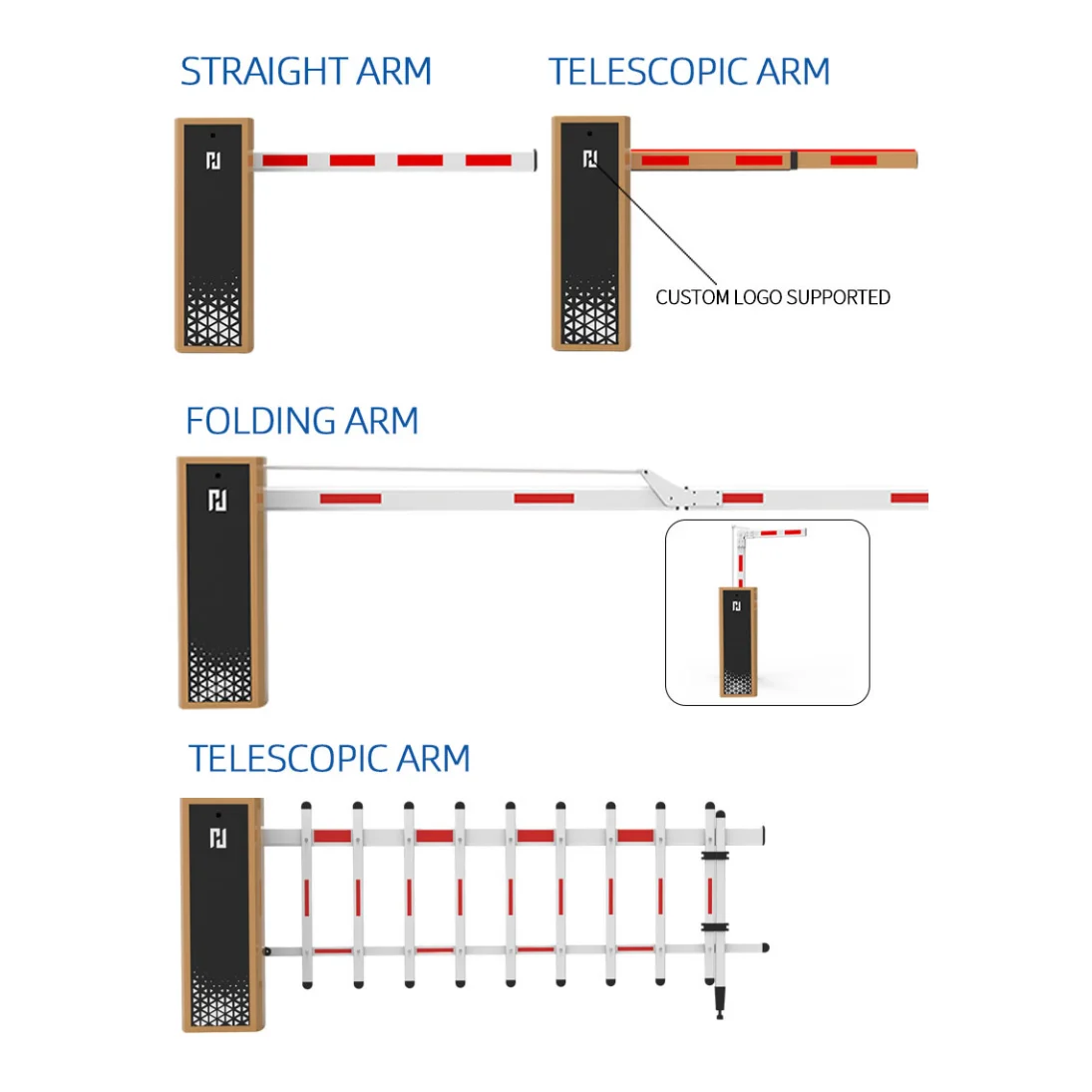
The boom arm is the horizontal or articulated bar that blocks or releases the vehicle lane. Depending on the site, it may be a straight arm, folding arm or fence-style arm. Arm length must be matched to the clear lane width, cabinet position, support arrangement and the manufacturer's permitted configuration.
Motor and drive mechanism
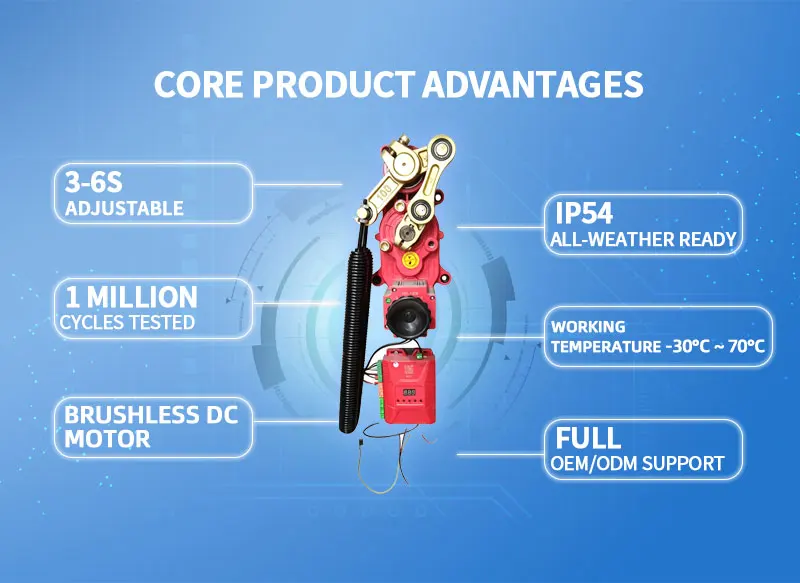
The motor supplies the force needed to move the boom arm. A gearbox, linkage or other transmission components convert motor rotation into the controlled lifting and lowering movement of the arm. BAROXON product pages list DC brushless motor and other drive options, depending on the model. The motor and drive assembly must be selected for the arm configuration, operating frequency and site requirements.
Control board
The control board acts as the operating centre of the barrier. It receives opening and closing commands, processes detector and safety signals, controls the motor and applies the configured operating logic. Depending on the model, connection options may include dry-contact inputs, RS485 or other interfaces for access-control and parking equipment.
Sensors and safety devices
Vehicle loops, radar detectors and photoelectric sensors can provide information about vehicle presence or obstacles. The barrier controller uses these inputs to help prevent the arm from closing at the wrong time. Some BAROXON product configurations also describe anti-collision or automatic rebound functions and a manual emergency release mechanism.
2. How does an automatic parking barrier gate work?
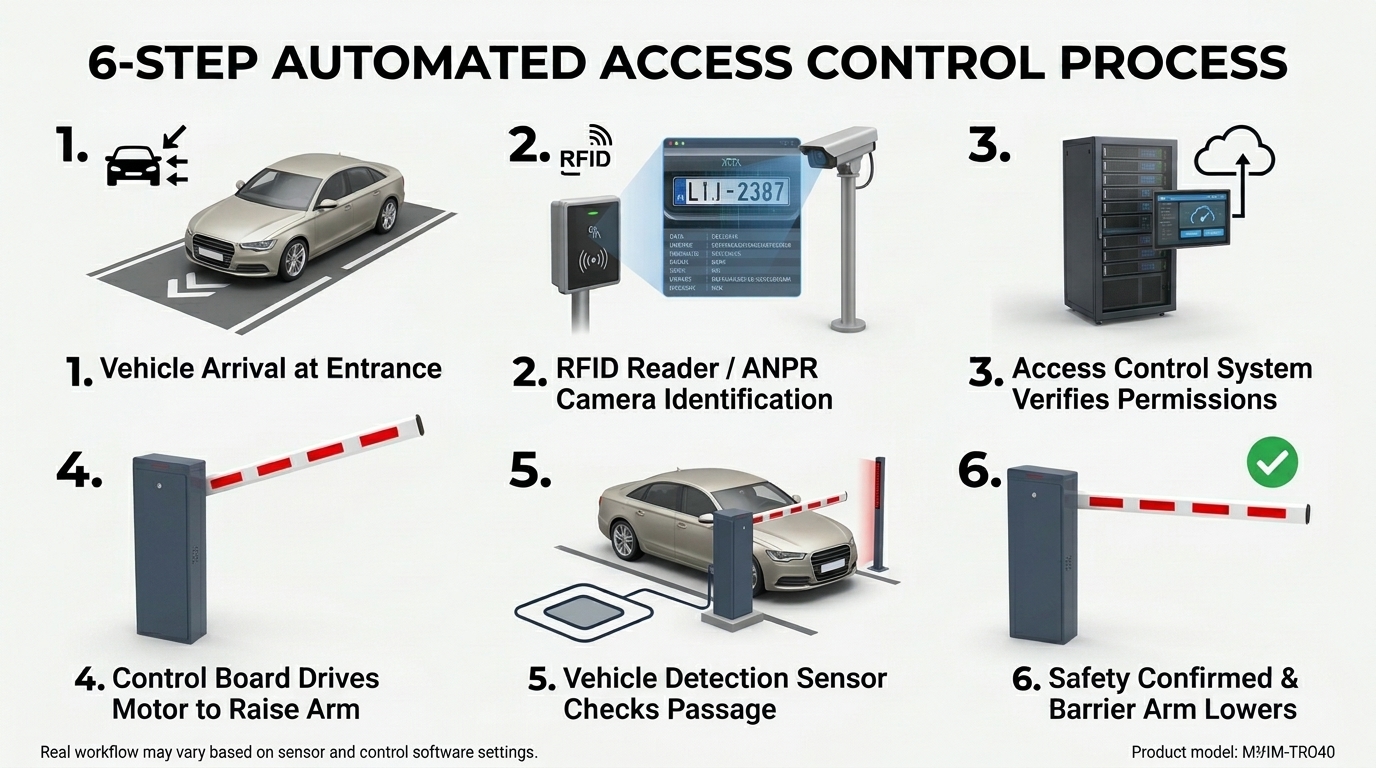
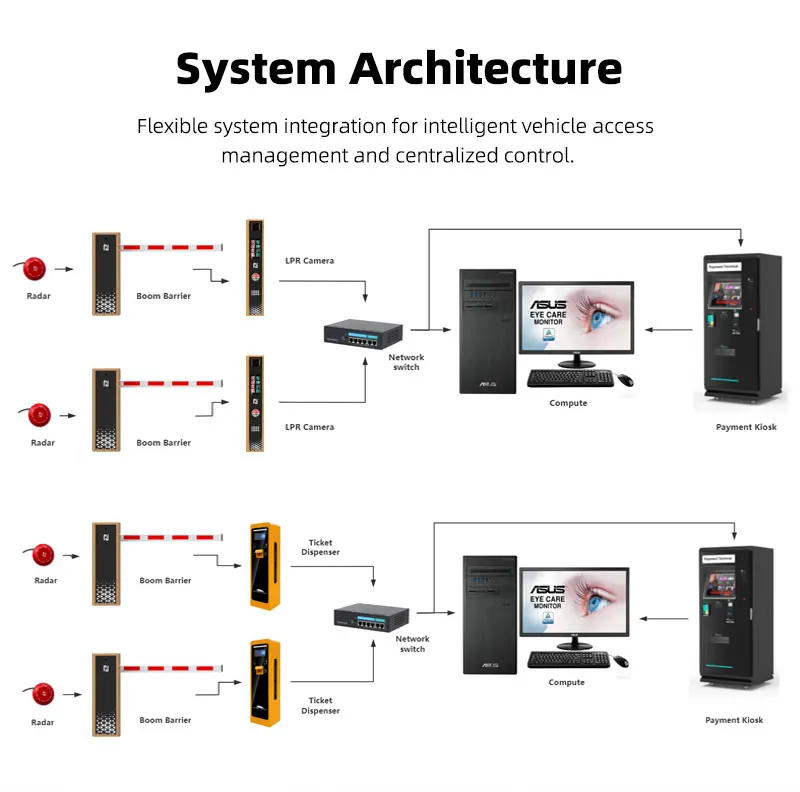
Although control arrangements differ between installations, the operating sequence usually follows a straightforward cycle: a vehicle approaches, an access request is checked, the controller receives an authorised opening command, the arm rises, the vehicle passes and the arm returns to the closed position when the lane is clear and the configured logic permits it.
Step 1: A vehicle approaches the entrance
A vehicle approaches the controlled lane and may be detected by an inductive loop, radar, photoelectric sensor or another configured detection device. The detection method depends on the site layout and the access-control design. Detection alone does not necessarily grant permission to enter; it can simply notify the system that a vehicle is present.
Step 2: The access system checks authorisation
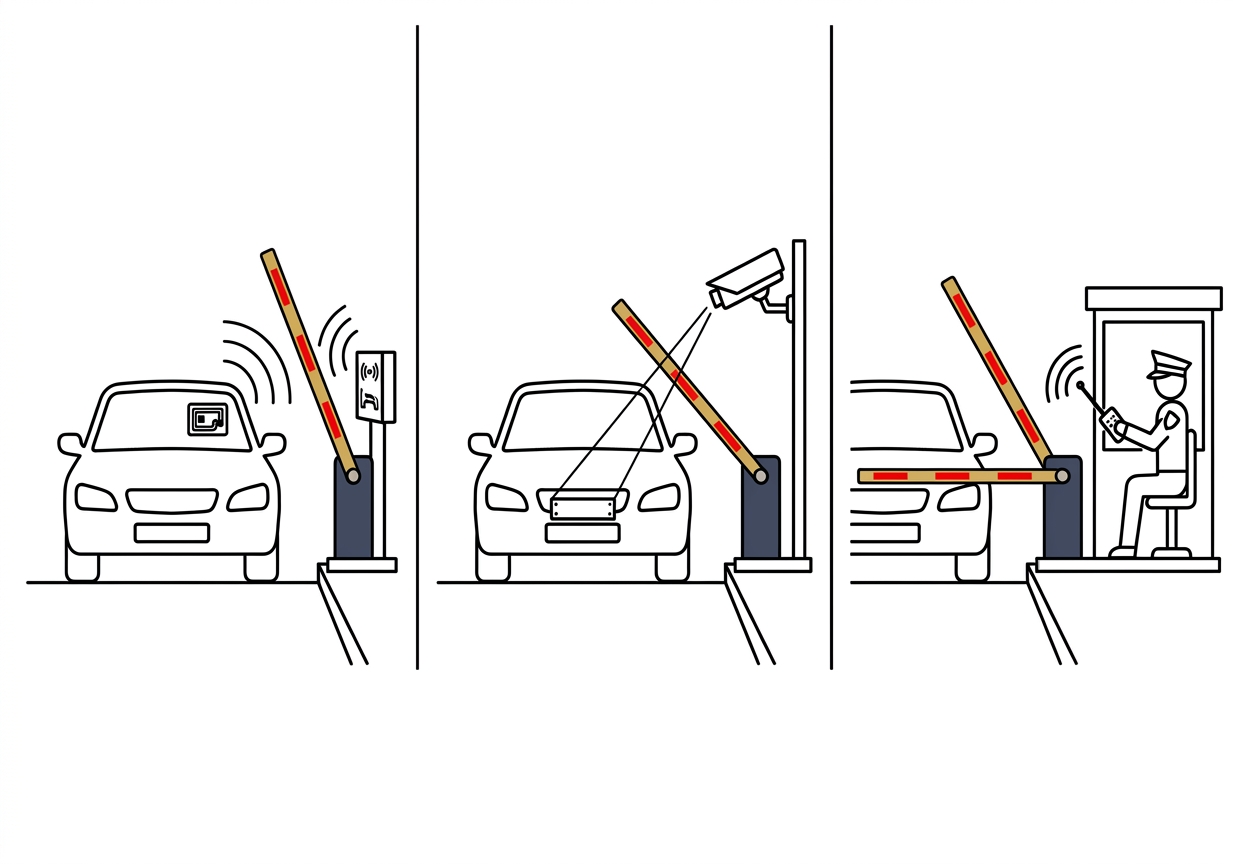
The driver presents an approved credential, such as an RFID card or tag, enters a PIN, uses a remote control or mobile credential, or has the vehicle registration plate checked by an ANPR/LPR camera. The access-control system compares the credential or registration with the relevant permissions and sends an opening request when the conditions are met.
Step 3: The controller checks the command and safety inputs
The barrier controller receives the opening request and checks the configured operating conditions. Depending on the installation, these may include the current arm position, limit or position signals, safety detector status and interlocks from the parking-management system. The exact logic should be confirmed in the wiring diagram and controller manual.
Step 4: The motor raises the boom arm
When the opening conditions are satisfied, the controller activates the motor and drive mechanism. The transmission moves the boom arm from the closed position to the raised position. Opening time depends on the selected model, arm length, speed setting and operating conditions; a quoted speed should never be assumed to apply to every arm configuration.
Step 5: The vehicle passes through the lane
The vehicle proceeds through the entrance while the barrier remains open according to the configured control sequence. Vehicle detection devices can help the system determine whether a vehicle is still beneath or near the arm. Drivers should follow the site's traffic signs and should not drive close behind another vehicle simply because the arm is raised.
Step 6: The barrier closes and returns to standby
After the vehicle has cleared the detection area and the closing conditions are satisfied, the controller commands the motor to lower the arm. The barrier then returns to its standby state, ready for the next authorised vehicle. The closing sequence must be configured and tested with the site's safety devices to suit the actual lane geometry and traffic pattern.
3. How does the access-control system communicate with the barrier?
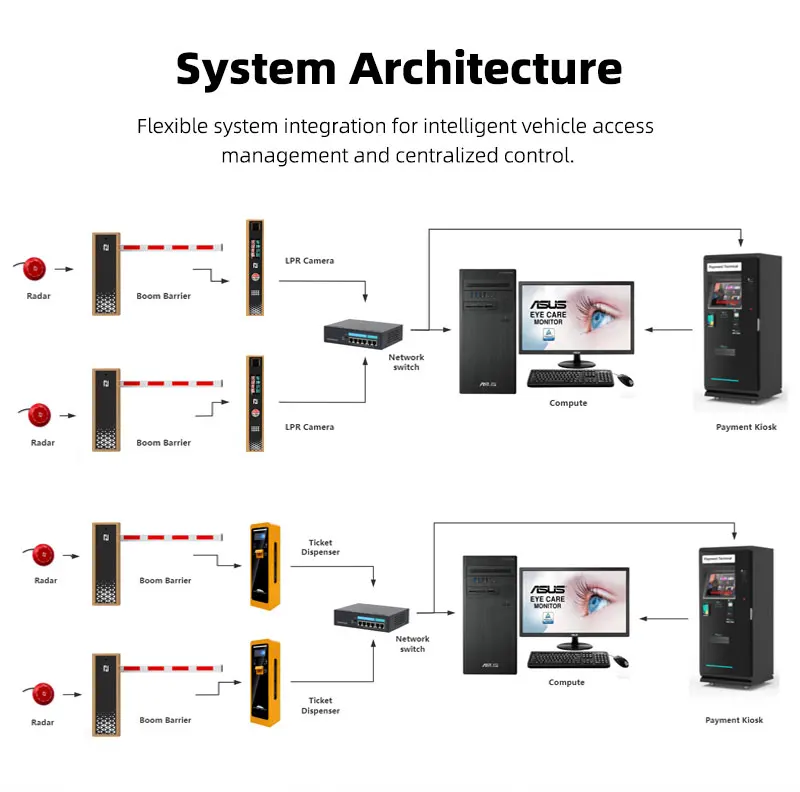
The barrier gate is the physical vehicle-control point, while the access-control system decides whether a vehicle should be allowed through. The two systems communicate through compatible electrical or data interfaces. Common arrangements include relay or dry-contact signals, and some products provide serial or network interfaces for integration with other equipment.
RFID access
With RFID access, a reader detects an authorised card, tag or vehicle credential. The access controller checks the credential against its permissions and sends a relay command to the barrier controller. RFID is commonly used for residents, staff, subscribers and other groups who need repeat access.
ANPR/LPR number plate recognition
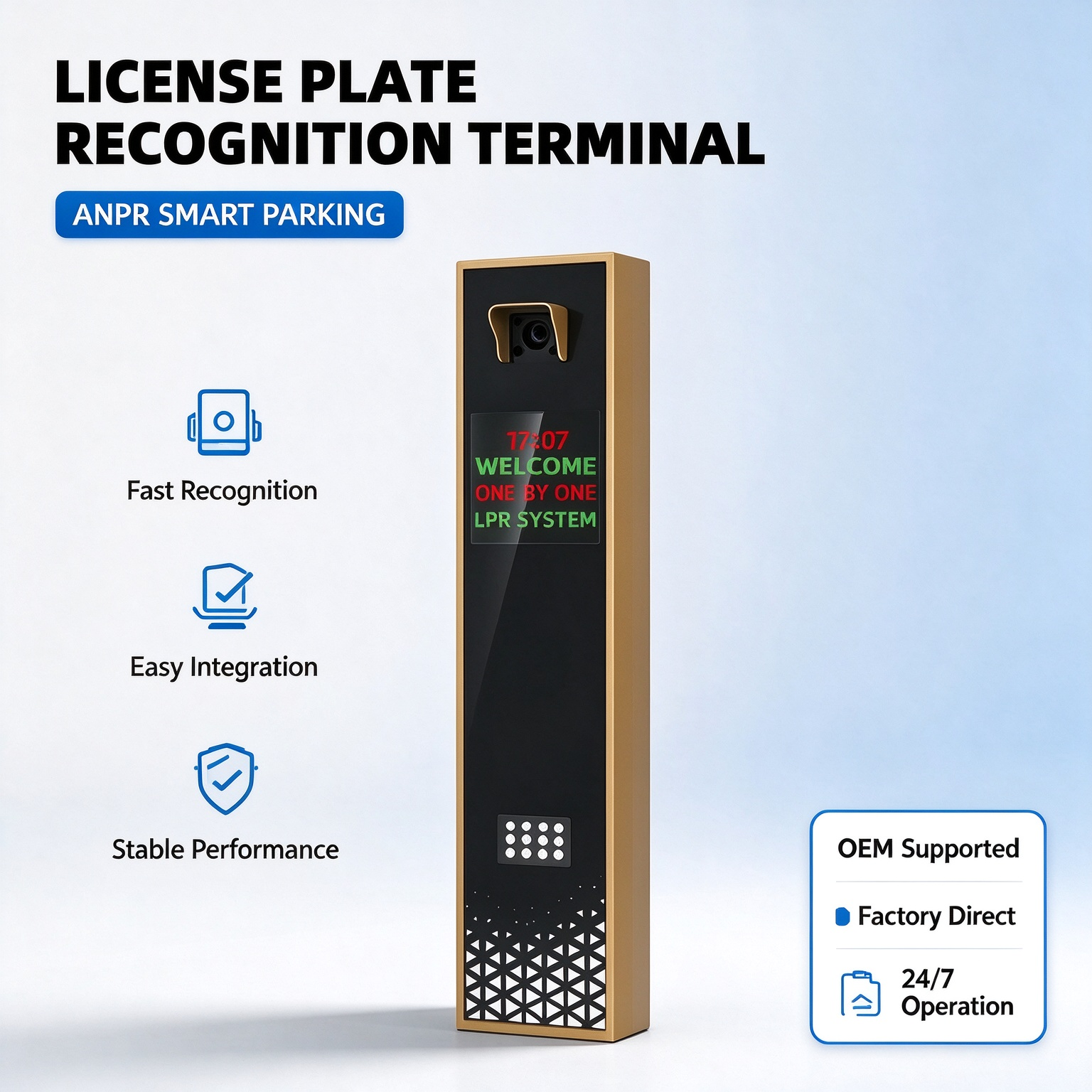
An ANPR/LPR camera captures a vehicle registration plate and converts the image into readable characters. The parking platform checks the registration against an authorised list, booking, payment or other access rule. If approved, it sends an opening request to the barrier controller. Camera positioning, lighting, plate condition, network availability and local privacy requirements all affect the design.
Ticketing, keypad and remote control
A ticket dispenser, keypad, intercom operator, push button or remote control can also initiate an access request. These methods are useful in different operating environments, including public car parks, visitor entrances, staffed sites and private driveways. The selected system should define how visitor access is approved, recorded and revoked.
4. What types of parking barrier gate are available?
The correct barrier type depends on the entrance geometry, available headroom, required level of access restriction and operating frequency. BAROXON Europe product information includes straight, folding and fence-style boom arm configurations, as well as options for high-speed and heavy-duty applications.
Straight-arm barrier
A straight-arm barrier is widely used at open-air car park entrances and driveways with sufficient clearance above the arm. It provides a simple, visible lane-control arrangement. The arm length and any support post should be selected for the actual lane width and model specification.
Folding-arm barrier
A folding-arm barrier uses an articulated section so that the arm can fold as it opens. It can be useful in underground car parks or covered entrances where a conventional straight arm may not have enough vertical clearance. Check the full opening path and the approved folding configuration before installation.
Fence-arm barrier
A fence-style arm uses multiple horizontal rails to form a more substantial visual barrier. It may be selected for certain controlled entrances where the arm profile needs to provide a stronger visual boundary. The supplier should confirm the permitted arm length, support arrangement and environmental limits for the chosen model.
High-speed and heavy-duty barriers
High-speed and heavy-duty barriers are designed for applications where vehicle movements are frequent or traffic flow needs careful management. Selection should be based on the manufacturer's duty-cycle rating, arm length, motor and controller specification, and the expected number of operating cycles—not on opening speed alone.
5. Where are parking barrier gates used in Europe?
Automatic barrier gates are used wherever vehicle access needs to be controlled, recorded or restricted. The operating requirements vary by site, so the barrier, access method and safety equipment should be specified as one coordinated system.
- Residential developments and apartment car parks: manage resident, visitor and service-vehicle access.
- Office buildings and business parks: control staff, tenant, contractor and visitor vehicle access.
- Retail centres and public car parks: connect entry barriers with ticketing, payment and parking-management systems.
- Industrial estates and logistics facilities: manage delivery vehicles, fleet movements and restricted operational areas.
- Hotels, hospitals and educational campuses: separate authorised vehicles, visitors and service access.
6. What safety features should a parking barrier gate have?
A barrier arm moves across a vehicle route, so safety must be considered in the system design, installation and commissioning. Depending on the site risk assessment and selected model, the system may use inductive vehicle loops, radar, photoelectric cells, obstacle detection, anti-collision or auto-reverse functions, warning lights and manual emergency release.
The safety arrangement should define how the barrier behaves if a vehicle stops beneath the arm, a detector is obstructed, communication is lost or mains power fails. Emergency procedures should be documented, and users should know how to keep clear of the arm's movement path. Sensors do not replace safe site layout, clear signs or trained operation.
7. What should be checked before installation?
Before installation, confirm the lane width, cabinet foundation, arm clearance, vehicle approach direction, drainage, power supply, cable routes and access for maintenance. For covered or underground car parks, check the complete arm movement envelope and the available headroom. For outdoor installations, confirm the environmental rating and mounting requirements for the exact model.
The electrical supply, controller connections and integration signals should be checked against the manufacturer's wiring diagram. BAROXON's Europe website describes European-market supply and control arrangements, but the project team should verify the voltage, frequency, protective devices and conformity documents for the exact model and destination country before commissioning.
8. Common operating problems and what to check
If a barrier does not open, first check whether the access request has been authorised and whether the controller is receiving the correct signal. Then check the power supply, emergency stop or interlock status, detector inputs and any fault indication shown by the controller. Do not bypass safety circuits to force operation.
If the arm stops part-way, moves unevenly or makes unusual noise, stop using the equipment and arrange inspection by a qualified technician. Possible causes may include an obstruction, incorrect arm balance, loose mechanical components, a drive fault or incorrect controller settings. Refer to the model-specific manual rather than adjusting springs, linkages or motor parameters without authorisation.
9. BAROXON parking barrier gate solutions for European projects
BAROXON Europe presents automatic boom barriers and vehicle access-control products for residential, commercial, industrial and parking applications. Product information includes straight, folding and fence-style arms; DC brushless and other motor options; RFID and other access credentials; ANPR/LPR integration options; and safety connections for devices such as vehicle loops and photoelectric sensors. Features and ratings vary between models and configurations.
For a general automatic entrance barrier, review the BAROXON automatic parking barrier boom arm gate. For a commercial or high-traffic project, see the commercial barrier gate system. For low-clearance sites, review the folding-arm boom barrier. For number-plate-based access, explore the automatic parking management and LPR camera gate system.
Frequently asked questions
What is the difference between a parking barrier gate and a boom barrier?
The terms are often used to describe the same type of vehicle access-control equipment. “Parking barrier gate” highlights its use at a car park entrance, while “boom barrier” or “boom gate” describes the rising arm mechanism.
Does a parking barrier gate open automatically?
Yes, when it is configured as an automatic system and receives a valid opening command. The command may come from an RFID reader, ANPR/LPR platform, ticketing system, keypad, remote control, push button or an authorised operator.
Can a parking barrier gate work with an ANPR/LPR camera?
Yes, provided the camera, access-control software and barrier controller have compatible interfaces and are correctly configured. The system should also include a clear process for handling unreadable plates, denied access and network interruptions.
What happens if the power fails?
The response depends on the barrier model and the site's emergency plan. Some configurations provide a manual release or clutch mechanism so an authorised person can move the arm during a power failure. Confirm the procedure in the manufacturer's manual and ensure staff are trained to use it safely.
How long does a parking barrier gate take to open?
Opening time varies with the model, boom length, motor, controller settings and operating conditions. BAROXON product pages list different speed options across its range. Always confirm the specified opening time for the exact model and arm configuration being purchased.
Which barrier arm is suitable for an underground car park?
A folding or articulated arm may be suitable where ceiling height or overhead structures restrict the movement of a straight arm. The installer must check the complete opening path, lane width and approved arm configuration before selecting the model.
Conclusion
A parking barrier gate controls vehicle access by combining a physical boom arm with a motor, drive mechanism, controller and safety devices. When connected to RFID, ANPR/LPR, ticketing or parking-management equipment, it can become part of a wider automated access-control solution. Its performance depends on correct specification, compatible integration, safe installation and regular maintenance.
For a BAROXON Europe project, begin with the entrance dimensions, traffic pattern, access method and site conditions. Then confirm the exact barrier model, arm type, motor and controller specification, safety devices and interface requirements with the supplier. This approach helps create a parking entrance system that is practical for the site and easier to operate over the long term.
For current datasheets, model configuration and project support, see the BAROXON Europe parking barrier and access control range.
Frequently Asked Questions
What is the difference between a parking barrier gate and a boom barrier?
The terms are often used to describe the same type of vehicle access-control equipment. “Parking barrier gate” highlights its use at a car park entrance, while “boom barrier” or “boom gate” describes the rising arm mechanism.
Does a parking barrier gate open automatically?
Yes, when it is configured as an automatic system and receives a valid opening command. The command may come from an RFID reader, ANPR/LPR platform, ticketing system, keypad, remote control, push button or an authorised operator.
Can a parking barrier gate work with an ANPR/LPR camera?
Yes, provided the camera, access-control software and barrier controller have compatible interfaces and are correctly configured. The system should also include a clear process for handling unreadable plates, denied access and network interruptions.
What happens if the power fails?
The response depends on the barrier model and the site's emergency plan. Some configurations provide a manual release or clutch mechanism so an authorised person can move the arm during a power failure. Confirm the procedure in the manufacturer's manual and ensure staff are trained to use it safely.
How long does a parking barrier gate take to open?
Opening time varies with the model, boom length, motor, controller settings and operating conditions. BAROXON product pages list different speed options across its range. Always confirm the specified opening time for the exact model and arm configuration being purchased.
Which barrier arm is suitable for an underground car park?
A folding or articulated arm may be suitable where ceiling height or overhead structures restrict the movement of a straight arm. The installer must check the complete opening path, lane width and approved arm configuration before selecting the model.
Latest News
Baroxon® | Leading Boom Barrier Manufacturer
Advanced Security Access Control and Intelligent Parking Solutions.
Company Strength
Adequate Inventory
Fast Shipping
Our Products
CONTACT US
Address: No. 2 Wanshou Road, International Innovation Industrial Park, Jinan, Shandong, China






© COPYRIGHT 2025 Baroxon® | Leading Boom Barrier Manufacturer
Point your camera here to open WhatsApp chat
Scan with WeChat to add our engineer
Chat with us directly
Scan the QR code with your phone to start a WhatsApp or WeChat conversation with the Baroxon Europe export team — quotations, drawings and lead times answered by engineers, not bots.

Contact Us
Professional Manufacturer of Vehicle Barriers & License Plate Recognition Cameras,Smart Parking Access Control Solutions for Global Clients,Reliable Barrier Gates + LPR Systems, Customized to Your Project,From residential communities, commercial shopping malls, industrial parks to highway toll stations, our matched barrier & LPR sets can realize automatic license plate identification, automatic gate lifting, real-time access records, automatic charging and remote management.