
What Is a Parking Barrier? Types, Uses and How It Works
Release time:
2026-11-05
Conclusion: a parking barrier is a vehicle access-control device, and the right type is set by lane width, headroom, traffic frequency and safety requirements. Straight-arm, folding-arm, fence-arm, high-speed and heavy-duty models cover most European sites, provided each is matched to compatible detection, access control and emergency release.
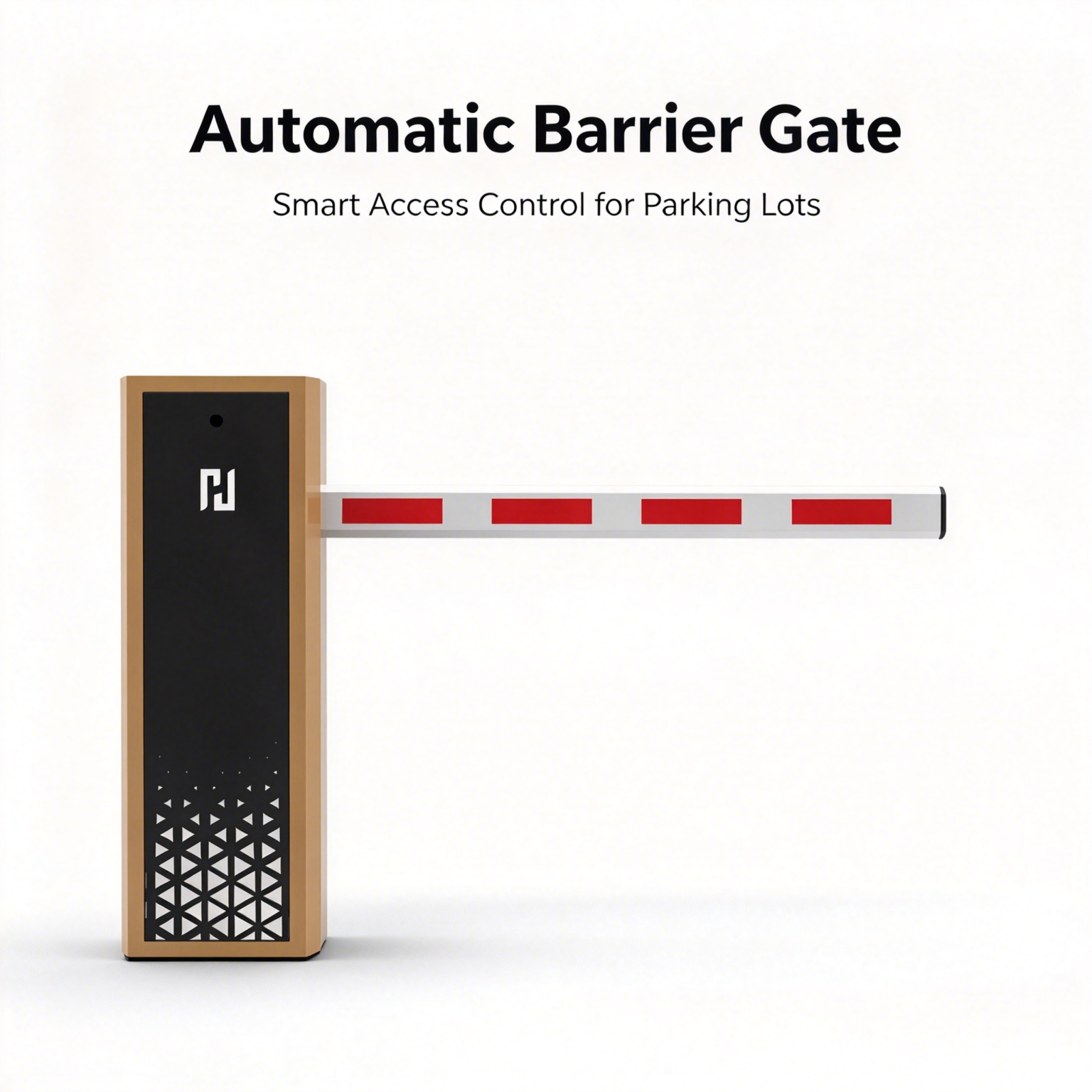
A parking barrier is a vehicle access control device that regulates vehicles entering or leaving a defined area. It is commonly installed at car parks, residential developments, office buildings, industrial sites, logistics facilities and controlled entrances. By raising and lowering a barrier arm, it provides a clear stopping point and allows access to be managed according to the site's rules.
In everyday use, the terms parking barrier, boom barrier, boom gate and barrier gate are often used to describe similar equipment. A parking barrier usually refers to the application, while a boom barrier highlights the horizontal arm that moves across the vehicle lane. The exact term may vary between countries, suppliers and project specifications.
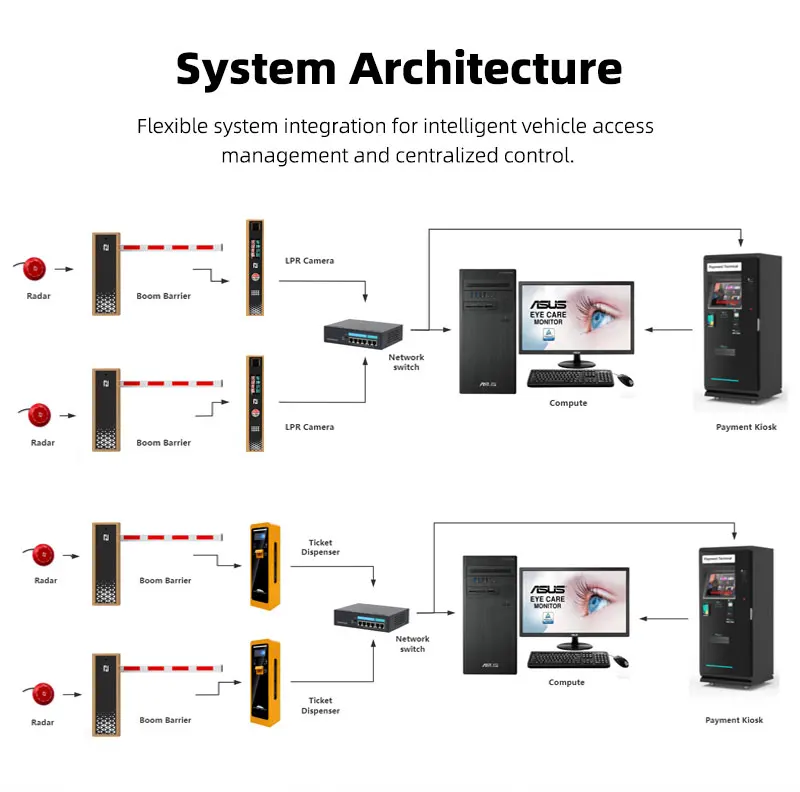
A modern automatic parking barrier is more than a motorised arm. It normally works as part of a wider vehicle access control system, which may include a controller, vehicle detector, safety sensor, access reader, ticketing equipment, ANPR/LPR camera or parking management software. The right combination depends on traffic volume, site layout, security policy and the way the entrance is operated.
What Does a Parking Barrier Do?
The main purpose of a parking barrier is to control vehicle movement at an entrance or exit. It can help operators allow authorised vehicles through, restrict access when permission has not been granted and organise traffic into clearly defined lanes. Depending on the system, the access event may also be recorded by parking or security software.
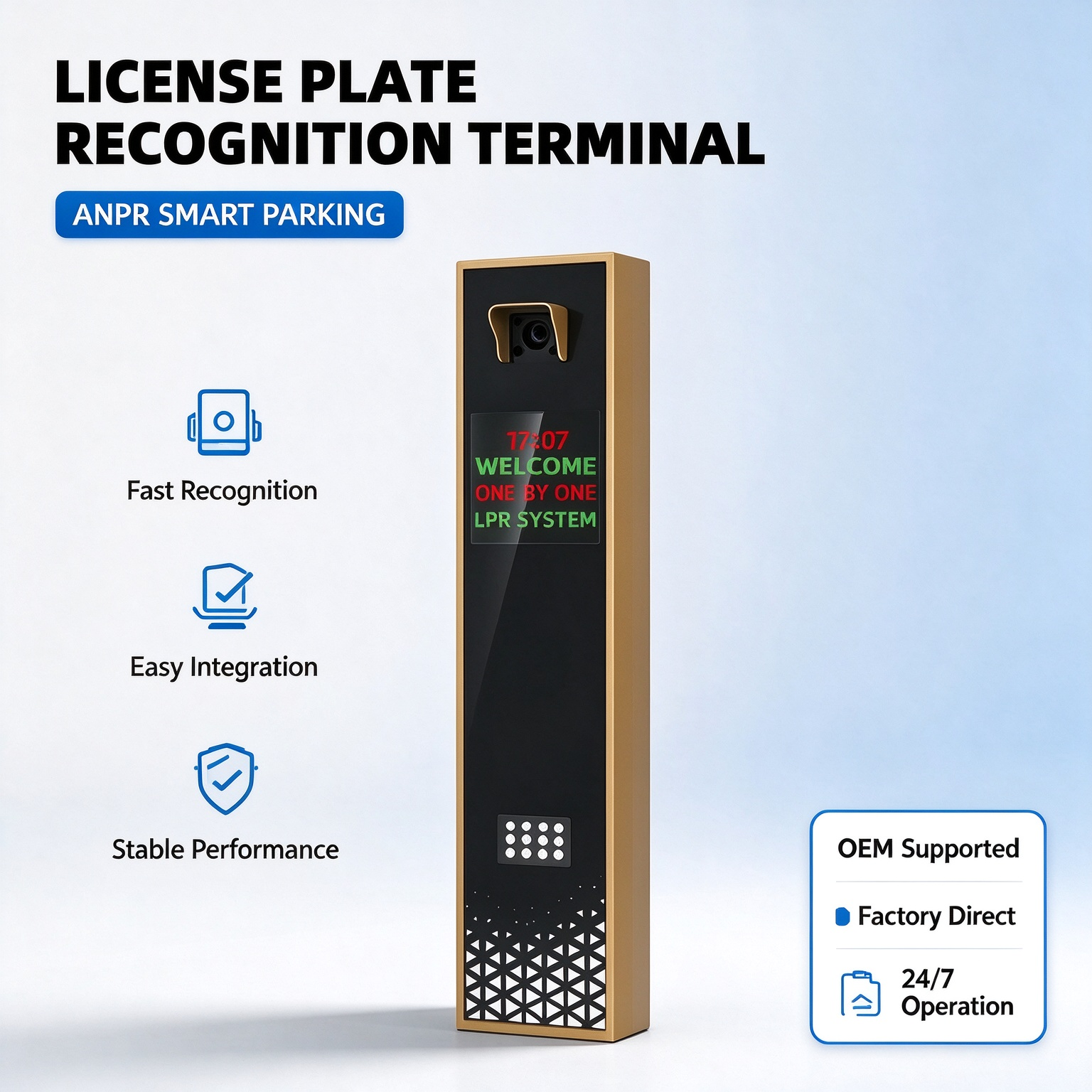
Typical uses include resident and visitor access at apartment complexes, staff and visitor parking at offices, paid parking at retail destinations, vehicle checkpoints at factories and logistics centres, and controlled lanes at transport facilities. In each case, the barrier should be selected to suit the vehicle flow and the wider access procedure rather than treated as a standalone security solution.
Main Types of Parking Barriers
The most suitable parking barrier depends on the available lane width and headroom, required opening speed, operating frequency, environmental exposure and security requirements. BAROXON's European product range includes boom barriers, high-speed barrier gates, RFID barrier options, ANPR/LPR-related systems and supporting access-control equipment. Common barrier configurations include the following.
1. Straight-arm barrier
A straight-arm barrier uses a single horizontal boom that rises to allow a vehicle to pass. It is a common choice for open-air car parks, office entrances, residential developments and commercial sites where there is sufficient vertical clearance. The arm length should be matched to the lane width and the manufacturer's approved configuration.
When specifying a straight-arm model, check the mounting position, vehicle approach angle, arm length, visibility, opening and closing speed, safety accessories and expected operating cycles. A longer arm or faster operating speed should not be selected without checking the mechanical rating and site conditions.
2. Folding-arm barrier
A folding-arm barrier is designed for entrances where overhead clearance is restricted. As the barrier opens, the arm folds to fit within the available vertical space. It may be suitable for some underground car parks, multi-storey parking structures and entrances with beams, low ceilings or other overhead obstacles.
Before installation, measure the complete operating envelope, including the ceiling, lighting, signs, pipes and the vehicle's required clearance. The folding mechanism and arm geometry must be suitable for the actual entrance; a site survey is preferable to relying on drawings alone.
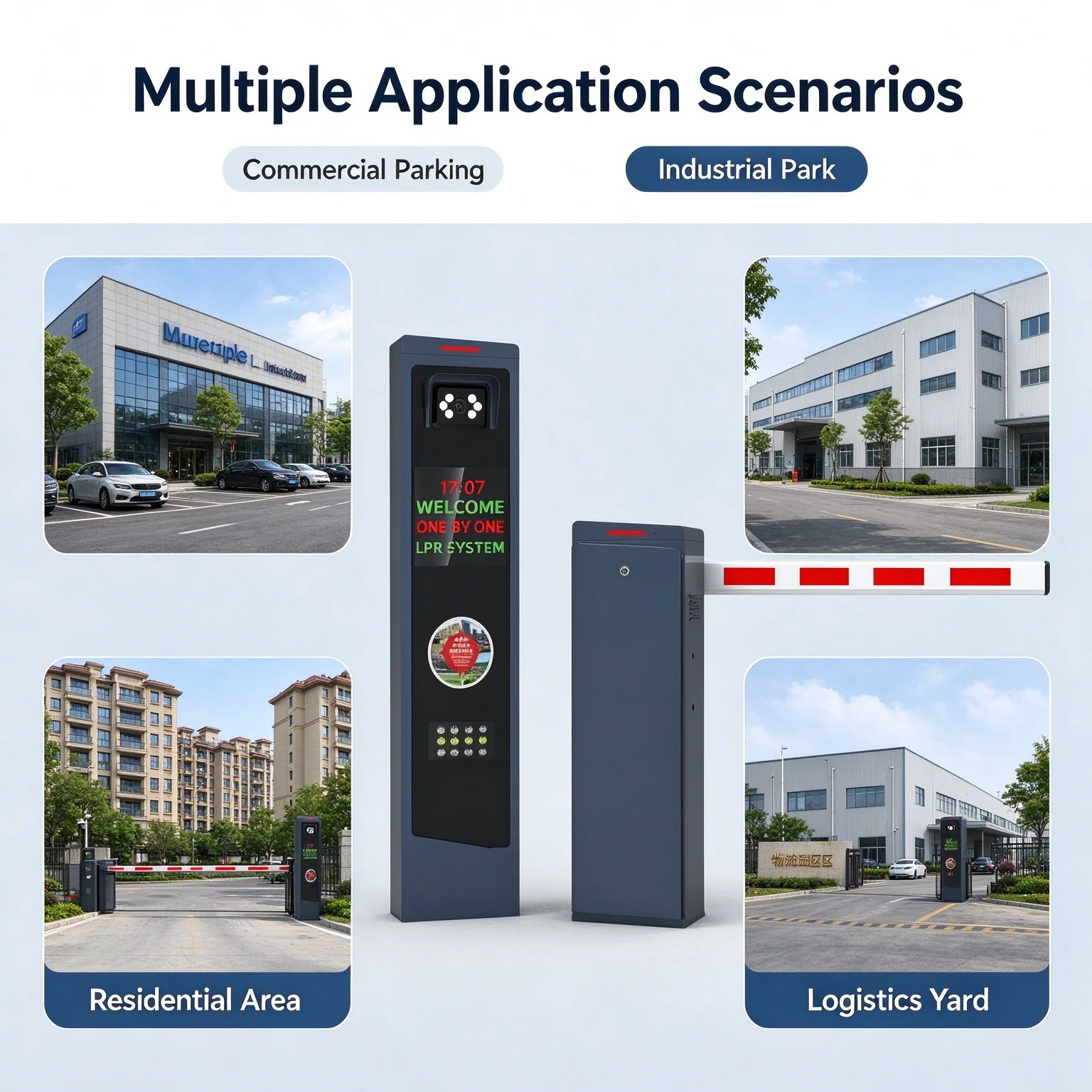
3. Fence-arm barrier
A fence-arm barrier adds vertical elements to the boom, creating a more substantial physical and visual barrier across the lane. It may be considered for sites where a standard straight arm does not provide the required level of lane separation or visual deterrence. The design should be assessed for wind exposure, arm length, mounting strength and safe operation.
A fence arm is not a replacement for perimeter fencing or a complete security barrier. The site operator should consider whether additional fencing, pedestrian control, CCTV or staffed security is required to meet the site's risk assessment.
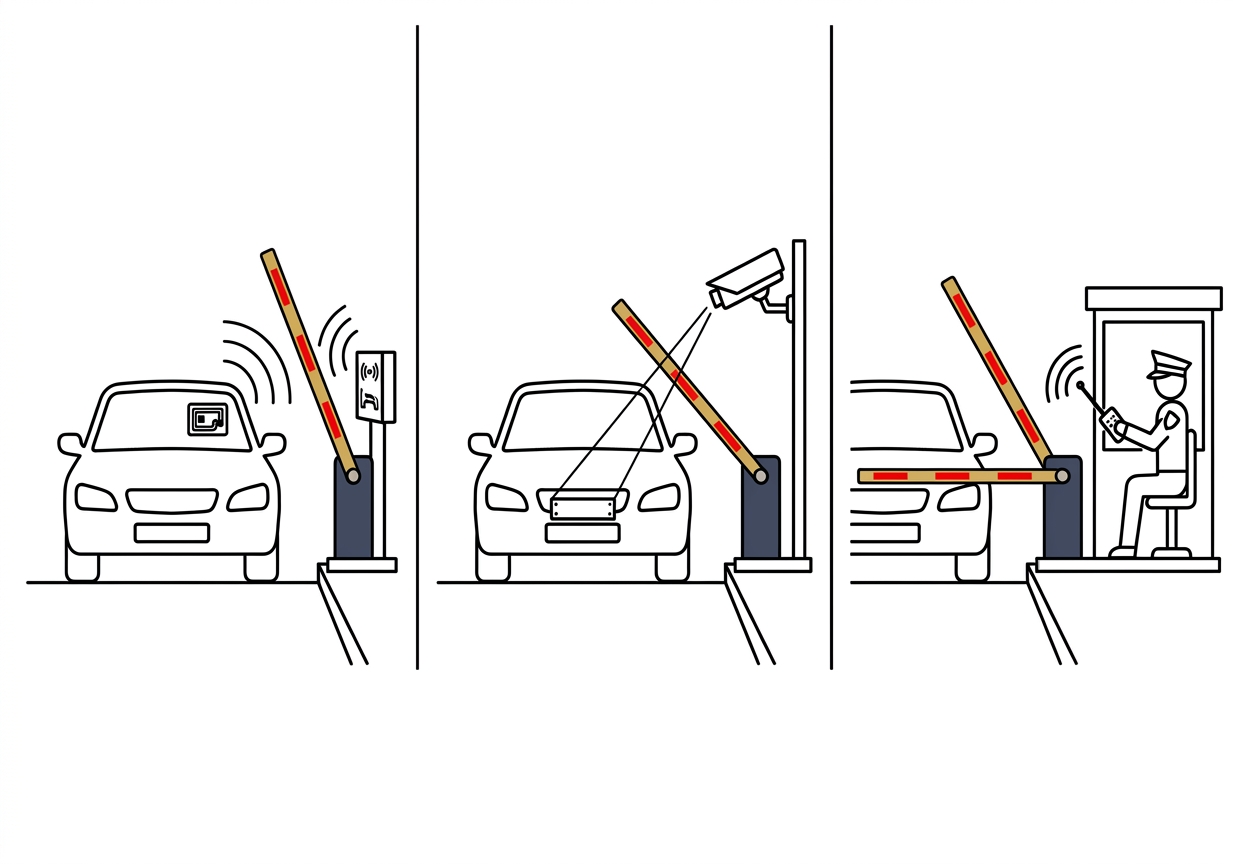
4. High-speed and heavy-duty barriers
High-speed barriers are intended for entrances where vehicles arrive frequently and efficient lane operation is important. Heavy-duty models may be used at logistics facilities, industrial premises, transport hubs and other demanding locations. Selection should be based on the expected duty cycle, arm length, vehicle flow and the manufacturer's published performance data.
The BAROXON Europe website describes configurations with brushless DC motor options, adjustable opening speeds and continuous-duty product options. Published specifications vary by model, so buyers should request the datasheet for the exact unit and confirm its rated operating conditions before ordering.
How Does an Automatic Parking Barrier Work?
An automatic parking barrier combines a mechanical arm, motor, controller and access command. Depending on the installation, vehicle detection and safety devices help determine when the arm can move. A typical operating sequence is as follows.
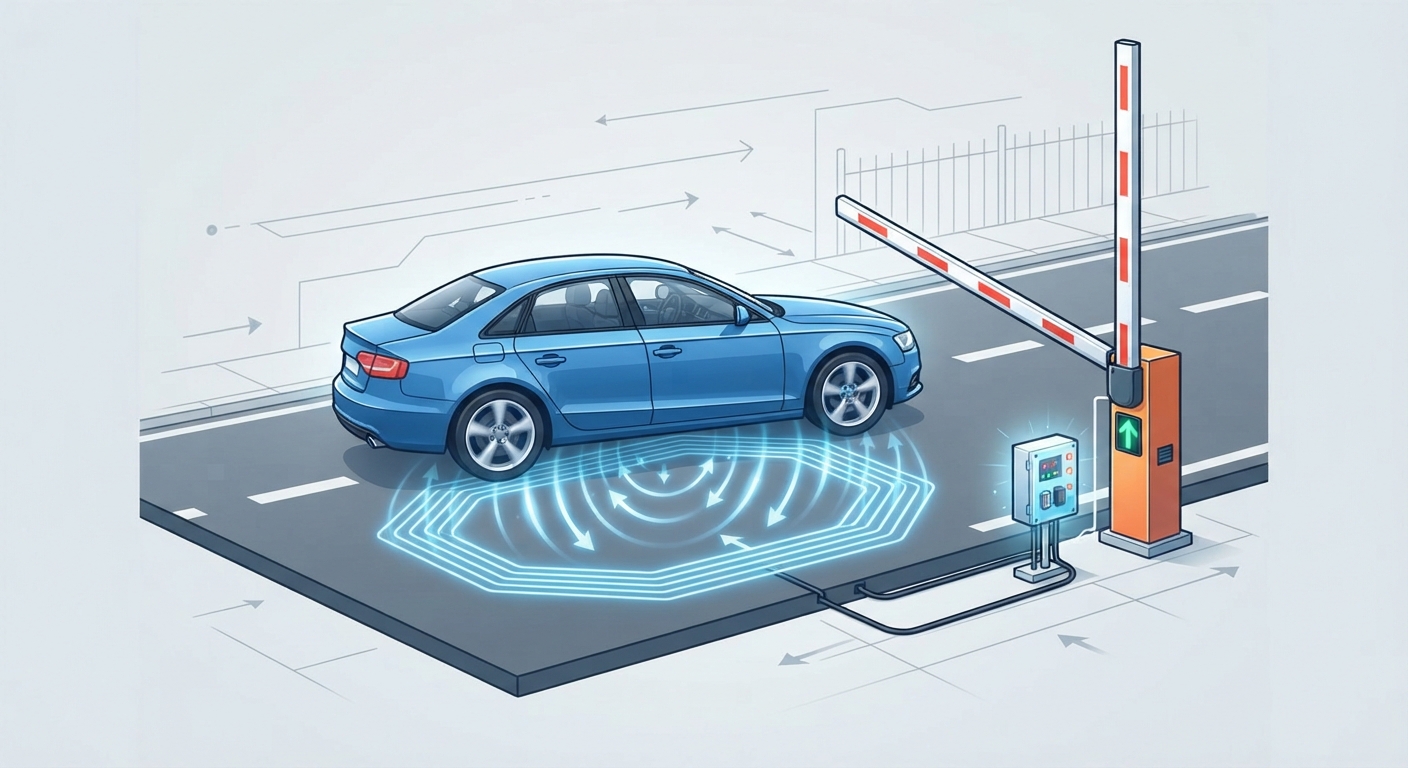
- A vehicle approaches the entrance. A loop detector, radar, photoelectric sensor or configured access device detects the vehicle.
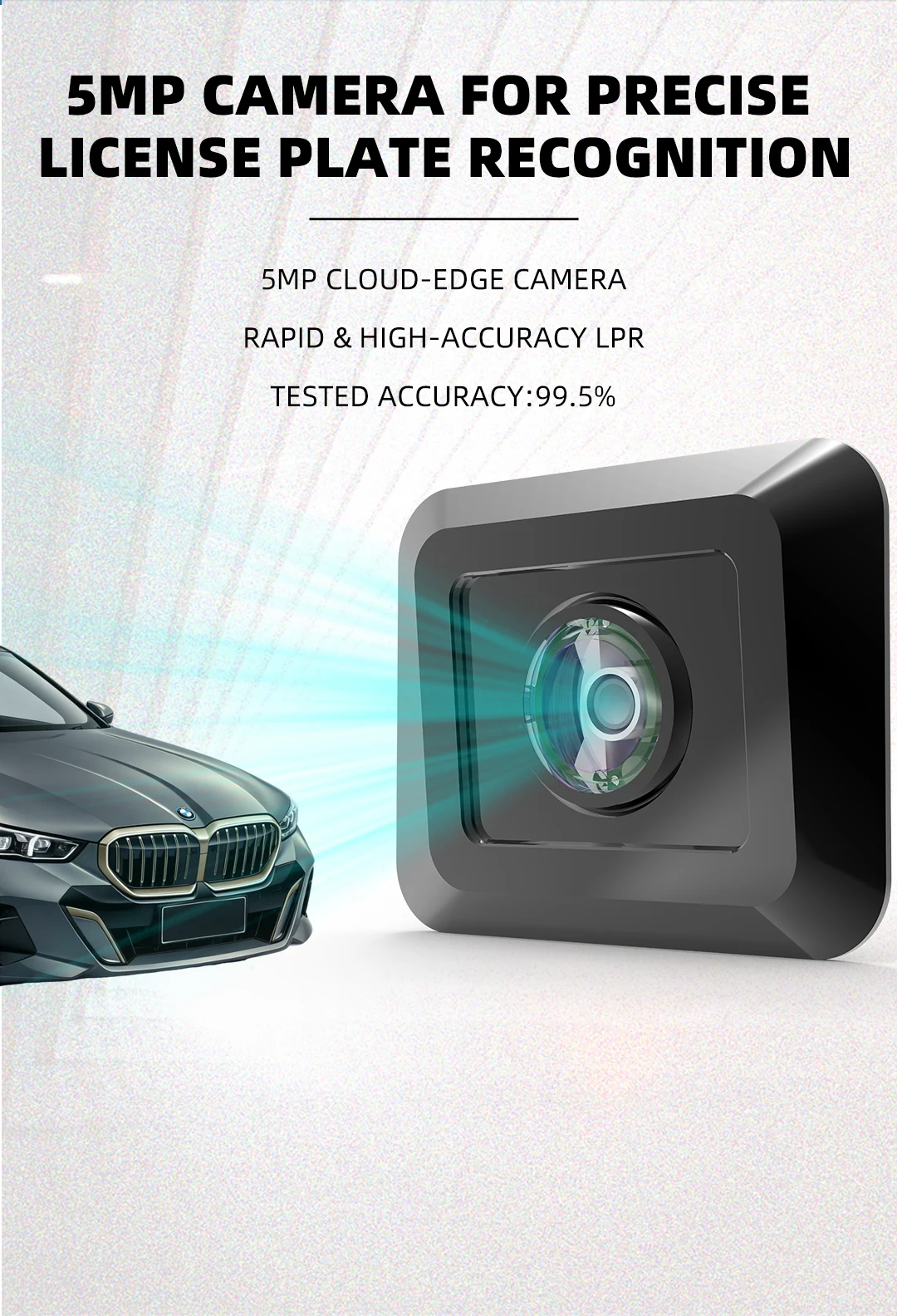
- The system checks access permission. The driver may present an access card or RFID credential, use a ticketing process, receive approval from an operator, or have the registration plate checked by an ANPR/LPR camera.
- The controller receives an authorised signal. If the credential or vehicle record is accepted, the controller sends a command to the barrier mechanism.
- The boom arm opens. The motor raises the arm to allow the vehicle to enter or leave.
- The vehicle clears the controlled lane. Suitable detection and safety devices monitor the vehicle's movement and help prevent the arm from closing while the vehicle is still in the danger area.
- The arm closes and the system resets. Once the configured conditions are met, the arm returns to its closed position and the system prepares for the next vehicle.
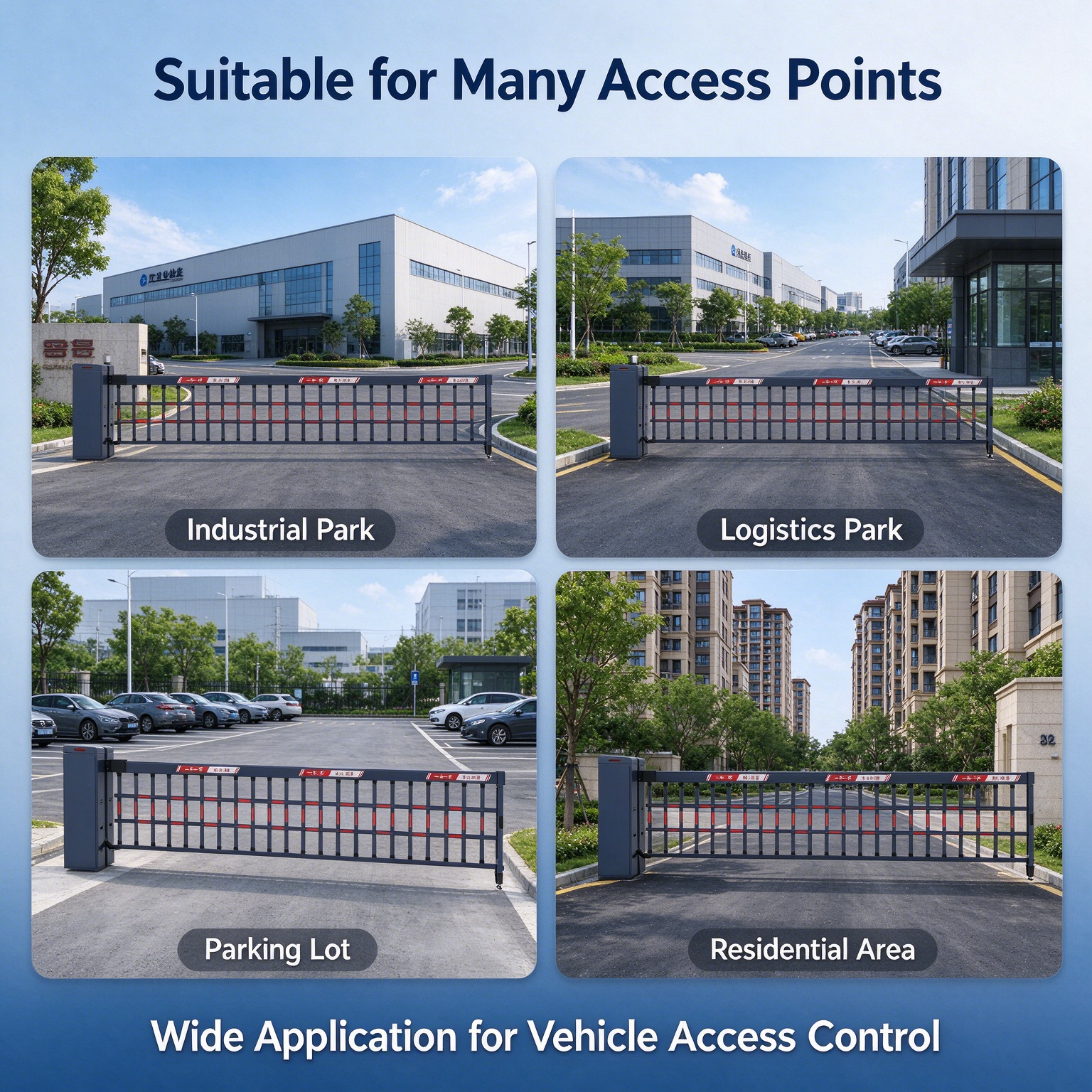
The exact sequence depends on the controller, access equipment and safety configuration. For example, an ANPR camera does not automatically operate a barrier on its own: the camera, recognition software, access rules, controller and barrier must be correctly integrated and commissioned. The installer should test authorised and unauthorised vehicles, sensor operation, tailgating scenarios and the agreed response to power or network interruptions.
Where Are Parking Barriers Used?
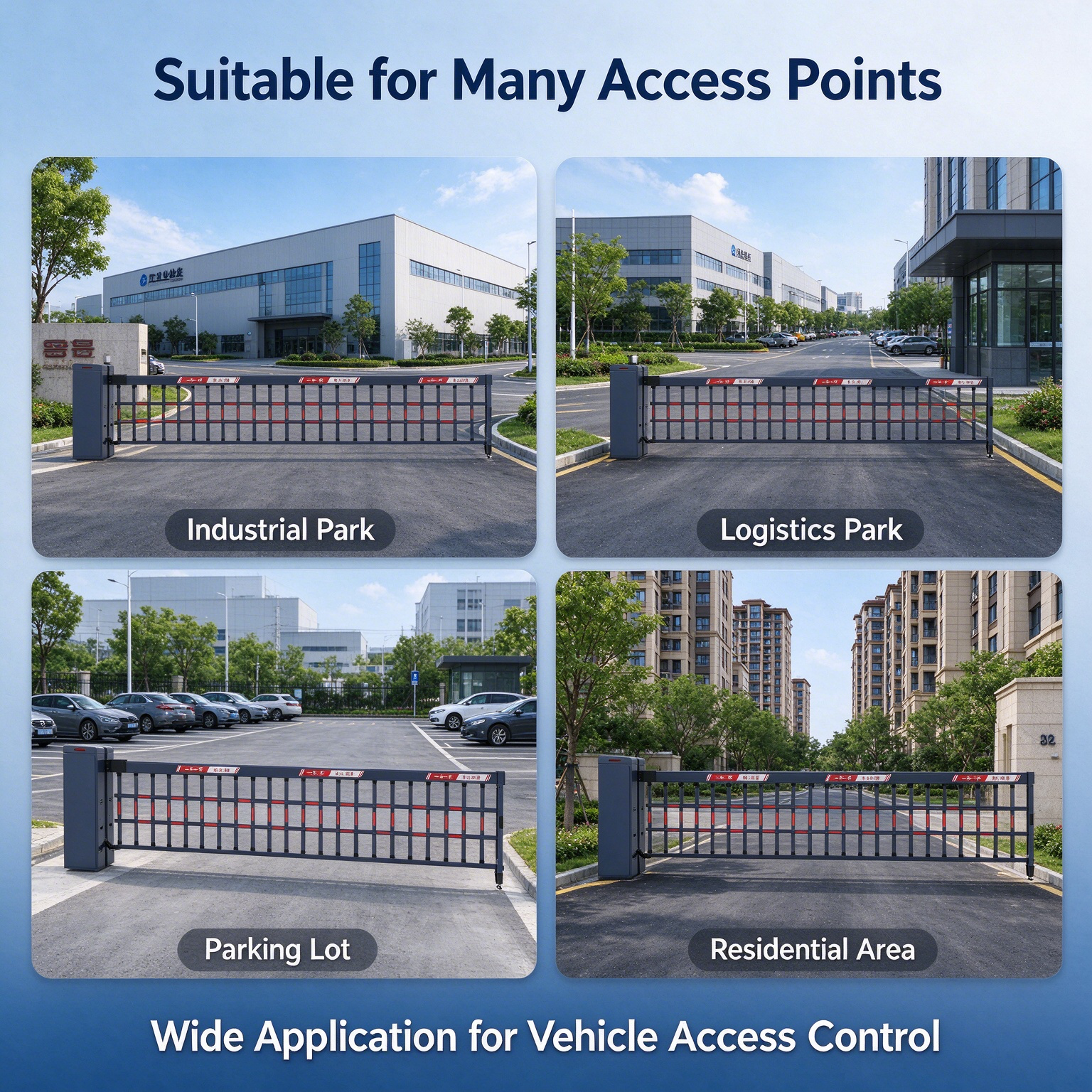
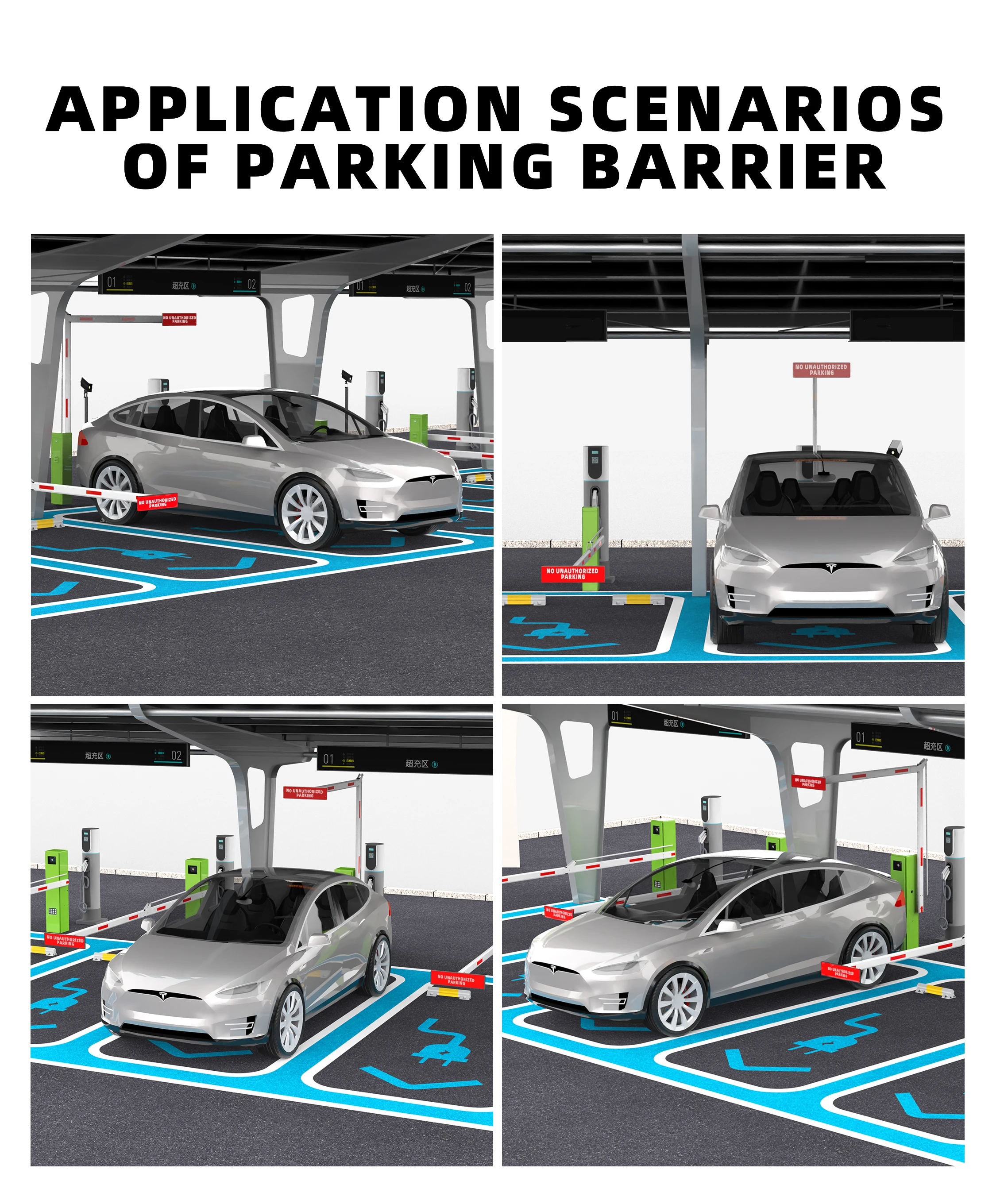
Parking barriers are used wherever vehicle movements need to be managed through a defined entrance or exit. Common applications across Europe include:
- Residential developments and apartment buildings: manage resident, tenant, visitor and delivery access.
- Office buildings and business parks: separate employee, visitor and service-vehicle access.
- Shopping centres, hotels and public car parks: support controlled entry and exit, ticketing and parking operations.
- Factories and logistics facilities: manage staff vehicles, delivery vans, heavy goods vehicles and fleet movements.
- Airports, ports and transport facilities: control access to staff areas, service roads and designated parking zones.
- Hospitals, schools and public buildings: organise visitor and authorised vehicle access while keeping pedestrian routes separate.
The operating environment matters. An outdoor barrier may need protection against rain, dust, temperature changes and corrosion, while an indoor installation may have limited headroom or restricted maintenance access. Sites with frequent vehicle movements should pay particular attention to the rated duty cycle and the availability of spare parts and technical support.
How to Choose the Right Parking Barrier for a European Site
A suitable barrier should match the physical entrance, traffic demand, access-control method and operating environment. Before requesting a quotation, review the following points.
1. Measure the lane and available headroom
Record the clear lane width, mounting position, boom length required, ceiling height and nearby obstacles. For underground car parks, check whether a straight arm can operate safely or whether a folding-arm design is more appropriate.
2. Estimate traffic volume and operating frequency
Consider the number of vehicle movements during peak periods and throughout the day. Choose a model whose rated duty cycle matches the expected workload. Ask the supplier to clarify how the published cycle-life and speed figures were tested.
3. Select the access-control method
Decide whether the site needs remote control, access cards, RFID, ANPR/LPR, ticketing, intercom approval or a combination. Check compatibility with existing parking management software, payment systems and access-control equipment before ordering.
4. Review safety and emergency operation
Ask about anti-collision functions, loop detectors, radar or photoelectric sensors, manual emergency release and the system's behaviour during a power failure. Safety equipment and operating procedures should be selected for the actual vehicle lane and reviewed against applicable local requirements.
5. Check environmental protection and installation conditions
For outdoor locations, confirm the exact model's ingress protection rating, temperature range, housing finish and suitability for the site conditions. Do not assume that every model in a product family has the same protection rating.
6. Confirm interfaces, maintenance and support
If the barrier must connect to third-party software, cameras, RFID readers or ticketing equipment, request interface details and a commissioning plan. Also check warranty terms, spare-parts availability, maintenance requirements and technical support arrangements.
BAROXON Parking Barrier Solutions for Europe
The BAROXON Europe website presents a vehicle access and parking product range that includes boom barriers and boom gates, high-speed barrier gates, automatic RFID boom barriers, ALPR/LPR car plate systems, pedestrian access control, turnstile gates, radar sensors, parking locks and barrier accessories. This allows a project team to assess the barrier together with the access-control equipment required at the entrance.
The European website also describes configurations for European electrical supply, including 230 V / 50 Hz versions, and product features such as brushless DC motor options, adjustable opening speed, obstacle-response functions and manual emergency release. These details are model-dependent. Buyers should request the current datasheet, wiring information and relevant conformity documentation for the exact product being considered.
For a European project enquiry, prepare the site type and country, lane width, number of lanes, estimated daily vehicle movements, required boom length, indoor or outdoor installation conditions, preferred access method and any existing software interfaces. This information helps the supplier assess the application and recommend a suitable configuration. Confirm local installation, electrical, safety and data-protection requirements with the relevant project professionals.
Frequently Asked Questions
Is a parking barrier the same as a boom barrier?
The terms are often used interchangeably. “Parking barrier” describes the vehicle-access application, while “boom barrier” or “boom gate” usually refers to the rising arm mechanism. Product terminology can vary between suppliers and markets.
How does an automatic parking barrier open?
An automatic barrier opens when its controller receives an authorised signal from a configured access device or management system. The signal may come from a remote control, access card, RFID reader, ticketing system, operator or integrated ANPR/LPR solution.
Can a parking barrier work with ANPR or LPR?
Yes, provided the camera, recognition software, access rules, controller and barrier are compatible and correctly integrated. Camera position, lighting, registration plate visibility, network reliability and a manual fallback process should all be considered.
Which barrier is suitable for an underground car park?
A folding-arm barrier may be suitable where ceiling height or overhead obstacles prevent a straight arm from opening fully. The available headroom and the complete movement of the arm must be measured before selecting a model.
Are parking barriers suitable for high-traffic entrances?
They can be, if the selected model is rated for the expected operating frequency and is supported by an appropriate access-control and safety arrangement. Review peak traffic, opening speed, duty cycle, vehicle detection and maintenance requirements together.
Does a parking barrier provide complete site security?
No. A parking barrier controls vehicle movement at a defined lane, but it does not provide complete perimeter protection or prevent every form of unauthorised access. Depending on the risk assessment, a site may also need fencing, CCTV, pedestrian access control, lighting and security procedures.
Conclusion
A parking barrier is an important part of vehicle access control for car parks, residential developments, commercial properties, industrial sites and transport facilities. The main options include straight-arm, folding-arm, fence-arm, high-speed and heavy-duty configurations. Each should be selected according to the entrance layout, traffic demand, operating frequency, access method and safety requirements.
An effective automatic parking barrier also needs to work with suitable detection devices, access-control equipment and operating procedures. For European projects considering BAROXON products, review the relevant product range and confirm the exact model specifications, interfaces and conformity documents before installation. A correctly specified system can help make vehicle access more organised, consistent and manageable.
For current datasheets, model configuration and project support, see the BAROXON Europe parking barrier and access control range.
Frequently Asked Questions
Is a parking barrier the same as a boom barrier?
The terms are often used interchangeably. “Parking barrier” describes the vehicle-access application, while “boom barrier” or “boom gate” usually refers to the rising arm mechanism. Product terminology can vary between suppliers and markets.
How does an automatic parking barrier open?
An automatic barrier opens when its controller receives an authorised signal from a configured access device or management system. The signal may come from a remote control, access card, RFID reader, ticketing system, operator or integrated ANPR/LPR solution.
Can a parking barrier work with ANPR or LPR?
Yes, provided the camera, recognition software, access rules, controller and barrier are compatible and correctly integrated. Camera position, lighting, registration plate visibility, network reliability and a manual fallback process should all be considered.
Which barrier is suitable for an underground car park?
A folding-arm barrier may be suitable where ceiling height or overhead obstacles prevent a straight arm from opening fully. The available headroom and the complete movement of the arm must be measured before selecting a model.
Are parking barriers suitable for high-traffic entrances?
They can be, if the selected model is rated for the expected operating frequency and is supported by an appropriate access-control and safety arrangement. Review peak traffic, opening speed, duty cycle, vehicle detection and maintenance requirements together.
Does a parking barrier provide complete site security?
No. A parking barrier controls vehicle movement at a defined lane, but it does not provide complete perimeter protection or prevent every form of unauthorised access. Depending on the risk assessment, a site may also need fencing, CCTV, pedestrian access control, lighting and security procedures.
Latest News
Baroxon® | Leading Boom Barrier Manufacturer
Advanced Security Access Control and Intelligent Parking Solutions.
Company Strength
Adequate Inventory
Fast Shipping
Our Products
CONTACT US
Address: No. 2 Wanshou Road, International Innovation Industrial Park, Jinan, Shandong, China






© COPYRIGHT 2025 Baroxon® | Leading Boom Barrier Manufacturer
Point your camera here to open WhatsApp chat
Scan with WeChat to add our engineer
Chat with us directly
Scan the QR code with your phone to start a WhatsApp or WeChat conversation with the Baroxon Europe export team — quotations, drawings and lead times answered by engineers, not bots.

Contact Us
Professional Manufacturer of Vehicle Barriers & License Plate Recognition Cameras,Smart Parking Access Control Solutions for Global Clients,Reliable Barrier Gates + LPR Systems, Customized to Your Project,From residential communities, commercial shopping malls, industrial parks to highway toll stations, our matched barrier & LPR sets can realize automatic license plate identification, automatic gate lifting, real-time access records, automatic charging and remote management.