
What Is the Difference Between RFID and ANPR Parking Systems?
Release time:
2026-11-05
Conclusion: RFID and ANPR differ in the identifier they check, not in the barrier they control. RFID reads an issued card or tag and suits stable groups such as residents and staff; ANPR reads the registration plate and suits visitors, bookings and ticketless entry. Many European sites combine both under one controller.
RFID and ANPR are two common technologies used to identify vehicles and manage access to a car park. Both can be connected to an automatic boom barrier, but they identify vehicles in different ways. RFID uses a radio-frequency tag or card, while ANPR uses a camera and image-processing software to read a vehicle's registration plate. The right choice depends on the site, the users, the traffic pattern and the way access permissions are managed.
BAROXON Europe's product portfolio covers automatic RFID boom barriers, ALPR/LPR licence plate recognition systems and automatic barrier solutions that can combine different access credentials. This gives car park operators several ways to build a coordinated vehicle access system. The important point is to select the identification method, controller, barrier operator and safety equipment as a compatible solution rather than treating the reader or camera as a stand-alone product.
1. What Is an RFID Parking System?
RFID stands for Radio Frequency Identification. In a parking access system, a vehicle is authorised through an RFID credential, such as a contactless card, key fob, windscreen tag or compatible long-range vehicle tag. A reader detects the credential and sends its identifier to the access controller. The controller checks whether that credential is active and permitted at that entrance and time.
For a vehicle-based installation, the tag may be assigned to a registered vehicle or user. Depending on the selected RFID technology and reader arrangement, the driver may need to present a card near the reader, or a vehicle-mounted tag may be detected as it approaches the entrance. Read range, tag orientation, mounting position and the surrounding environment all affect performance, so the actual reader and tag combination should be tested at the site.
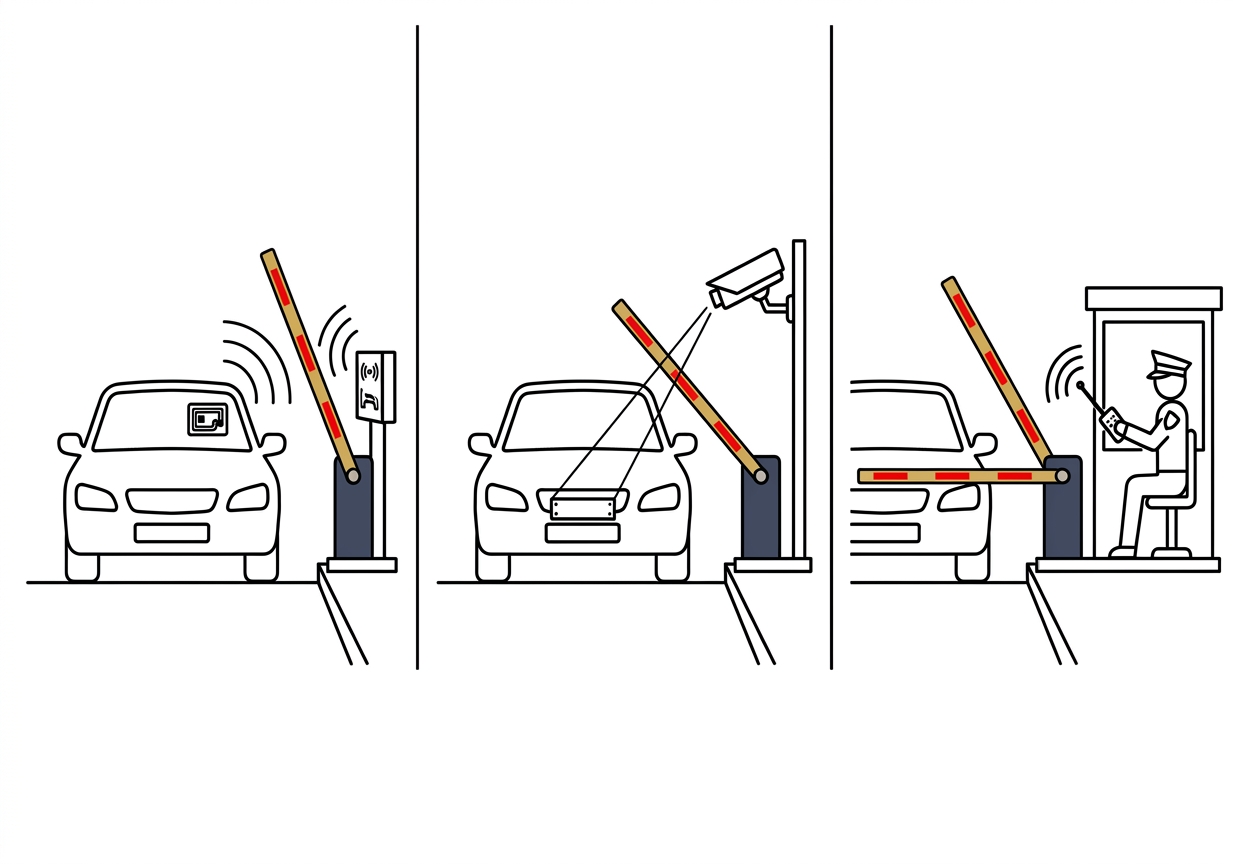
How RFID access works
- The driver approaches the controlled entrance.
- The RFID card or vehicle tag is presented to, or detected by, the reader.
- The reader sends the credential data to the access controller.
- The controller checks the credential against the authorised-user or vehicle database and the applicable access rules.
- If access is approved, the controller sends an opening command to the boom barrier.
- Safety devices and the barrier control logic manage the vehicle passage and closing sequence.
RFID is particularly useful when a site has a known group of regular users, such as residents, employees, permit holders or fleet vehicles. The operator can issue, suspend or replace credentials without relying on the registration plate as the primary identifier. The administration process must still include a clear method for reporting lost cards or tags and removing access when a user or vehicle is no longer authorised.
2. What Is an ANPR Parking System?
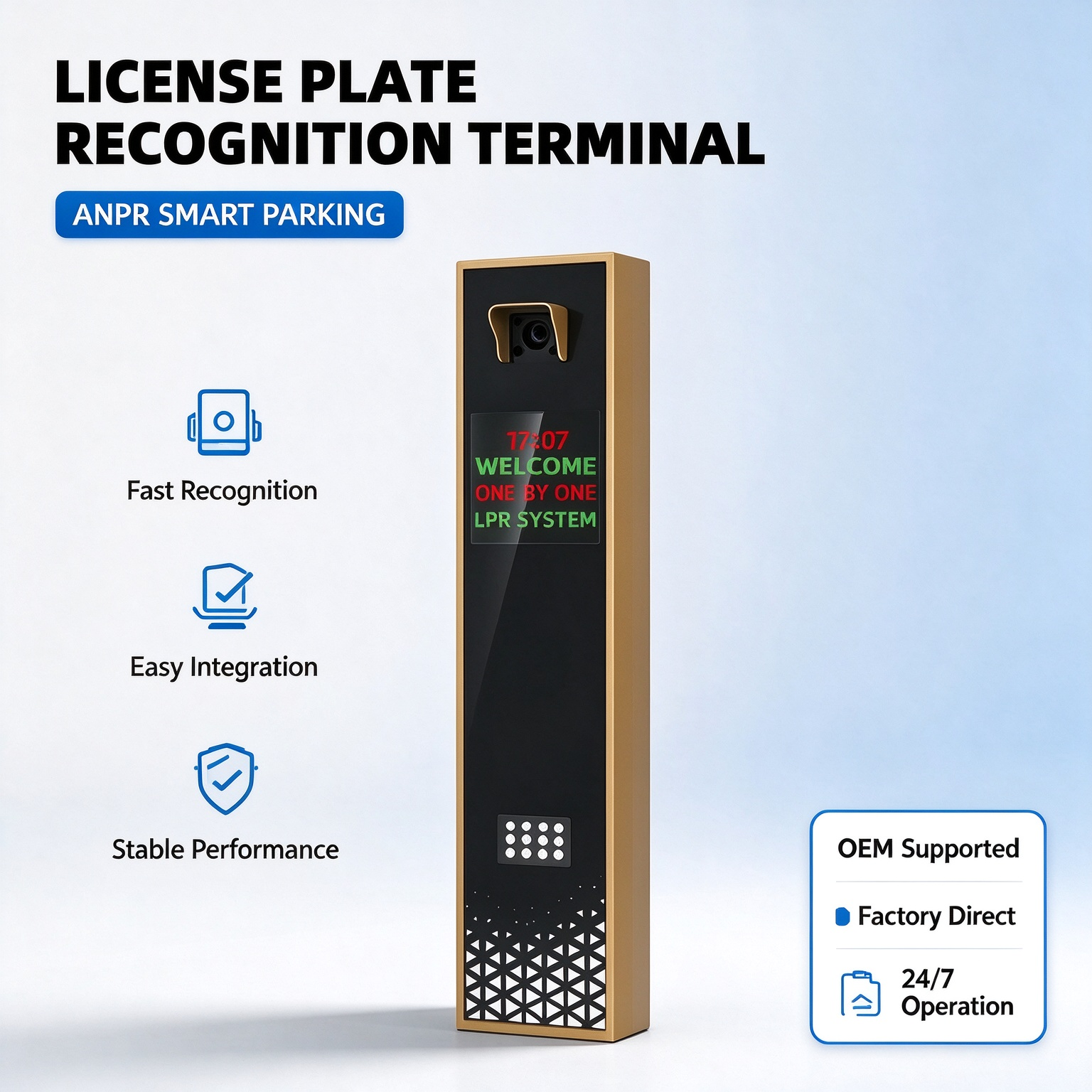
ANPR stands for Automatic Number Plate Recognition. It is also commonly described as licence plate recognition or LPR. An ANPR camera captures an image of a vehicle's registration plate, and recognition software analyses the image to convert the plate characters into data. The parking system can then compare the recognised registration with an approved list, a booking, a permit record or another access rule.
Unlike RFID, ANPR does not require the driver to present a separate card or tag at the reader. The vehicle registration plate acts as the visible identifier. When the plate is recognised and the relevant access rule is satisfied, the system can send an opening command to the connected boom barrier. This supports ticketless entry for suitable applications, provided the complete parking-management workflow has been configured.
How ANPR access works
- A vehicle approaches the entrance within the camera's configured capture area.
- The ANPR camera captures the registration plate.
- Recognition software processes the image and returns the plate number, subject to image quality and recognition conditions.
- The parking-management system checks the result against its permitted-vehicle list, booking or payment rules.
- If the vehicle meets the configured access conditions, the controller instructs the boom barrier to open.
- The system records the relevant event according to its configured logging and data-retention policy.
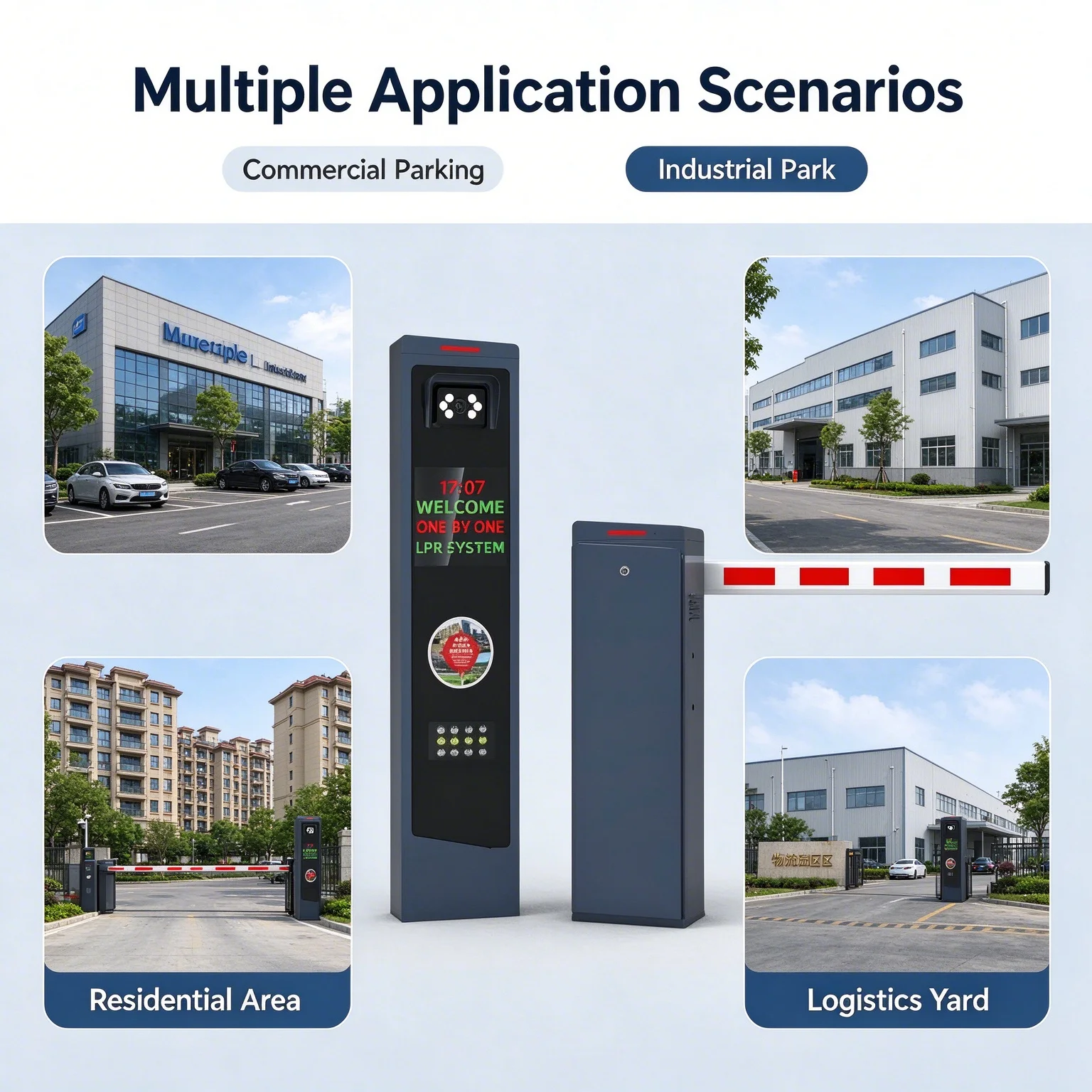
ANPR can be useful for public or semi-public car parks, visitor access, pre-booked parking, commercial sites and locations where operators want to reduce the need to issue physical credentials. It can also support a centralised view of vehicle movements across connected sites when the software and network architecture are designed for that purpose.
3. RFID vs ANPR: The Main Differences
The main difference is the identifier used to make an access decision. RFID checks a credential carried by the driver or fitted to the vehicle. ANPR reads the vehicle's registration plate. This difference affects the user experience, installation design, administration and the situations in which each technology is most practical.
| Comparison point | RFID parking system | ANPR parking system |
|---|
| Identification method | Radio-frequency card or tag | Camera-based plate recognition |
|---|
| Main identifier | Credential ID | Vehicle registration plate |
|---|
| Driver action | May present a card or carry a vehicle tag | Normally no separate card presentation |
|---|
| Vehicle changes | A credential can be reassigned or replaced under site rules | The vehicle registration record must be updated |
|---|
| Visitor handling | Temporary card or tag may be issued | Plate may be pre-registered or processed under a visitor workflow |
|---|
| Installation focus | Reader position, tag type, read range and controller | Camera position, lighting, plate capture angle, software and network |
|---|
| Typical strengths | Controlled groups and credential-based permissions | Convenient vehicle recognition and ticketless workflows |
|---|
| Typical limitations | Credentials can be lost, shared or forgotten | Recognition can be affected by image quality, plate condition and environment |
|---|
| Best fit | Residents, staff, permit holders and registered fleets | Visitor-heavy sites, ticketless parking and vehicle-list management |
|---|
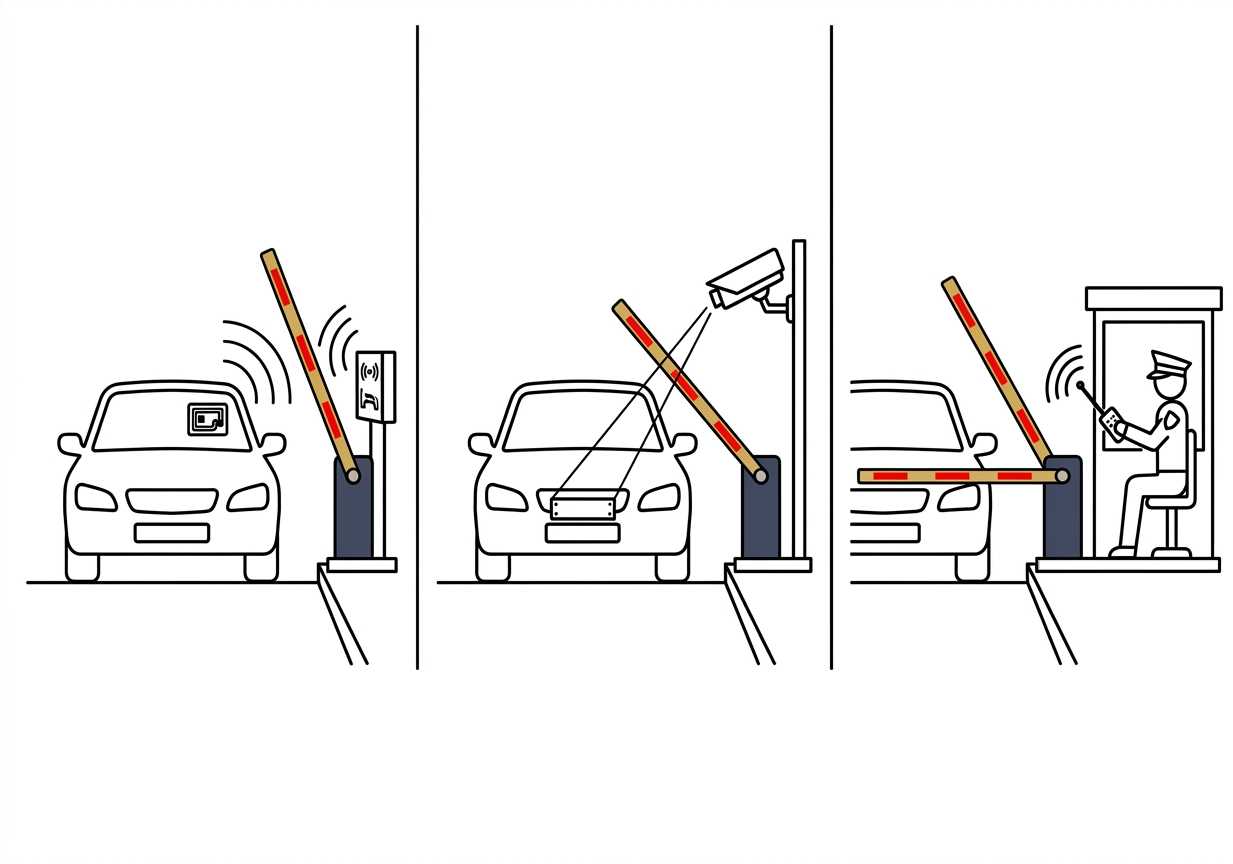
4. Advantages of RFID Parking Access Control
RFID provides a straightforward way to manage a defined group of authorised users. Each card or tag can have its own permissions, and credentials can be added, suspended or replaced through the access-management process. This can be convenient for residential developments, staff car parks, gated business premises and fleet entrances where the user population is relatively stable.
RFID can also be selected in different forms to suit the way vehicles approach the barrier. A short-range card reader may be suitable where drivers can safely stop beside a reader. A vehicle-mounted tag and compatible reader may be more appropriate where the design calls for hands-free identification. The actual read distance and operating conditions must be confirmed for the selected equipment.
However, RFID credentials need to be managed carefully. A card may be lost, lent to another person or left in a different vehicle. Vehicle-mounted tags can also be installed incorrectly or become damaged. Operators should establish credential ownership, issue and cancellation procedures, and a clear process for temporary access.
5. Advantages of ANPR Parking Access Control
ANPR can make vehicle access more convenient because the registration plate is already attached to the vehicle. For authorised users, the system can recognise a registered plate without requiring a separate card to be presented at the entrance. This can be valuable for visitor parking, pre-booked spaces, commercial car parks and sites seeking a ticketless entry process.
A connected ANPR parking-management platform can associate a plate with a booking, permit, payment status or access record. Depending on the software configuration, operators may be able to manage authorised vehicles centrally and review relevant entry events. BAROXON's Europe range includes LPR camera and parking-management solutions intended to work with automatic vehicle access control.
ANPR performance depends on more than the camera specification. The installation must provide a suitable capture angle, distance and field of view. Lighting, glare, rain, dirt, plate condition, vehicle speed and the local registration-plate format can all affect recognition. A site test using representative vehicles and actual entrance conditions is therefore important before the system is approved.
6. Which System Is Better for Different Car Park Applications?
There is no universal winner. The best option depends on how users arrive, how often visitors need access, whether vehicles are registered in advance and how the operator wants to administer permissions.
| Application | Practical starting point | Why |
|---|
| Residential car park | RFID or a hybrid system | Residents can be issued credentials; ANPR can simplify registered visitor access |
|---|
| Staff-only car park | RFID | Employee credentials are easy to assign and revoke |
|---|
| Public or visitor-heavy car park | ANPR, subject to the payment workflow | Plate recognition can reduce physical credential handling |
|---|
| Logistics or fleet entrance | RFID, ANPR or both | Fleet tags and plate records can support different operational checks |
|---|
| Multi-site commercial property | ANPR or a hybrid system | Centralised vehicle records may be useful across locations |
|---|
| Small private car park | RFID | A simple credential-based arrangement may be sufficient |
|---|
| Pre-booked parking | ANPR or a hybrid system | A booking can be associated with a vehicle registration |
|---|
These are starting points, not fixed rules. A residential site with frequent visitors may benefit from ANPR, while a public car park with repeat permit holders may still use RFID. The operator should map the entry and exit process, user categories, exception handling and payment requirements before choosing the technology.
7. Can RFID and ANPR Work Together?
Yes. RFID and ANPR can be combined in a hybrid parking access system when the controller, software and interfaces support the required configuration. For example, residents or employees may use RFID credentials, while visitors use pre-registered number plates. A logistics site may use a vehicle tag as the main credential and use plate recognition as an additional verification or audit input.
A hybrid system should have clearly defined decision rules. The project team must decide whether either credential can independently authorise access, whether both must match, and what should happen if one method fails or the two identifiers disagree. These rules should be tested before handover so that the barrier does not open simply because one device has produced an incomplete or unexpected result.
A practical hybrid layout may include an RFID reader, an ANPR camera, an access controller, parking-management software, a boom barrier and suitable vehicle-safety devices. The exact arrangement depends on lane geometry, vehicle approach direction, traffic volume, user categories and the selected equipment. Confirm all communication interfaces and operating sequences with the supplier before ordering.
8. The Role of the Boom Barrier and Safety Devices
RFID and ANPR identify a credential or vehicle; the boom barrier physically controls the lane. The barrier controller must receive a valid opening command from the access system and operate in accordance with the configured safety logic. The barrier arm, cabinet position, lane width, opening time and duty rating should be selected for the actual site rather than inferred from the identification technology.
Safety equipment is a separate but essential part of the design. Depending on the site and selected configuration, this may include vehicle loop detectors, photoelectric sensors, radar detection, anti-collision functions or other compatible devices. The installer should confirm which devices are included, how they connect to the barrier controller and how the system behaves if a sensor is obstructed or fails.
An access approval must never replace safe vehicle detection. The system still needs to manage the barrier arm safely while a vehicle is passing through the lane. Emergency operation, manual release, power-loss behaviour and maintenance access should also be covered in the installation and handover documentation.
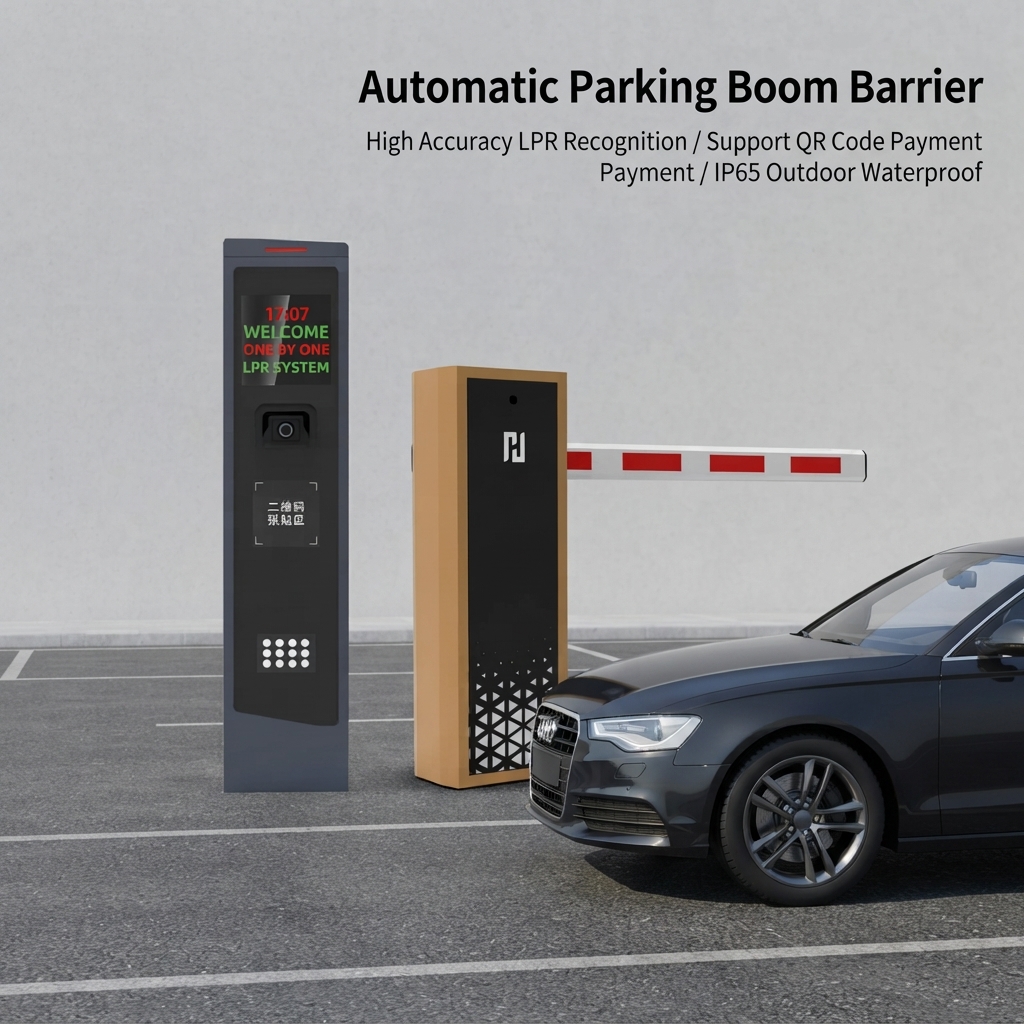
9. Data Protection and Privacy Considerations in Europe
RFID records and ANPR records may both relate to identifiable individuals when they are linked to a resident, employee, visitor or vehicle owner. ANPR systems can collect registration-plate images and associated time and location data. Before deployment, the car park operator should establish an appropriate lawful basis, provide clear information to users, restrict access to records and define how long data is retained.
For projects in the European Economic Area and other jurisdictions with applicable privacy laws, the operator should assess the relevant requirements before collecting or processing vehicle data. Depending on the deployment, this may include signage, a privacy notice, data minimisation, retention controls, security measures and a process for handling data-subject requests. Obtain advice from a qualified privacy professional where required; this article is technical guidance, not legal advice.
10. How to Choose Between RFID and ANPR
Before selecting a parking access system, work through the following questions:
- Who uses the car park? Separate residents, employees, visitors, contractors, delivery drivers and fleet vehicles.
- Are vehicles known in advance? A stable user list may suit RFID; frequently changing visitors may favour an ANPR-based workflow.
- Does the driver need hands-free access? Consider the appropriate RFID reader and tag arrangement, or camera-based recognition.
- How will visitors be authorised? Define pre-registration, temporary credentials, intercom approval or another visitor process.
- Is payment involved? Confirm how the access system connects to the tariff, booking and payment workflow.
- What are the site conditions? Check lighting, weather exposure, approach angle, lane width, stopping position and available mounting points.
- What happens when identification fails? Plan a staffed override, intercom, help point or controlled exception process.
- What records are required? Define operational reporting, access logs, privacy controls and retention periods.
Do not compare systems on the purchase price of a reader or camera alone. Consider the complete cost of the installation, including the barrier, controller, access software, credentials, network connection, civil works, commissioning, training, maintenance and any recurring software or support charges. The lower-cost device may not deliver the simplest or most economical operating process over the life of the car park.
11. BAROXON Europe RFID and ANPR Barrier Options
BAROXON Europe's published range includes automatic RFID boom barrier products and ALPR/LPR car plate systems. Its product pages also describe automatic vehicle barrier configurations that can support different access credentials, including RFID and ANPR integration. This allows a project to be specified around the site's access policy and traffic requirements.
For RFID-led projects, review the Automatic RFID Boom Barrier range and confirm the reader type, credential format, read range, controller compatibility and the number of users or vehicles to be managed. For ANPR-led projects, review the ALPR/LPR Car Plate System and the automatic parking-management software with LPR camera options. Confirm supported plate formats, camera placement, recognition conditions, database functions and the required connection to the barrier controller.
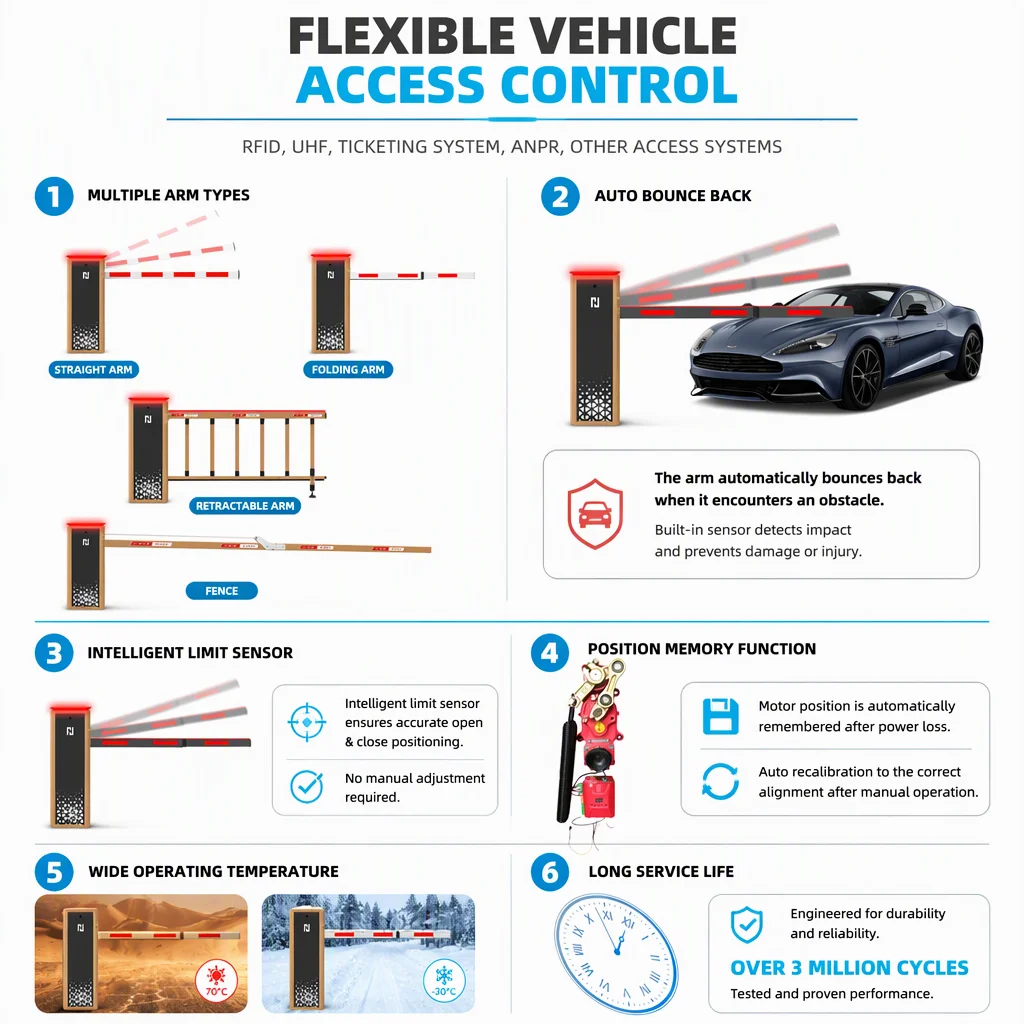
The barrier itself should be selected separately according to lane width, arm type, traffic frequency, installation environment and safety requirements. BAROXON's range includes boom barrier and high-speed barrier categories, but motor type, opening time, duty rating, arm length, protection rating, interfaces and safety functions are model- and configuration-dependent. Request the current datasheet and a written configuration proposal for the exact project.
12. Frequently Asked Questions
Is RFID better than ANPR for a residential car park?
RFID is often a practical option where residents and staff form a stable group of authorised users. ANPR may be useful where the site receives frequent visitors or wants to associate access with registered number plates. A hybrid system can support both groups, provided the software and controller are configured for the required rules.
Does ANPR work without an RFID card?
Yes. An ANPR-based workflow can identify a vehicle by its registration plate without requiring an RFID card, provided the plate is recognised and the parking system confirms that the vehicle meets the configured access conditions. The site should still have an exception procedure for unreadable plates, unregistered vehicles and other failed transactions.
Can an existing boom barrier be upgraded to RFID or ANPR?
Possibly. The existing barrier may be reusable if its controller, input terminals, safety devices and operating logic are compatible with the proposed access system. A qualified installer should inspect the barrier model, control board, wiring and safety arrangement before confirming an upgrade. Do not assume that every older barrier supports every reader or camera interface.
Can RFID and ANPR control the same boom barrier?
Yes, if the access controller and software support both inputs and the decision rules are configured correctly. The project specification should explain whether the credentials work independently or must be cross-checked, and define the response to communication failure or conflicting results.
Is ANPR always more secure than RFID?
No. Security depends on the complete system, including credential or plate enrolment, access rules, database protection, network security, anti-passback or anti-tailgating measures where required, operator procedures and audit controls. ANPR and RFID address different identification needs; neither should be described as automatically more secure in every application.
Does ANPR recognise every European registration plate?
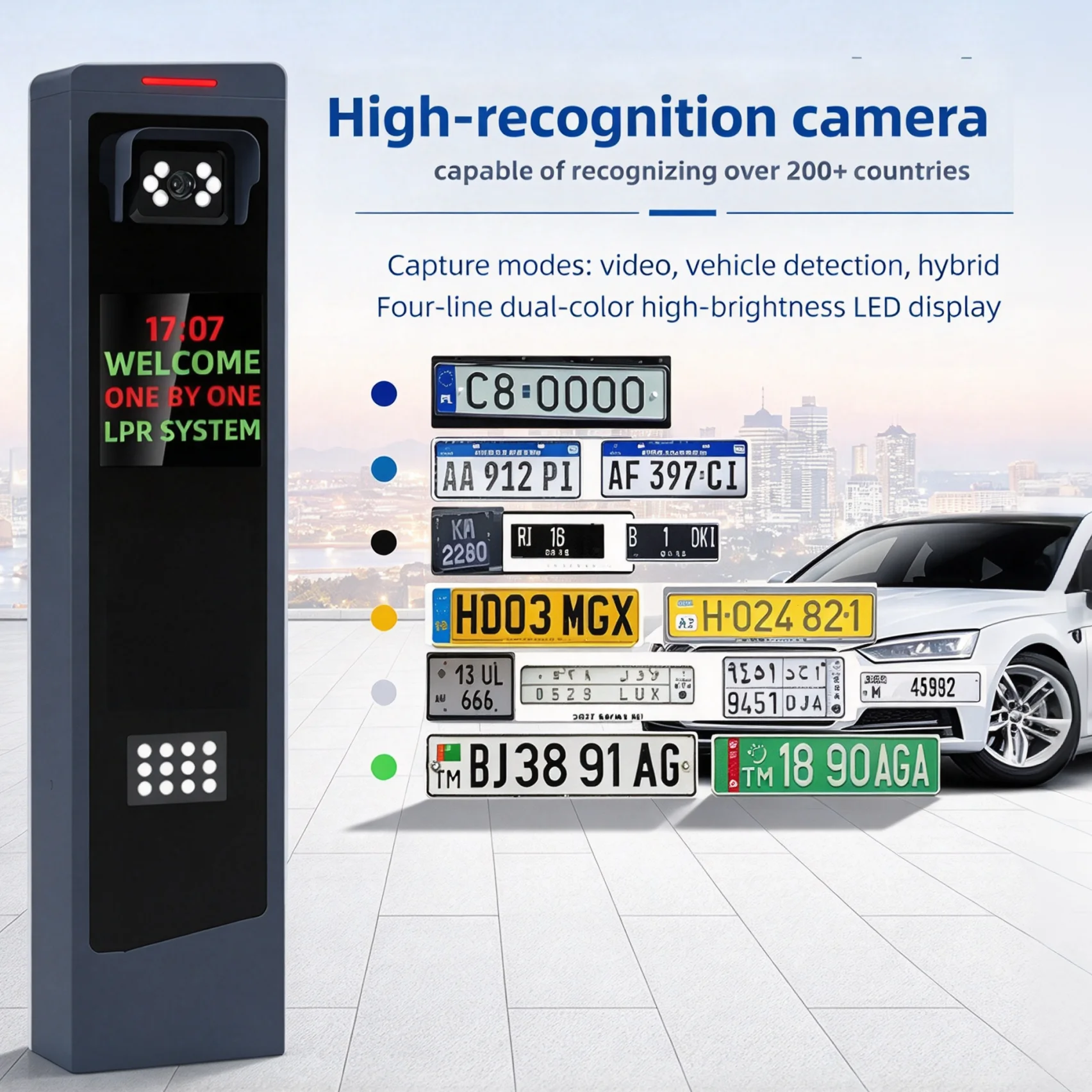
Recognition capability depends on the camera, software, supported country formats, installation geometry and operating conditions. Europe has multiple national registration-plate formats. Before procurement, confirm that the selected system supports the countries and plate types expected at the site, and conduct a representative on-site test.
Conclusion: Choose the Identification Method Around the Site
RFID and ANPR both provide effective ways to identify vehicles for automatic parking access, but they solve different operational problems. RFID is based on a card or vehicle tag and is often suitable for controlled groups of regular users. ANPR reads the registration plate and can simplify visitor, booking and ticketless parking workflows. A hybrid arrangement can bring both methods together where the access policy requires it.
For a BAROXON Europe project, begin with the site layout, vehicle categories, expected traffic, visitor process, privacy requirements and existing equipment. Then confirm the appropriate RFID or ANPR components, barrier model, controller interfaces and safety devices as one complete system. Request the exact datasheets, drawings and written quotation before final selection, because technical specifications vary between models and configurations.
For current datasheets, model configuration and project support, see the BAROXON Europe parking barrier and access control range.
Frequently Asked Questions
Is RFID better than ANPR for a residential car park?
RFID is often a practical option where residents and staff form a stable group of authorised users. ANPR may be useful where the site receives frequent visitors or wants to associate access with registered number plates. A hybrid system can support both groups, provided the software and controller are configured for the required rules.
Does ANPR work without an RFID card?
Yes. An ANPR-based workflow can identify a vehicle by its registration plate without requiring an RFID card, provided the plate is recognised and the parking system confirms that the vehicle meets the configured access conditions. The site should still have an exception procedure for unreadable plates, unregistered vehicles and other failed transactions.
Can an existing boom barrier be upgraded to RFID or ANPR?
Possibly. The existing barrier may be reusable if its controller, input terminals, safety devices and operating logic are compatible with the proposed access system. A qualified installer should inspect the barrier model, control board, wiring and safety arrangement before confirming an upgrade. Do not assume that every older barrier supports every reader or camera interface.
Can RFID and ANPR control the same boom barrier?
Yes, if the access controller and software support both inputs and the decision rules are configured correctly. The project specification should explain whether the credentials work independently or must be cross-checked, and define the response to communication failure or conflicting results.
Is ANPR always more secure than RFID?
No. Security depends on the complete system, including credential or plate enrolment, access rules, database protection, network security, anti-passback or anti-tailgating measures where required, operator procedures and audit controls. ANPR and RFID address different identification needs; neither should be described as automatically more secure in every application.
Does ANPR recognise every European registration plate?
Recognition capability depends on the camera, software, supported country formats, installation geometry and operating conditions. Europe has multiple national registration-plate formats. Before procurement, confirm that the selected system supports the countries and plate types expected at the site, and conduct a representative on-site test.
Latest News
Baroxon® | Leading Boom Barrier Manufacturer
Advanced Security Access Control and Intelligent Parking Solutions.
Company Strength
Adequate Inventory
Fast Shipping
Our Products
CONTACT US
Address: No. 2 Wanshou Road, International Innovation Industrial Park, Jinan, Shandong, China






© COPYRIGHT 2025 Baroxon® | Leading Boom Barrier Manufacturer
Point your camera here to open WhatsApp chat
Scan with WeChat to add our engineer
Chat with us directly
Scan the QR code with your phone to start a WhatsApp or WeChat conversation with the Baroxon Europe export team — quotations, drawings and lead times answered by engineers, not bots.

Contact Us
Professional Manufacturer of Vehicle Barriers & License Plate Recognition Cameras,Smart Parking Access Control Solutions for Global Clients,Reliable Barrier Gates + LPR Systems, Customized to Your Project,From residential communities, commercial shopping malls, industrial parks to highway toll stations, our matched barrier & LPR sets can realize automatic license plate identification, automatic gate lifting, real-time access records, automatic charging and remote management.