
How to Choose the Right Automatic Parking Barrier for Your Site
Release time:
2026-11-05
Conclusion: choose an automatic parking barrier from measured site conditions, not from the fastest quoted opening time. Lane width, headroom, daily cycles, arm type, authorisation method, safety devices, protection rating and service support must be checked together against the exact model datasheet before a quotation is accepted.
Choosing an automatic parking barrier is not simply a matter of selecting a motor or the fastest opening time. The right system must suit the entrance layout, available headroom, vehicle flow, access-control method, safety requirements and local operating conditions. A barrier that works well at a quiet residential entrance may not be suitable for a busy retail car park or logistics facility.
This guide explains the main points to assess before specifying an automatic boom barrier. It also outlines the straight-arm, folding-arm and fence-arm options available in the BAROXON Europe product range, together with practical questions to raise with your supplier.
1. Start with the entrance layout and lane width
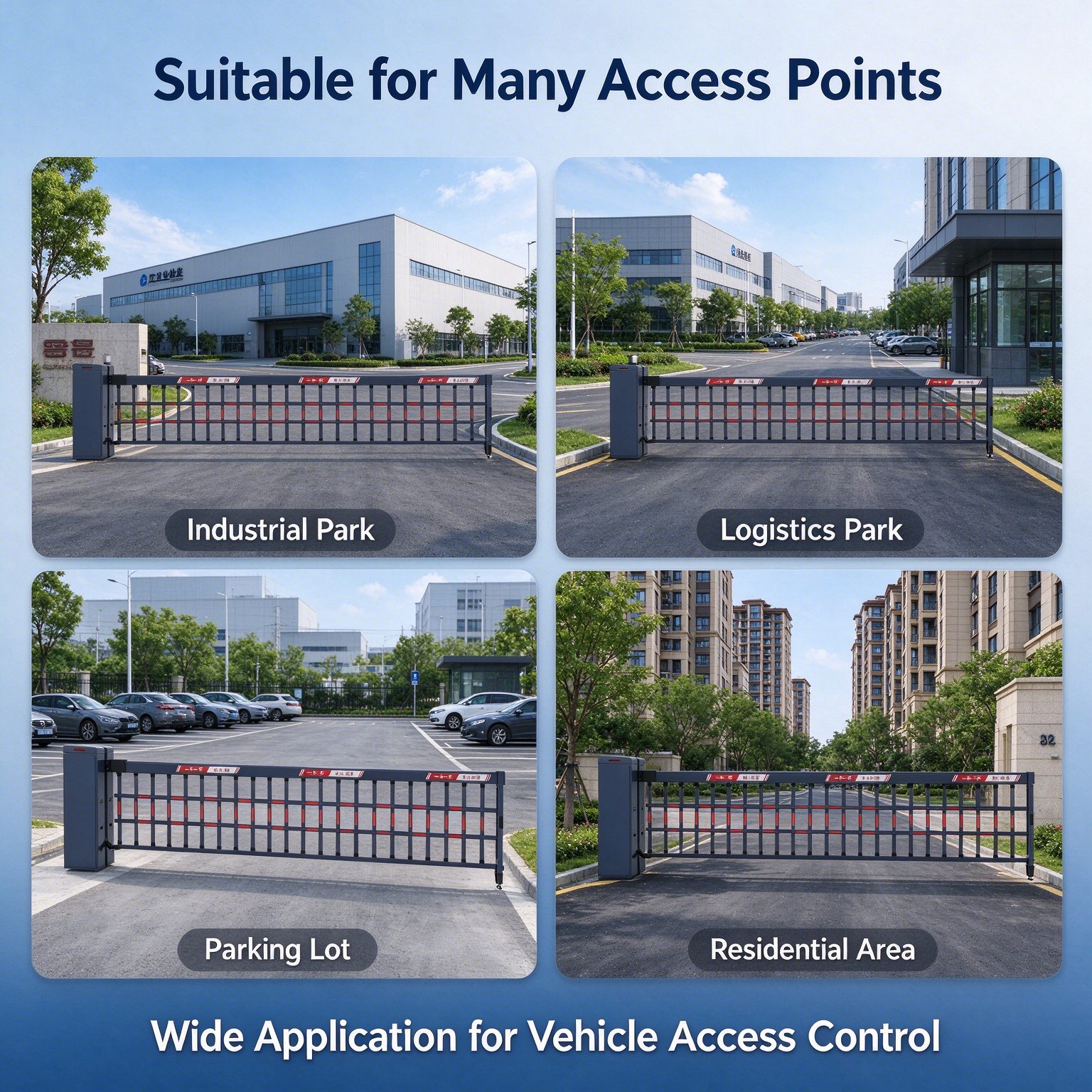
The first step is to measure the entrance accurately. Record the clear lane width, the position available for the barrier cabinet, the required boom length and the distance between the arm and nearby walls, kerbs, columns or other equipment. Check whether vehicles approach straight on or at an angle, and whether the entrance is shared by cars, vans and larger vehicles.
A boom arm that is too short may leave an avoidable gap, while an unnecessarily long arm can increase mechanical load and affect the choice of operator. Do not estimate the span by eye. Ask the supplier to confirm the suitable arm length and support arrangement for the measured lane.
2. Choose the right boom arm configuration
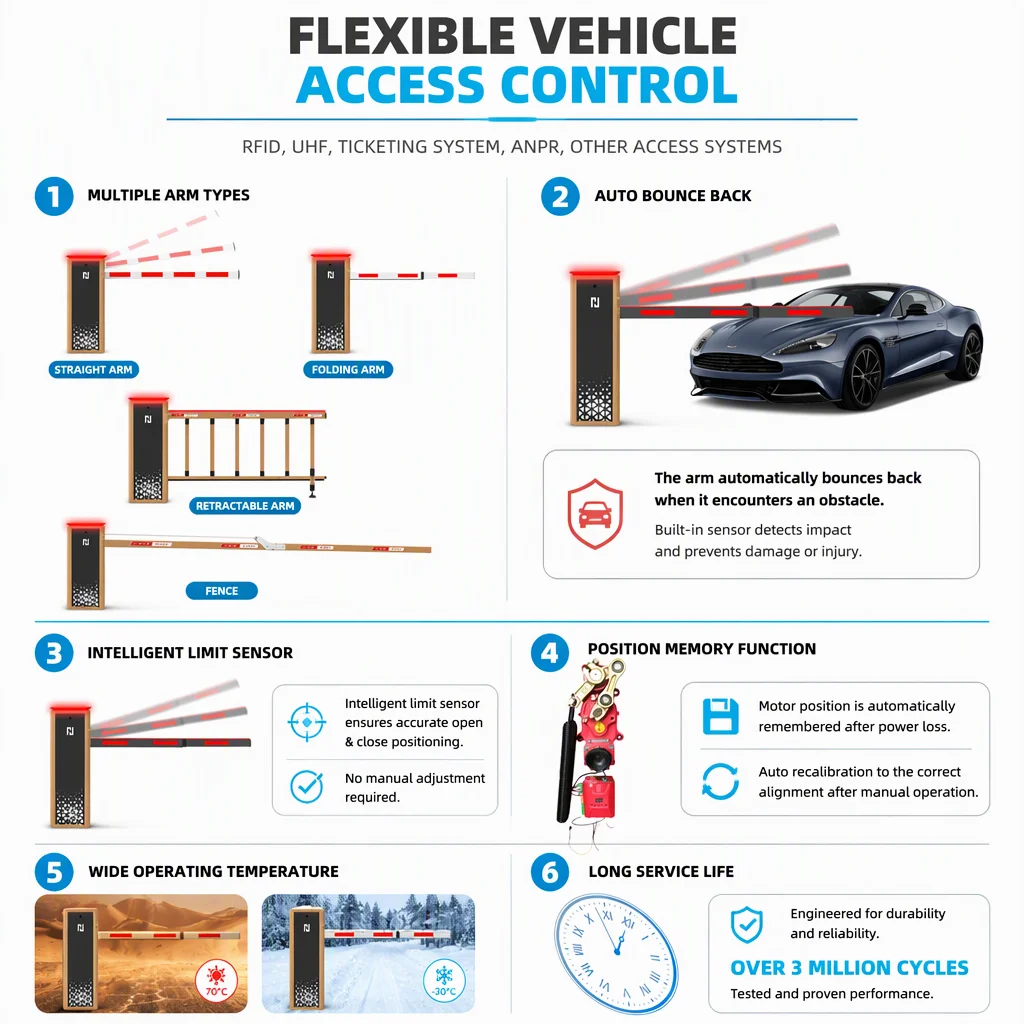
The arm design should match the physical conditions and the level of vehicle restriction required at the entrance. BAROXON Europe lists straight, folding and fence-style boom arm configurations, with arm lengths and operating parameters depending on the selected model.
Straight-arm barrier
A straight-arm barrier is a common choice for standard car park entrances where there is sufficient vertical clearance for the arm to rise. It is suitable for many residential, office, commercial and industrial vehicle lanes. Confirm the required arm span, cabinet position and vehicle detection arrangement before ordering.
Folding-arm barrier
A folding-arm barrier is worth considering where a ceiling, beam, pipework or other overhead obstruction limits the available opening height. It is often considered for underground car parks and covered entrances. Measure the complete movement envelope, not just the static ceiling height, to make sure the arm can open and close without striking nearby structures.
Fence-arm barrier
A fence-arm barrier uses a multi-rail arm to create a more visually substantial vehicle-control line. It may be appropriate for selected entrances where a more defined barrier profile is required. Check the lane width, wind exposure, arm support and the manufacturer's permitted configuration for the exact model.
High-speed or heavy-duty barrier
A high-speed or heavy-duty configuration may be appropriate for entrances with frequent vehicle movements, such as commercial car parks, toll lanes and logistics sites. Do not select it on speed alone. Confirm the rated duty cycle, arm length, motor type, controller settings, vehicle detection and maintenance plan for the expected workload.
3. Estimate daily traffic and peak-hour demand
Estimate the number of vehicle movements during a normal day and during the busiest periods. Include both entry and exit movements, delivery vehicles, visitors and any seasonal peaks. A barrier serving a small residents' car park has a different workload from one controlling several lanes at a shopping centre or distribution site.
BAROXON Europe product information includes configurations described for continuous operation and up to 5,000 cycles per day, while published cycle-life options vary by product. Treat these figures as model-specific selection data, not a guarantee that every barrier is suitable for every high-traffic site. Request the current datasheet and clarify how the duty-cycle rating is defined.
4. Select an opening speed that suits the traffic flow
A faster opening time can help reduce waiting at a busy entrance, but it is only one part of the system's performance. The barrier must also detect vehicles reliably, receive access authorisation promptly and complete each movement safely. A fast barrier connected to a slow or poorly configured access-control system may not improve the overall queue.
BAROXON Europe product pages describe adjustable opening and closing speed options, including configurations listed at 0.6 seconds, 0.9 seconds and adjustable ranges from 1.5 to 6 seconds. These are product-page specifications and must be checked against the exact arm length, model, installation and operating conditions. Ask the supplier to recommend a speed setting that balances throughput, mechanical loading and safe vehicle movement.
5. Decide how drivers will be authorised
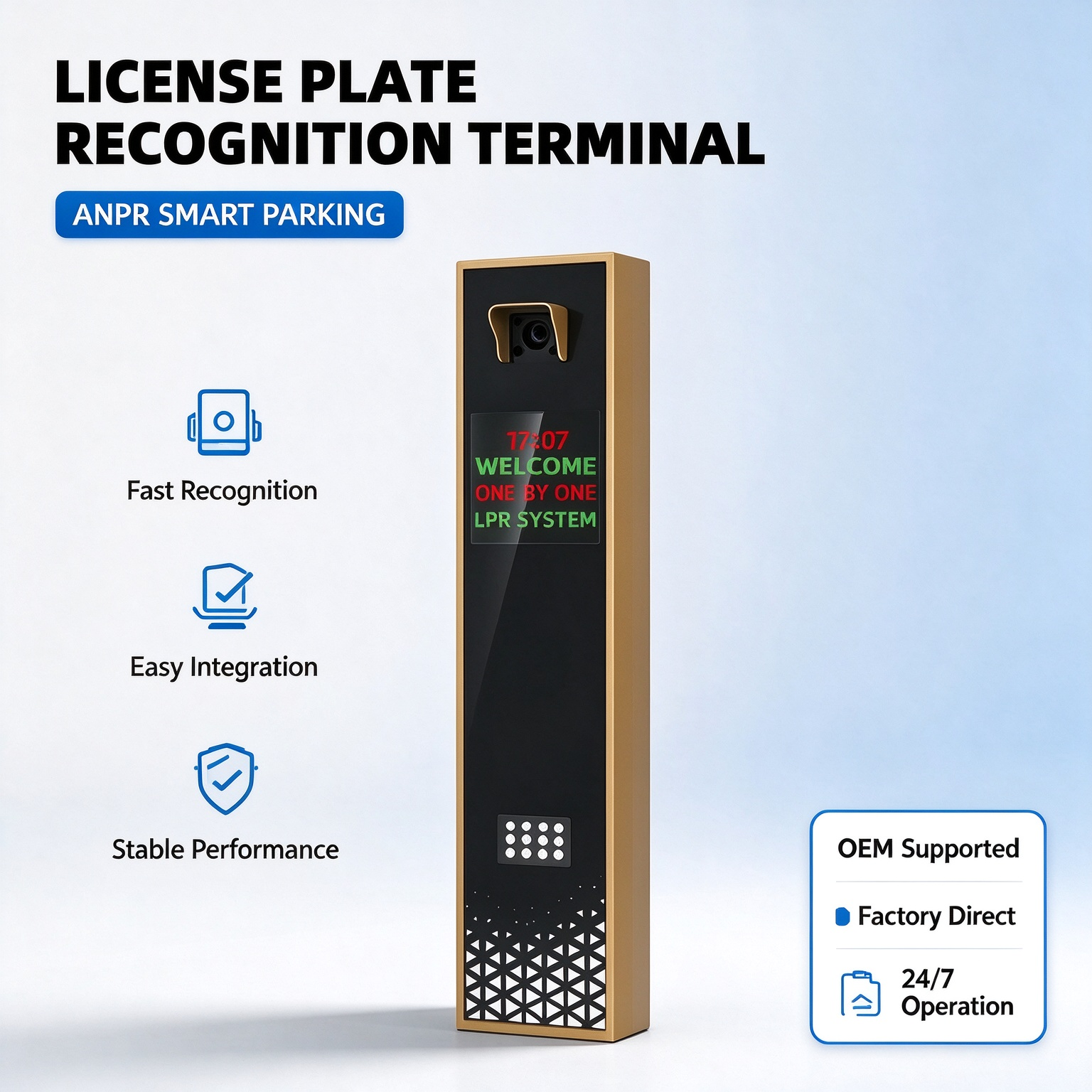
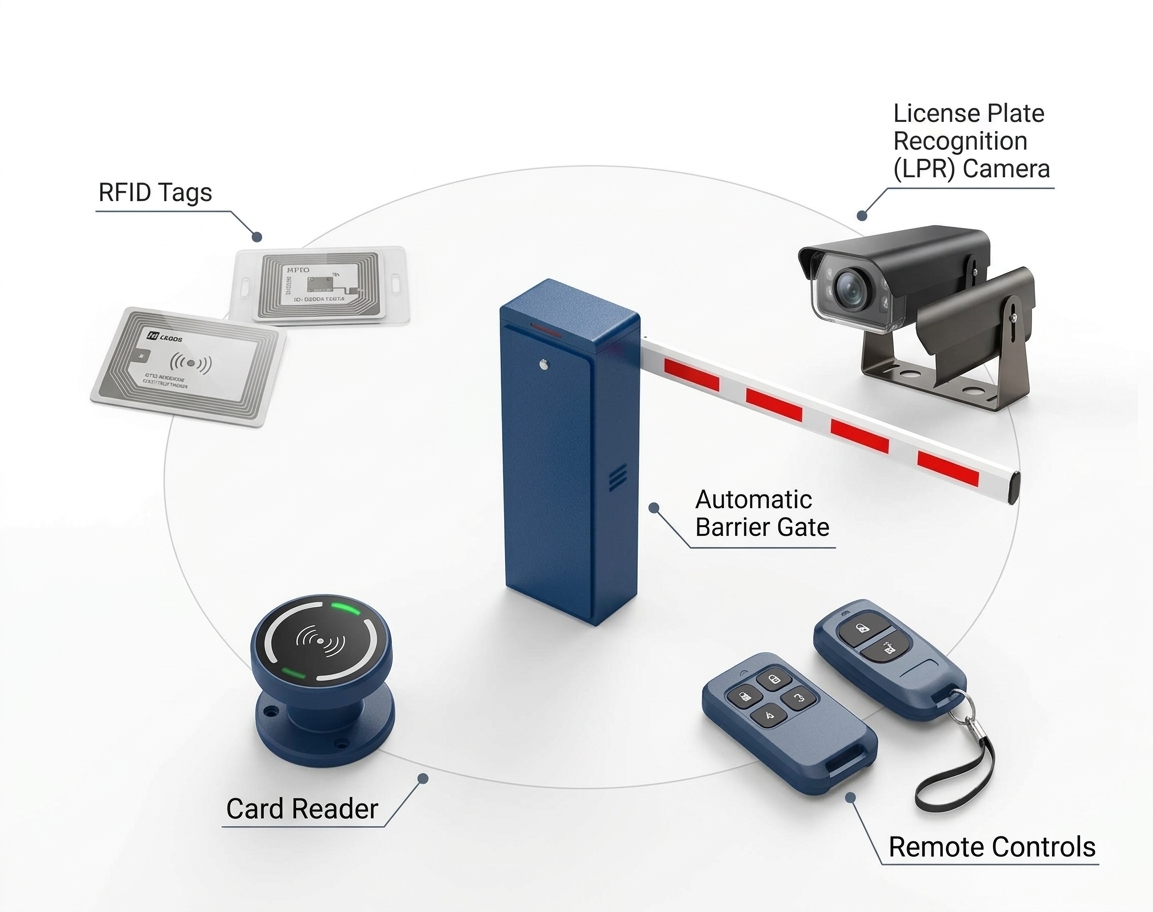
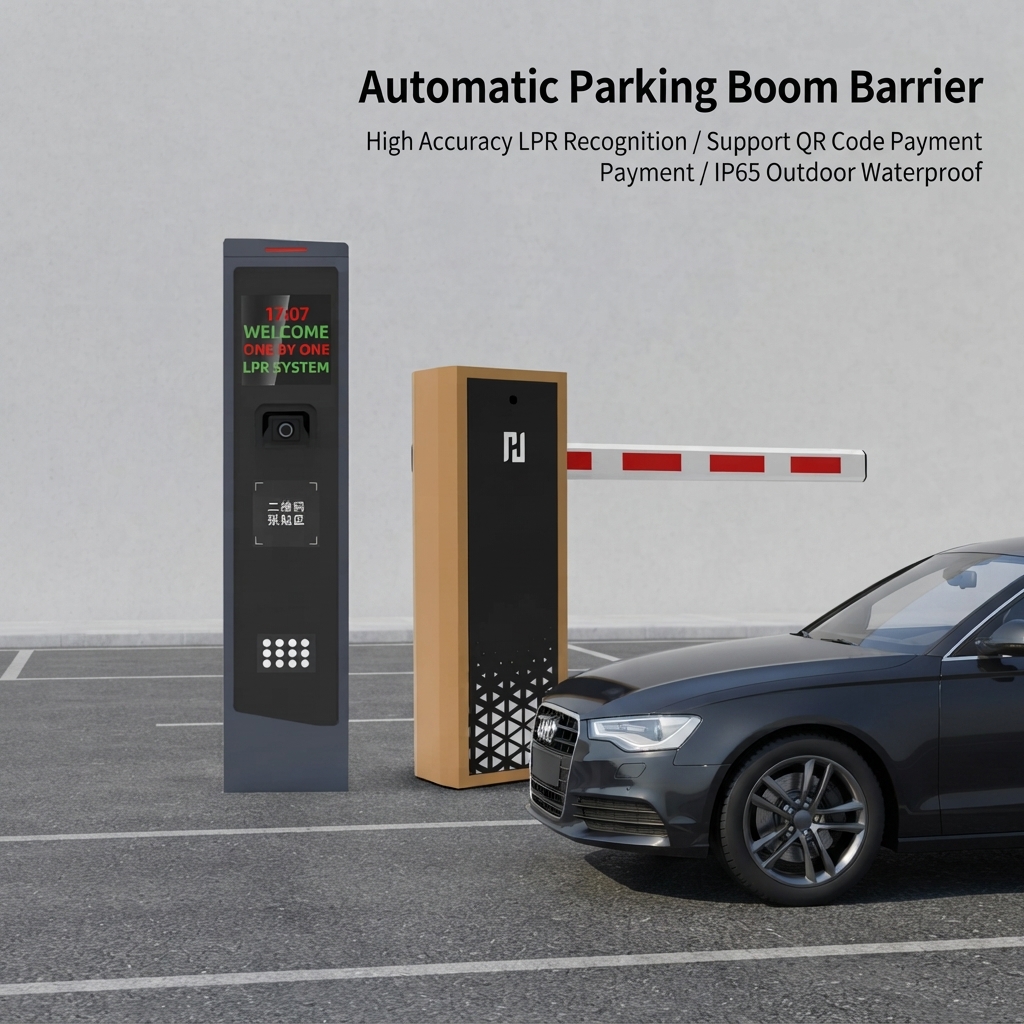
The access-control method should reflect how the site is used. A residential development may use access cards, RFID credentials or remote controls. A staffed car park may rely on ticketing and operator approval. A commercial or logistics entrance may require a combination of RFID, keypad access, mobile credentials and ANPR/LPR number plate recognition.
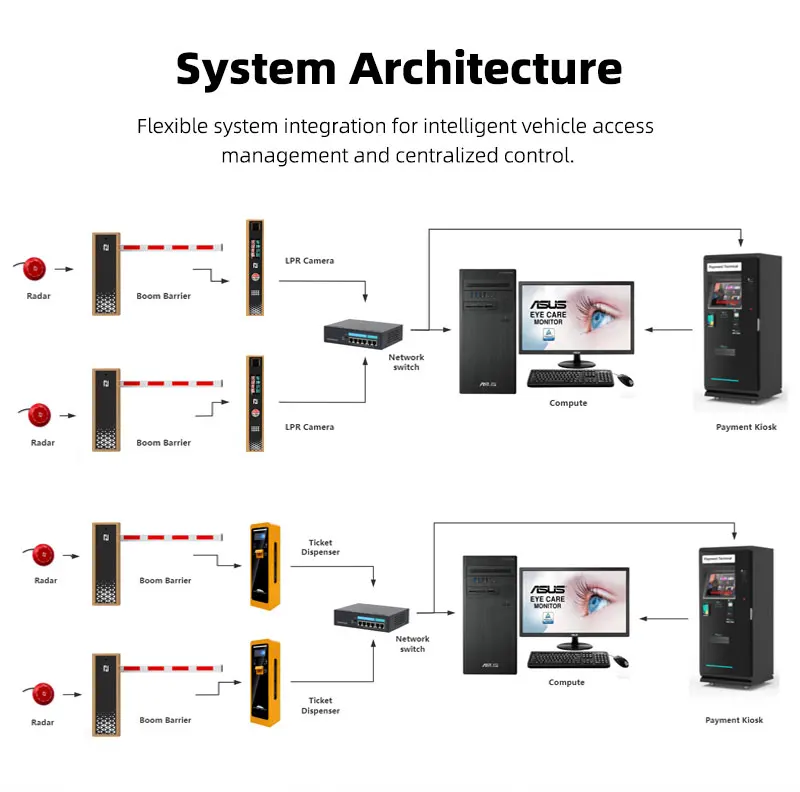
Before choosing an integrated system, confirm that the barrier controller, reader, camera, parking software and payment equipment can exchange the required signals and data. Ask which interfaces are available, who is responsible for integration and how the system behaves if the network or recognition service becomes unavailable.
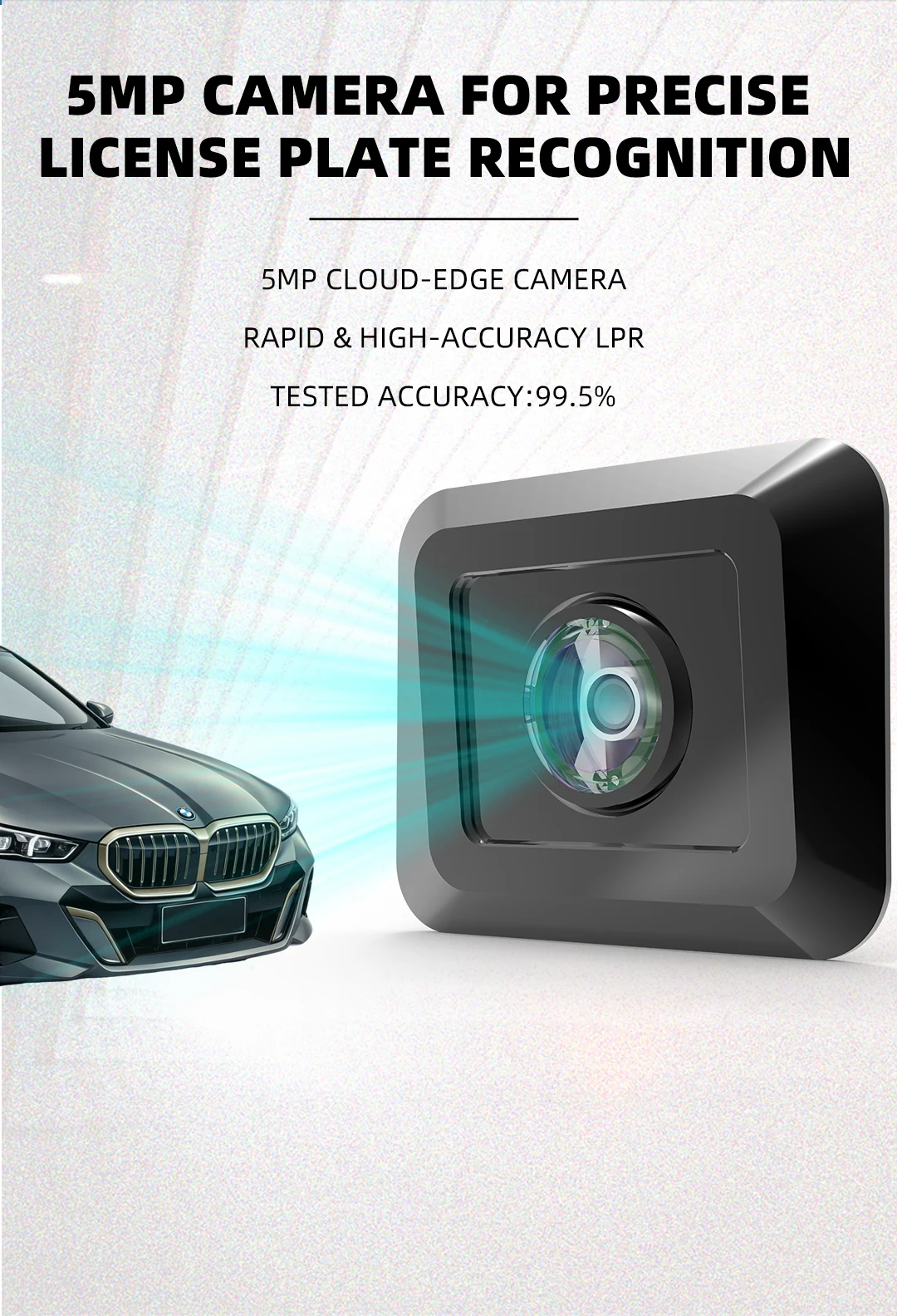
For ANPR/LPR projects, consider camera position, lighting, plate visibility, vehicle approach speed, network reliability and local data-protection obligations. In Europe, operators should assess the applicable privacy and data-protection rules for the country and use case, including appropriate notices, access controls and retention policies where required.
6. Check safety devices and emergency operation
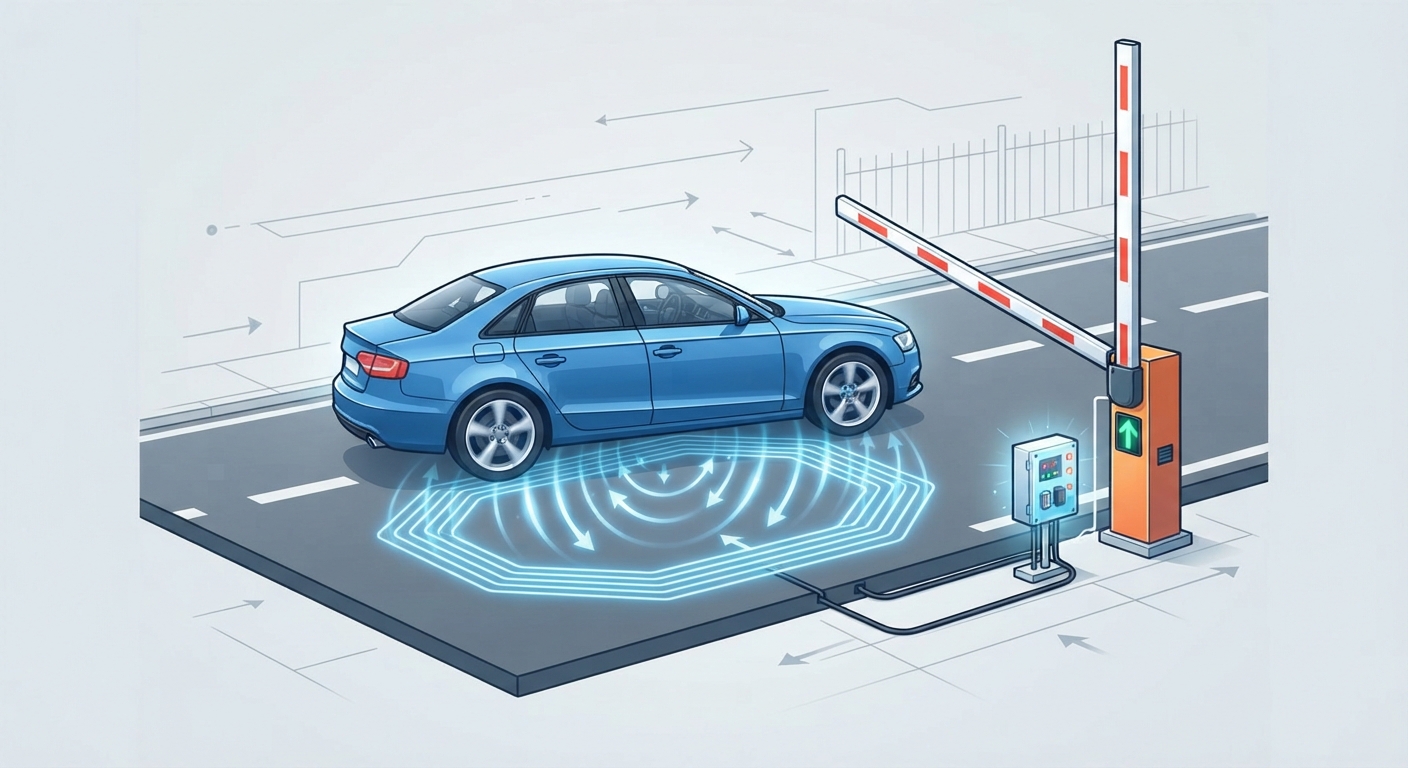
A parking barrier is a moving mechanical system operating around vehicles and people. The project specification should address vehicle detection and the prevention of unintended arm movement. Depending on the site design, this may involve inductive loop detectors, radar, photoelectric sensors, anti-collision or auto-reverse functions and suitable traffic-light signalling.
Ask the supplier to explain the safety logic, the position of each detector, the response when a vehicle stops beneath the arm and the procedure for manual release during a power failure. The final design, installation and commissioning should be reviewed by qualified professionals against the applicable requirements in the country where the equipment will operate.
7. Match the barrier to the environment
An outdoor barrier may be exposed to rain, dust, temperature changes, wind and corrosive conditions. An underground or covered installation may have limited headroom, restricted access for maintenance or different ventilation conditions. Check the exact model's ingress protection rating, cabinet finish, operating temperature range and installation requirements rather than assuming that all models share the same environmental rating.
BAROXON Europe product listings show protection-class options such as IP54, IP65 and IP66 across product information. The rating must be verified for the exact model and configuration being quoted. Also ask about the foundation, drainage, cable routing, power supply and access needed for routine servicing.
8. Consider maintenance, service access and total cost
The purchase price is only one part of the long-term cost. Consider the expected number of operating cycles, routine inspection intervals, availability of replacement parts, ease of access to the motor and controller, warranty terms and the supplier's technical support. A modular design may make certain maintenance tasks easier, but the actual service procedure should be confirmed for the selected model.
Ask for a written quotation that separates the barrier, boom arm, support post, safety devices, access-control equipment, installation, commissioning and any software or integration charges. This makes it easier to compare proposals on a like-for-like basis and reduces the risk of overlooking essential components.
9. Check electrical, conformity and project documentation
For a European installation, confirm the supply voltage and frequency required by the exact model and the electrical arrangements at the site. Request the current technical datasheet, installation instructions, wiring diagrams, operating manual and applicable conformity documentation. Do not rely on a general website statement as proof that every model or customised configuration meets every requirement in every European country.
If the barrier is part of a larger parking system, agree who will supply, install, connect and commission each component. Clear responsibility for civil works, power, network connections, safety devices and software integration helps prevent delays during handover.
10. A practical checklist before requesting a quotation
Prepare the following information before contacting a supplier. Accurate site details help the supplier recommend a suitable configuration and provide a more meaningful quotation.
- Site type and country: residential, commercial, industrial, retail, logistics or public facility.
- Clear lane width and required boom length.
- Indoor, outdoor, underground or covered installation.
- Available headroom and nearby obstacles.
- Estimated daily vehicle movements and peak-hour traffic.
- Preferred arm type: straight, folding or fence.
- Access method: remote control, RFID, keypad, ticketing or ANPR/LPR.
- Required safety devices and emergency release arrangement.
- Power supply, network availability and third-party interfaces.
- Maintenance access, service expectations and project schedule.
BAROXON automatic parking barrier options for European projects
The BAROXON Europe website presents automatic boom barriers and vehicle access-control products for residential, commercial, industrial and parking applications. The listed configurations include straight, folding and fence arms, adjustable operating speeds, DC brushless motor options, RFID and other access credentials, and integration options involving ANPR/LPR systems. Product specifications vary by model, so the final selection should be based on the current datasheet and a review of the actual site.
For a folding-arm application, review the BAROXON articulated boom barrier. For indoor or outdoor drop-arm applications, see the drop-arm barrier gate. For a broader commercial installation, review the commercial barrier gate system. Where number plate recognition is required, assess the vehicle access control barrier with LPR camera technology alongside the barrier controller and site software.
Frequently asked questions
What is the most important factor when choosing an automatic parking barrier?
There is no single factor for every site. Lane width, headroom, traffic volume, duty cycle, access-control requirements and safety arrangements should be considered together. The best choice is the configuration that meets the site's actual operating conditions.
Is a straight-arm or folding-arm barrier better?
A straight arm is generally suitable where there is enough vertical clearance. A folding arm may be more suitable where overhead structures restrict the opening height. Measure the available space and the full arm movement before deciding.
What boom length do I need?
The required boom length depends on the clear lane width, cabinet position, arm support arrangement and any required clearance. Provide measured drawings or site photographs to the supplier rather than relying on an estimate.
Is a high-speed barrier always the best option for a busy car park?
Not necessarily. A high-speed barrier may help at a busy entrance, but the complete system must also process authorisation and detect vehicles reliably. Confirm that the model is rated for the expected operating frequency and that the access-control system will not become the bottleneck.
Can an automatic parking barrier work with RFID or ANPR/LPR?
Yes, when the barrier controller, reader or camera, management software and access rules are compatible and properly commissioned. Confirm the required interfaces and local data-protection responsibilities before deployment.
What should I ask the supplier before placing an order?
Ask for the exact model datasheet, permitted arm lengths, duty-cycle rating, speed settings, protection rating, safety-device compatibility, electrical requirements, installation instructions, warranty terms, spare-parts arrangements and applicable conformity documents.
Conclusion
Choosing the right automatic parking barrier starts with the site, not the product brochure. Measure the lane, check the available headroom, estimate traffic demand, select the appropriate arm configuration and define the access-control and safety requirements. Then compare the exact model specifications, installation needs, maintenance arrangements and supporting documentation.
For a BAROXON Europe project, share the entrance measurements, site type, expected vehicle movements and preferred access method when requesting a recommendation. A properly specified barrier system can support more orderly vehicle access and more dependable day-to-day operation when it is correctly installed, integrated and maintained.
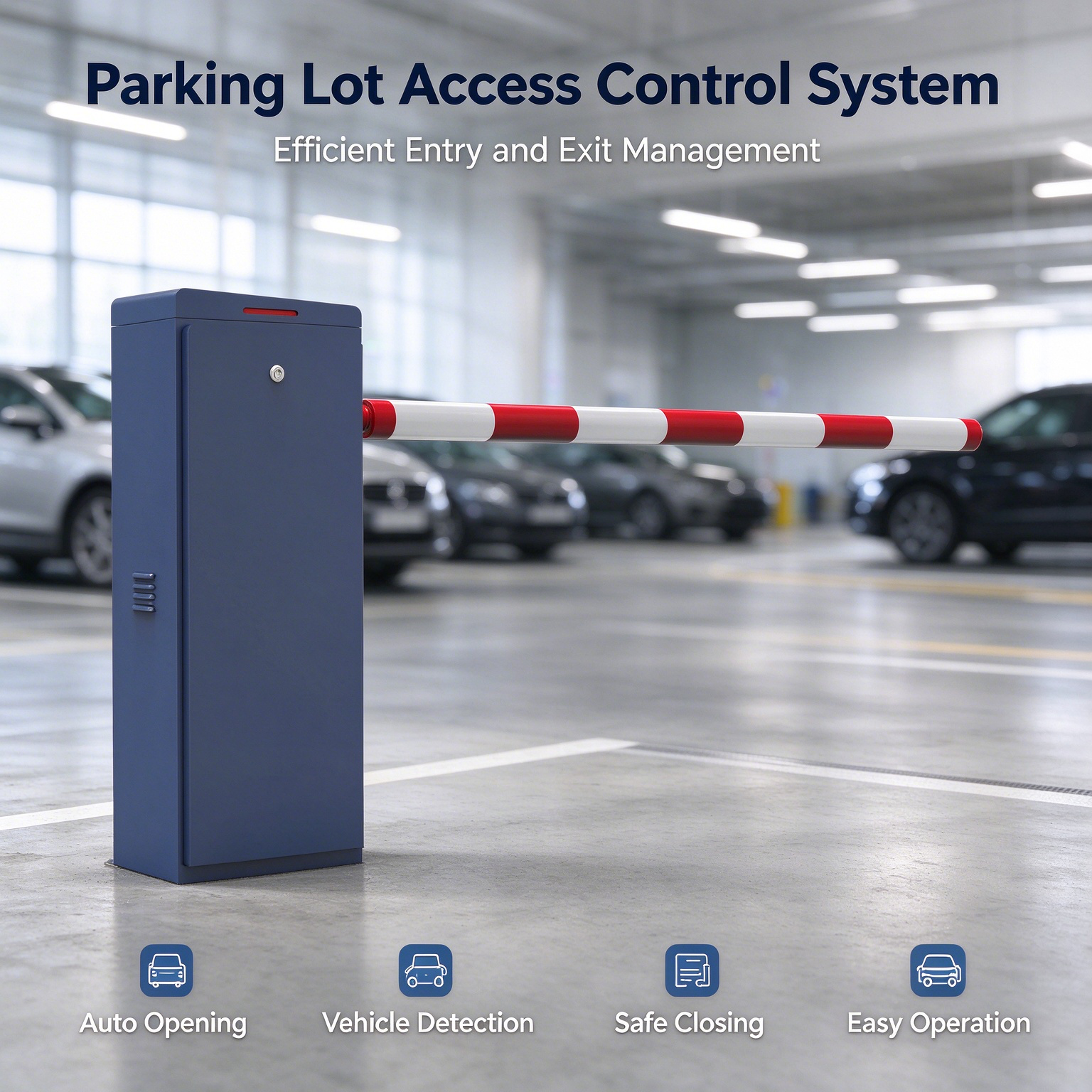
For current datasheets, model configuration and project support, see the BAROXON Europe parking barrier and access control range.
Frequently Asked Questions
What is the most important factor when choosing an automatic parking barrier?
There is no single factor for every site. Lane width, headroom, traffic volume, duty cycle, access-control requirements and safety arrangements should be considered together. The best choice is the configuration that meets the site's actual operating conditions.
Is a straight-arm or folding-arm barrier better?
A straight arm is generally suitable where there is enough vertical clearance. A folding arm may be more suitable where overhead structures restrict the opening height. Measure the available space and the full arm movement before deciding.
What boom length do I need?
The required boom length depends on the clear lane width, cabinet position, arm support arrangement and any required clearance. Provide measured drawings or site photographs to the supplier rather than relying on an estimate.
Is a high-speed barrier always the best option for a busy car park?
Not necessarily. A high-speed barrier may help at a busy entrance, but the complete system must also process authorisation and detect vehicles reliably. Confirm that the model is rated for the expected operating frequency and that the access-control system will not become the bottleneck.
Can an automatic parking barrier work with RFID or ANPR/LPR?
Yes, when the barrier controller, reader or camera, management software and access rules are compatible and properly commissioned. Confirm the required interfaces and local data-protection responsibilities before deployment.
What should I ask the supplier before placing an order?
Ask for the exact model datasheet, permitted arm lengths, duty-cycle rating, speed settings, protection rating, safety-device compatibility, electrical requirements, installation instructions, warranty terms, spare-parts arrangements and applicable conformity documents.
Latest News
Baroxon® | Leading Boom Barrier Manufacturer
Advanced Security Access Control and Intelligent Parking Solutions.
Company Strength
Adequate Inventory
Fast Shipping
Our Products
CONTACT US
Address: No. 2 Wanshou Road, International Innovation Industrial Park, Jinan, Shandong, China






© COPYRIGHT 2025 Baroxon® | Leading Boom Barrier Manufacturer
Point your camera here to open WhatsApp chat
Scan with WeChat to add our engineer
Chat with us directly
Scan the QR code with your phone to start a WhatsApp or WeChat conversation with the Baroxon Europe export team — quotations, drawings and lead times answered by engineers, not bots.

Contact Us
Professional Manufacturer of Vehicle Barriers & License Plate Recognition Cameras,Smart Parking Access Control Solutions for Global Clients,Reliable Barrier Gates + LPR Systems, Customized to Your Project,From residential communities, commercial shopping malls, industrial parks to highway toll stations, our matched barrier & LPR sets can realize automatic license plate identification, automatic gate lifting, real-time access records, automatic charging and remote management.