
How Does an Automatic Parking Barrier System Work?
Release time:
2026-11-05
Conclusion: an automatic parking barrier system is a coordinated chain of identification, permission checking, controller commands, motorised arm movement and safe closing. Reliability depends on every link in that chain, including the control board, vehicle loops, photocells, access devices and the commissioning logic, rather than on the boom arm alone.
An automatic parking barrier system controls vehicle entry and exit by combining an access-control device, a control unit, a motorised boom barrier and safety sensors. When a vehicle is authorised, the controller activates the drive mechanism, raises the boom arm and allows the vehicle to pass. Once the vehicle has cleared the lane, the system lowers the arm in a controlled manner.
For a car park operator, the main benefit is not simply that the barrier opens automatically. It is the coordination of identification, access permission, mechanical movement and vehicle detection. Understanding how these parts work together makes it easier to specify, install and maintain a reliable parking barrier gate system.
1. What Are the Main Components of an Automatic Parking Barrier System?
A typical automatic boom barrier installation consists of several connected components. The exact configuration depends on the site, lane layout, access policy and selected model.
1.1 Barrier cabinet and boom arm
The cabinet houses the motor, gearbox or drive assembly, control board and related electrical components. The boom arm is the physical barrier across the vehicle lane. BAROXON configurations include straight arms for standard entrances, folding arms for locations with limited overhead clearance, and fence-style arms for applications that require a more substantial visual or physical barrier.
Arm length and type must be selected according to the clear lane width, available mounting space and operating environment. The product range lists configurable arm lengths, with model-specific options; confirm the selected model's datasheet before specifying a project.
1.2 Motor and drive mechanism
The motor provides the force needed to raise and lower the boom arm. Depending on the selected BAROXON model, drive options include 24 V DC brushless motors, AC motors or servo-based configurations. The drive mechanism transfers motor movement through the transmission and balancing assembly to produce controlled arm movement.
A suitable motor and drive system should match the expected traffic frequency, arm length, opening-speed requirement and site conditions. A fast opening time should never be selected in isolation: the barrier must also operate smoothly and safely with the chosen arm and detection equipment.
1.3 Main control board
The control board is the operating centre of the barrier. It receives signals from access devices and safety detectors, checks the configured operating logic and sends commands to the motor drive. It can also provide connection points for external equipment, depending on the model and interface specification.
BAROXON product information describes integration options such as dry-contact relay inputs, RS485 and Wiegand interfaces on applicable configurations. These can be used to connect compatible RFID readers, ANPR/LPR equipment, ticket dispensers and parking management systems. Always confirm the actual terminals and communication protocol on the selected control board.
1.4 Access-control devices
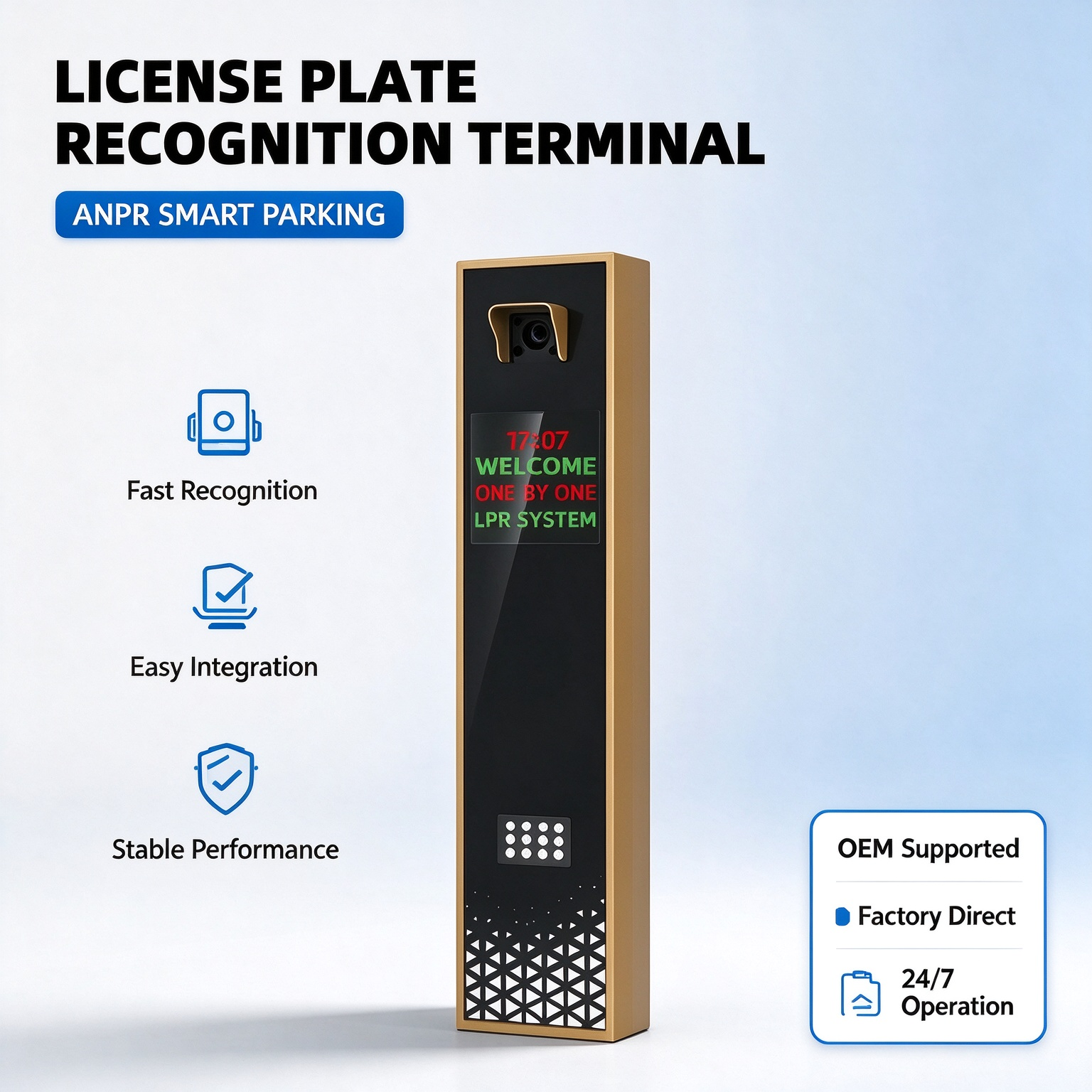
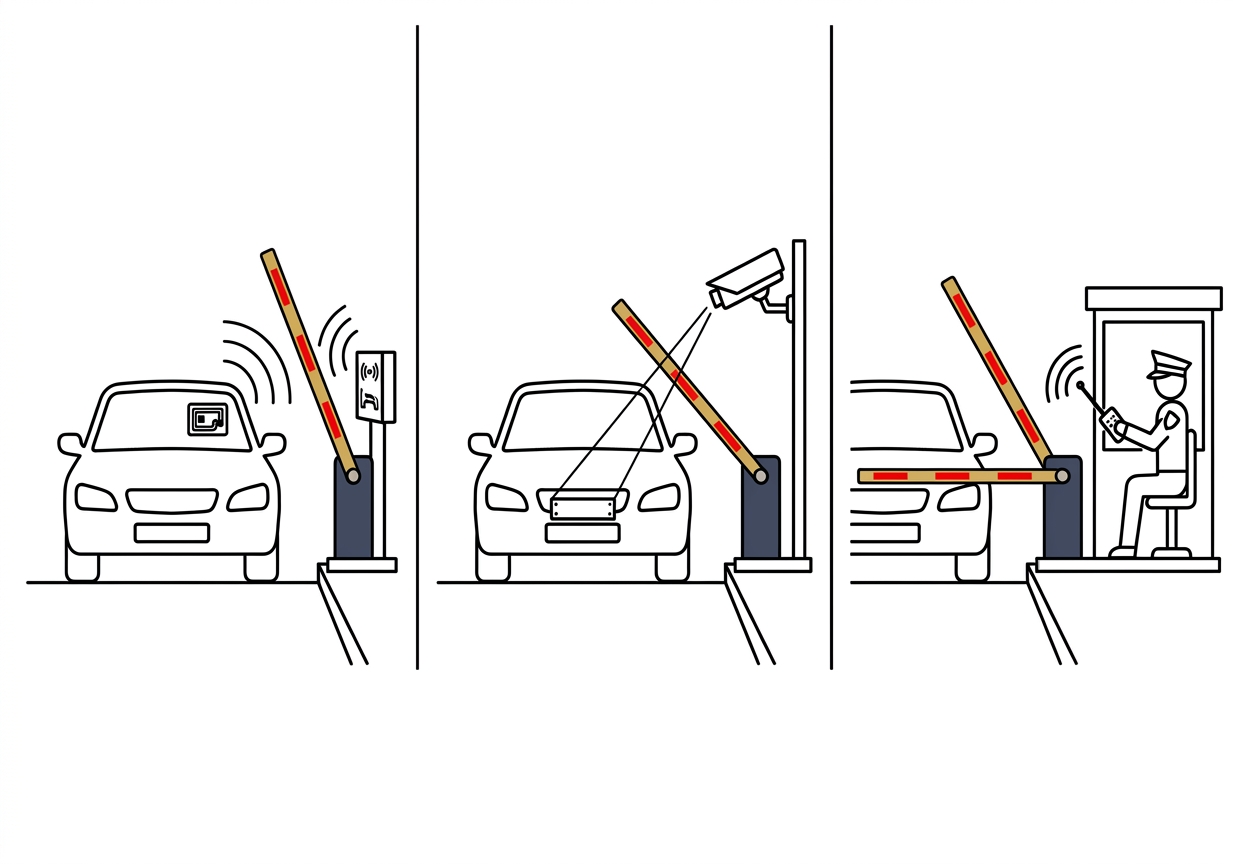
An automatic barrier needs a way to decide whether a vehicle may enter or leave. Common options include RFID cards or tags, QR codes, PIN keypads, remote controls, intercom release and ANPR/LPR cameras. A site may use one method or combine several methods for residents, staff, visitors and contractors.
The access-control platform checks the credential against its permissions, such as an authorised user list, time schedule or parking tariff. The platform then sends an open command to the barrier controller when the access conditions are met.
1.5 Safety and vehicle-detection sensors
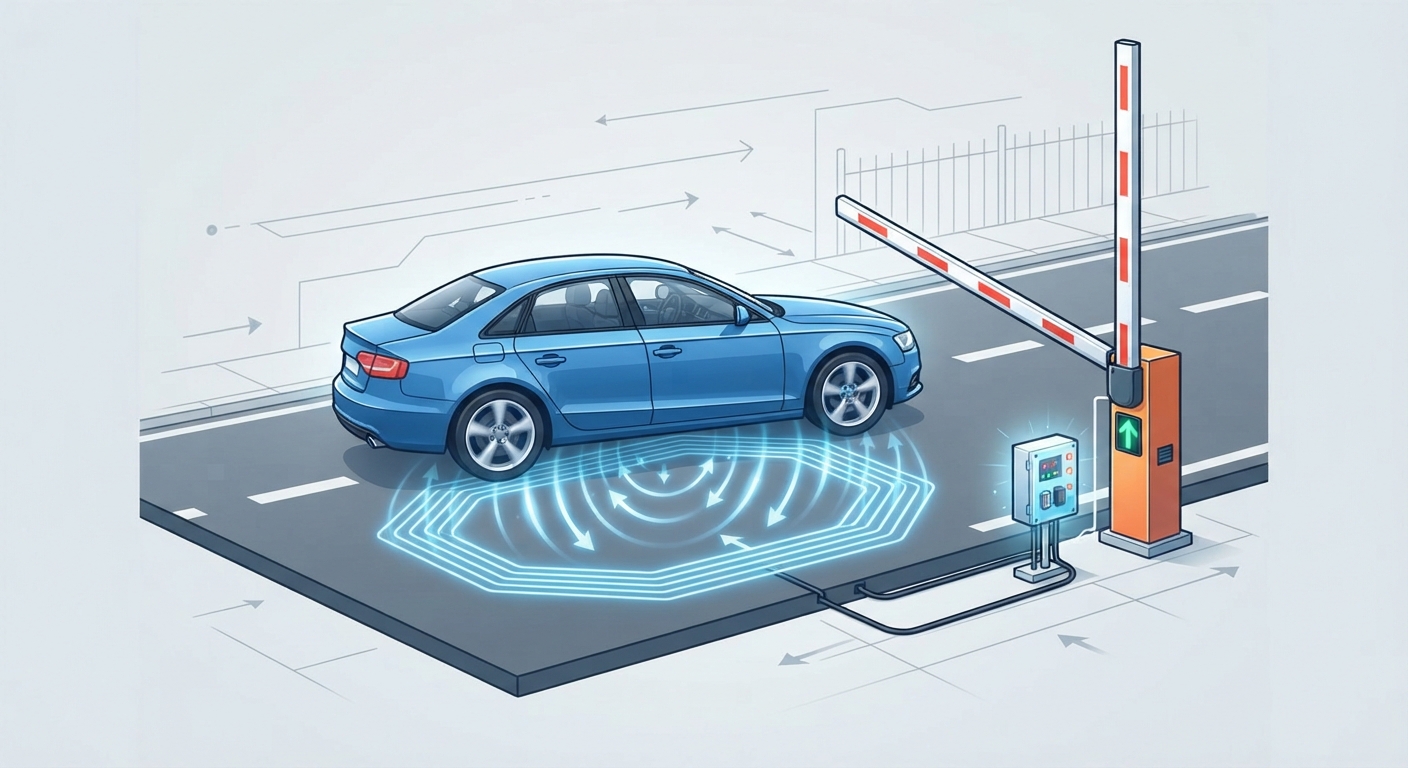
Safety devices help the system detect a vehicle or obstruction in the barrier lane. Depending on the installation, these may include inductive vehicle loop detectors, infrared photocells, radar sensors and the barrier's obstruction-detection or auto-reverse function.
A vehicle loop is commonly installed in or beneath the road surface and detects the presence of a vehicle in the defined detection area. Photocells create a detection beam across the lane. When correctly positioned and configured, these devices help prevent the arm from closing onto a vehicle. They must be designed into the installation rather than treated as optional accessories added after commissioning.
2. How Does an Automatic Parking Barrier Work? Step by Step
Although access methods differ, the operating sequence is broadly similar across most automatic parking barrier systems.
Step 1: A vehicle approaches the entrance
The driver approaches the controlled lane and stops at the designated reading point or detection zone. Lane markings, signs, a ticket terminal or an intercom help the driver understand where to wait. The barrier remains in its closed position until a valid opening command is received.
Step 2: The system identifies the vehicle or driver
The access device reads the selected credential. An RFID reader checks a card or tag; an ANPR/LPR camera captures the registration plate and compares it with the configured database; a ticketing system may issue or validate a parking ticket. The identification method depends on the car park's operating model.
Step 3: Access permission is checked
The access-control software checks whether the credential is valid. It may consider whitelist status, subscription validity, permitted entry times, payment status or visitor approval. If access is denied, the barrier stays closed and the system may display a message or request assistance.
Step 4: The controller receives the open command
Once access is authorised, the access-control unit sends an opening signal to the barrier's control board. The controller checks the relevant operating conditions and activates the motor drive. The motor and transmission then begin to raise the boom arm.
Step 5: The vehicle passes through the lane
The arm reaches its open position and the vehicle proceeds through the entrance. A vehicle loop, photocell or other compatible detector can monitor the lane and help confirm that the vehicle has cleared the closing area. The precise sequence depends on the control logic and sensor layout.
Step 6: The barrier closes safely
After the vehicle has cleared the protected area and the configured closing conditions are satisfied, the controller commands the motor to lower the arm. If a safety detector indicates that a vehicle or obstruction remains in the lane, the closing command should be inhibited or the configured safety response should be triggered. The system then returns to standby for the next vehicle.
3. How Do RFID and ANPR/LPR Control an Automatic Boom Barrier?
RFID and ANPR/LPR are two common ways to automate vehicle access, but they work differently.
A site can also combine RFID and ANPR/LPR. For example, regular users may enter through plate recognition while temporary visitors use an intercom or QR code. Integration depends on camera performance, lighting, plate formats, network reliability, software configuration and the interfaces supported by the barrier controller.
4. What Happens If a Vehicle or Obstacle Is Under the Barrier Arm?
Safety depends on a correctly designed combination of sensors, control logic and operating procedures. A vehicle loop can detect a vehicle within its detection zone, while photocells can detect an interruption across the lane. Some barrier models also support obstruction detection and automatic rebound or reverse functions.
These functions are not a substitute for a proper risk assessment, suitable sensor positioning, regular testing or safe driver behaviour. Installers should follow the manufacturer's wiring and commissioning instructions, verify the response of each safety device, and ensure that pedestrians have a safe route separate from the vehicle lane wherever possible.
5. Which Boom Arm Type Should a European Car Park Choose?
The best boom arm depends on the entrance geometry and operational requirements.
- Straight arm: A practical option for standard open-air entrances with sufficient overhead clearance.
- Folding arm: Designed for entrances with limited vertical clearance, such as underground car parks and covered access ramps. BAROXON lists 90° and 180° folding options on applicable systems.
- Fence-style arm: Can provide a more substantial barrier across a lane or perimeter entrance. The appropriate two-rail or three-rail configuration depends on the project.
Before choosing, measure the clear opening width, check ceiling and wall obstructions, consider wind exposure and confirm the compatible arm length and drive configuration with the product datasheet.
6. Where Are Automatic Parking Barrier Systems Used?
Automatic boom barriers are used wherever vehicle access needs to be controlled and recorded. Typical European applications include:
- Residential developments: Resident credentials, visitor access and controlled underground parking.
- Office buildings and business parks: Staff access, visitor authorisation and scheduled entry.
- Retail and public car parks: Ticketing, payment validation and ANPR/LPR-based workflows.
- Hotels and leisure facilities: Guest access and integration with reception or parking management.
- Industrial sites and logistics centres: Fleet access, delivery scheduling and frequent vehicle movements.
For high-traffic sites, the barrier should be selected according to actual daily cycles, peak-hour flow, arm length and the operating environment. Product specifications such as duty cycle, opening speed and ingress protection are model-dependent and should be checked against the exact configuration.
7. What Should Be Checked Before Installing an Automatic Parking Barrier?
A reliable installation starts with a site survey. Check the following points before ordering or commissioning the equipment:
- Lane width and arm length: Confirm the clear vehicle opening and suitable boom arm configuration.
- Mounting foundation: Check that the cabinet can be securely anchored to a stable, level base.
- Power supply: Verify the required voltage, frequency, earthing and protection in accordance with the selected model and local electrical requirements.
- Access-control integration: Confirm the required relay, RS485, Wiegand or other interfaces with the reader, camera and parking software suppliers.
- Safety devices: Plan the position and wiring of vehicle loops, photocells and any additional detectors.
- Drainage and weather exposure: Consider standing water, rain, snow, dust, temperature and the specified IP rating.
- Pedestrian safety and traffic flow: Provide clear signs, safe pedestrian routes and adequate space for vehicles to wait without blocking public roads.
- Emergency operation: Make sure authorised staff understand the manual release procedure and site response plan.
8. How Can You Keep an Automatic Barrier System Reliable?
Routine maintenance helps identify wear, loose fixings and sensor problems before they cause downtime. A practical maintenance schedule should include visual inspection of the cabinet and boom arm, checking mounting bolts and arm balance, cleaning sensor faces, testing safety devices, checking cable glands and electrical connections, and confirming that the barrier opens and closes smoothly.
The inspection interval should reflect traffic intensity, exposure and the manufacturer's instructions. Any unusual noise, slow movement, repeated reversal or inconsistent access response should be investigated by a qualified technician. Isolate the power supply before carrying out work inside the cabinet, and never bypass safety devices to keep a lane operating.
9. How Does BAROXON Support Automatic Parking Barrier Integration?
BAROXON's European product range includes automatic boom barrier systems with different motor and arm configurations, as well as integration options for vehicle access-control equipment. Depending on the selected model, the system can be configured for RFID readers, ANPR/LPR cameras, vehicle loop detectors, photocells, ticketing equipment and parking management platforms.
The product information also describes straight, folding and fence-style boom arms, configurable operating speeds and different enclosure protection options across the range. These are not universal specifications for every model. For a European project, confirm the required supply voltage and frequency, arm length, opening time, duty cycle, IP rating, safety inputs and communication interfaces against the exact product datasheet and installation manual.
10. Frequently Asked Questions
Does an automatic parking barrier need an internet connection?
Not always. Basic barrier operation can be controlled locally through access devices and the control board. A network connection may be required for cloud-based management, remote administration, centralised reporting or certain ANPR/LPR workflows. The required network architecture depends on the chosen software and system design.
Can an automatic boom barrier work with an ANPR/LPR camera?
Yes, where the camera, software and barrier controller have compatible interfaces. The camera recognises the registration plate, the access platform checks its permission and then sends an opening command to the barrier. Confirm the communication method and trigger logic with the suppliers before installation.
What happens during a power failure?
The response depends on the barrier model and the site's electrical design. BAROXON product information describes manual clutch or manual release arrangements on applicable systems. Operators should know how to release the barrier safely and should follow the model-specific instructions. If uninterrupted operation is required, discuss an appropriate backup-power design with the supplier.
How fast does an automatic parking barrier open?
Opening times vary by motor, boom arm length, controller settings and model. BAROXON's published range includes several adjustable speed options, but a quoted speed should always be checked against the selected arm and configuration. The fastest setting is not necessarily the safest or most suitable for every entrance.
Can one barrier system manage both entry and exit?
A barrier can be used for an entry lane or an exit lane, and a site may install separate barriers for each direction. The access-control software and lane equipment must be configured to apply the correct permissions and traffic logic for each movement.
Conclusion: Understand the Whole System, Not Just the Boom Arm
An automatic parking barrier system works through a coordinated sequence: identify the vehicle, verify access permission, send a command to the controller, operate the motorised boom arm, detect vehicle clearance and close safely. The motor, control board, access devices and safety sensors all contribute to dependable operation.
When planning a new car park entrance or upgrading an existing one, assess traffic volume, lane geometry, access methods, safety requirements and integration needs together. Review the exact BAROXON model datasheet before confirming technical specifications, and work with qualified installers to commission and test the complete system.
For current datasheets, model configuration and project support, see the BAROXON Europe parking barrier and access control range.
Frequently Asked Questions
Does an automatic parking barrier need an internet connection?
Not always. Basic barrier operation can be controlled locally through access devices and the control board. A network connection may be required for cloud-based management, remote administration, centralised reporting or certain ANPR/LPR workflows. The required network architecture depends on the chosen software and system design.
Can an automatic boom barrier work with an ANPR/LPR camera?
Yes, where the camera, software and barrier controller have compatible interfaces. The camera recognises the registration plate, the access platform checks its permission and then sends an opening command to the barrier. Confirm the communication method and trigger logic with the suppliers before installation.
What happens during a power failure?
The response depends on the barrier model and the site's electrical design. BAROXON product information describes manual clutch or manual release arrangements on applicable systems. Operators should know how to release the barrier safely and should follow the model-specific instructions. If uninterrupted operation is required, discuss an appropriate backup-power design with the supplier.
How fast does an automatic parking barrier open?
Opening times vary by motor, boom arm length, controller settings and model. BAROXON's published range includes several adjustable speed options, but a quoted speed should always be checked against the selected arm and configuration. The fastest setting is not necessarily the safest or most suitable for every entrance.
Can one barrier system manage both entry and exit?
A barrier can be used for an entry lane or an exit lane, and a site may install separate barriers for each direction. The access-control software and lane equipment must be configured to apply the correct permissions and traffic logic for each movement.
Latest News
Baroxon® | Leading Boom Barrier Manufacturer
Advanced Security Access Control and Intelligent Parking Solutions.
Company Strength
Adequate Inventory
Fast Shipping
Our Products
CONTACT US
Address: No. 2 Wanshou Road, International Innovation Industrial Park, Jinan, Shandong, China






© COPYRIGHT 2025 Baroxon® | Leading Boom Barrier Manufacturer
Point your camera here to open WhatsApp chat
Scan with WeChat to add our engineer
Chat with us directly
Scan the QR code with your phone to start a WhatsApp or WeChat conversation with the Baroxon Europe export team — quotations, drawings and lead times answered by engineers, not bots.

Contact Us
Professional Manufacturer of Vehicle Barriers & License Plate Recognition Cameras,Smart Parking Access Control Solutions for Global Clients,Reliable Barrier Gates + LPR Systems, Customized to Your Project,From residential communities, commercial shopping malls, industrial parks to highway toll stations, our matched barrier & LPR sets can realize automatic license plate identification, automatic gate lifting, real-time access records, automatic charging and remote management.