
What to Consider When Buying a Heavy-Duty Parking Barrier
Release time:
2026-11-05
Conclusion: a heavy-duty parking barrier should be bought on verified duty cycle, drive assembly, arm geometry, cabinet protection, safety devices and integration scope. Published figures such as daily cycles, speed or IP ratings apply to specific models, so the datasheet, wiring diagram and written quotation for the exact configuration decide the purchase.
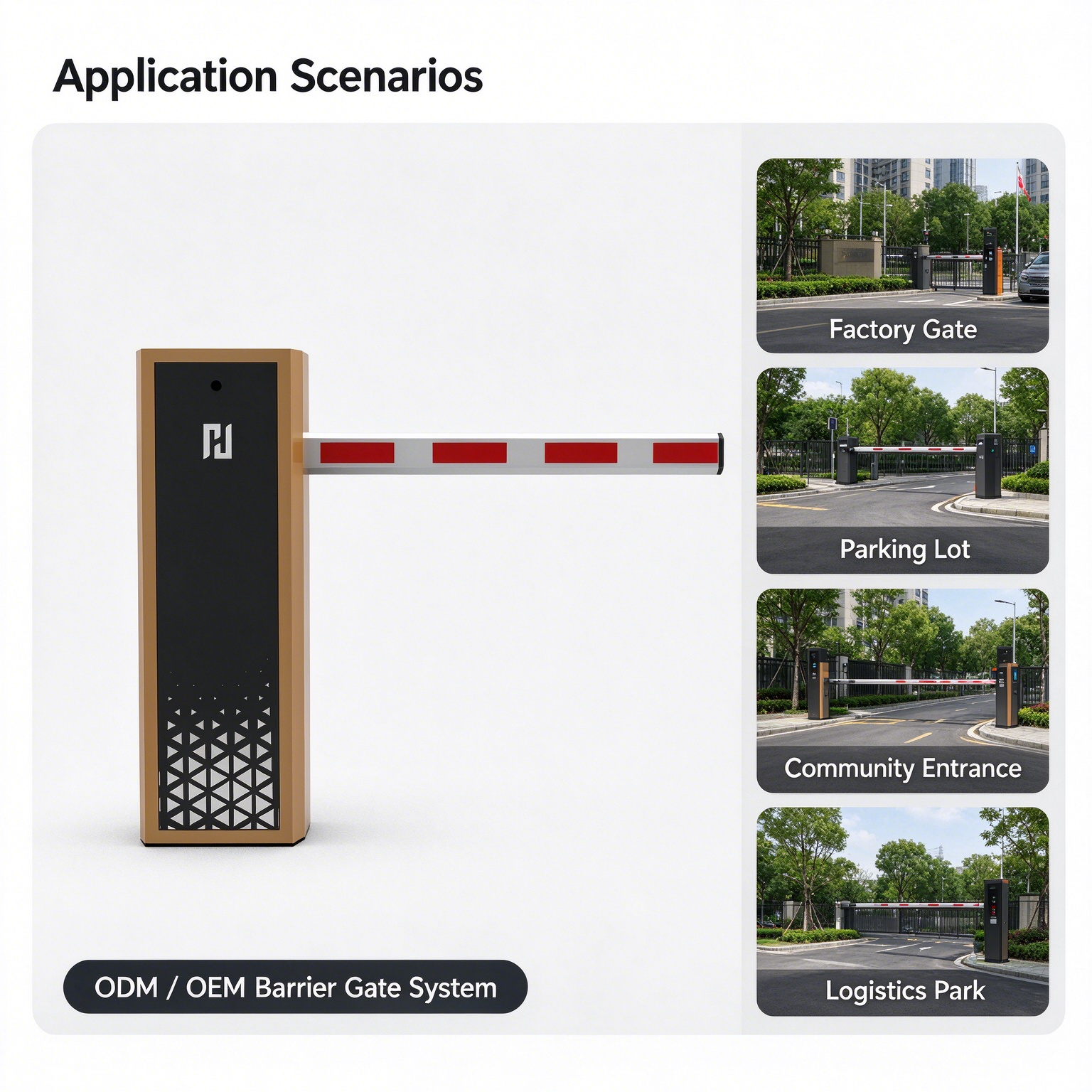
A heavy-duty parking barrier is designed for vehicle entrances where the barrier may operate frequently, manage a wide lane or work in a demanding outdoor environment. Typical applications include commercial car parks, industrial estates, logistics depots, distribution centres, gated residential developments and other sites with regular vehicle movements.
Choosing the right heavy-duty boom barrier involves more than selecting a strong-looking cabinet or the fastest opening time. The motor, gearbox, boom arm, operating cycle, safety devices, weather protection and access-control interfaces must work as one system. A specification that suits a busy logistics entrance may be unnecessary for a small private car park, while an underspecified barrier can lead to queues, premature wear and avoidable downtime.
This guide explains the main points to assess before buying a commercial parking barrier in Europe and how to match the equipment to the actual site conditions.
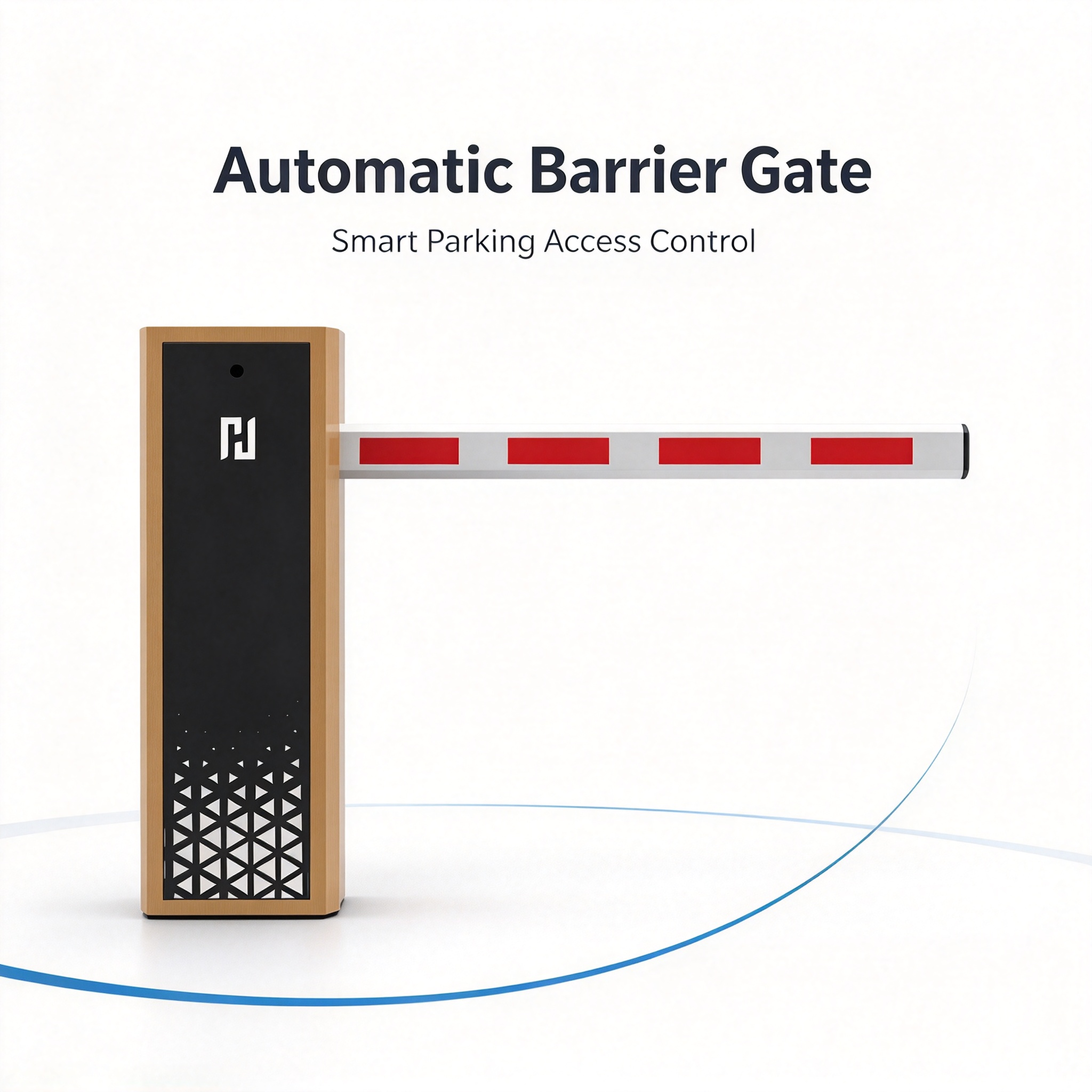
1. Start with Traffic Volume and Required Operating Duty
The first buying criterion is the number of opening and closing cycles the barrier is expected to complete. A residential entrance with predictable peak periods has different requirements from a distribution centre where vans and HGVs arrive throughout the day. Estimate:
- Average vehicle movements per hour and peak-hour throughput
- Expected opening and closing cycles per day
- Daily operating hours and whether the site runs overnight
- Seasonal peaks, shift changes and delivery windows
- Acceptable queue length and recovery time after a fault
Ask the supplier for the duty-cycle rating of the exact model and clarify how the rating is defined. BAROXON's published commercial barrier information describes configurations with continuous-duty operation and up to 5,000 cycles per day. Treat this as a model-specific published specification, not a blanket guarantee for every barrier in the range. Request the datasheet for the proposed motor, boom length and controller combination.
A barrier rated for frequent operation should still be matched to the real traffic pattern. Oversizing can add unnecessary cost; undersizing can increase wear and create congestion during busy periods.
2. Check the Motor, Gearbox and Drive Mechanism
The motor and transmission determine how the boom arm accelerates, moves and stops. For a high-traffic entrance, look beyond the motor label and assess the complete drive assembly.
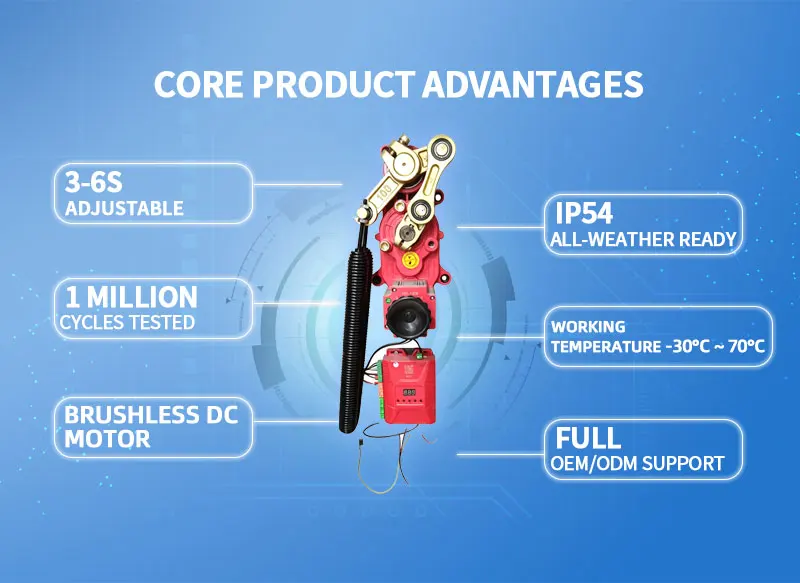
BAROXON's European commercial barrier information lists several drive options, including 24 V DC brushless, AC motor and servo-drive configurations, depending on the model. A brushless DC motor can be a suitable option where controlled movement, frequent cycling and low-voltage control are priorities. Servo configurations may be considered where the project calls for more precise motion control. The correct choice depends on boom length, arm type, cycle frequency, supply arrangement and site requirements.
Ask the supplier to confirm:
- Motor type, rated power and operating voltage
- Gearbox design and availability of replacement parts
- Compatible boom length and arm profile
- Opening and closing time for the selected configuration
- Thermal protection and controller safeguards
- Manual release or clutch procedure during a power failure
Do not compare opening speeds without comparing the boom length and arm type. A short straight arm and a long fence arm do not impose the same mechanical load.
3. Select the Correct Boom Length and Arm Type
The boom arm must cover the clear vehicle lane without creating unnecessary mechanical strain or obstructing nearby structures. Measure the usable lane width, cabinet position, kerbs, walls, overhead beams and any pedestrian route before selecting the arm.
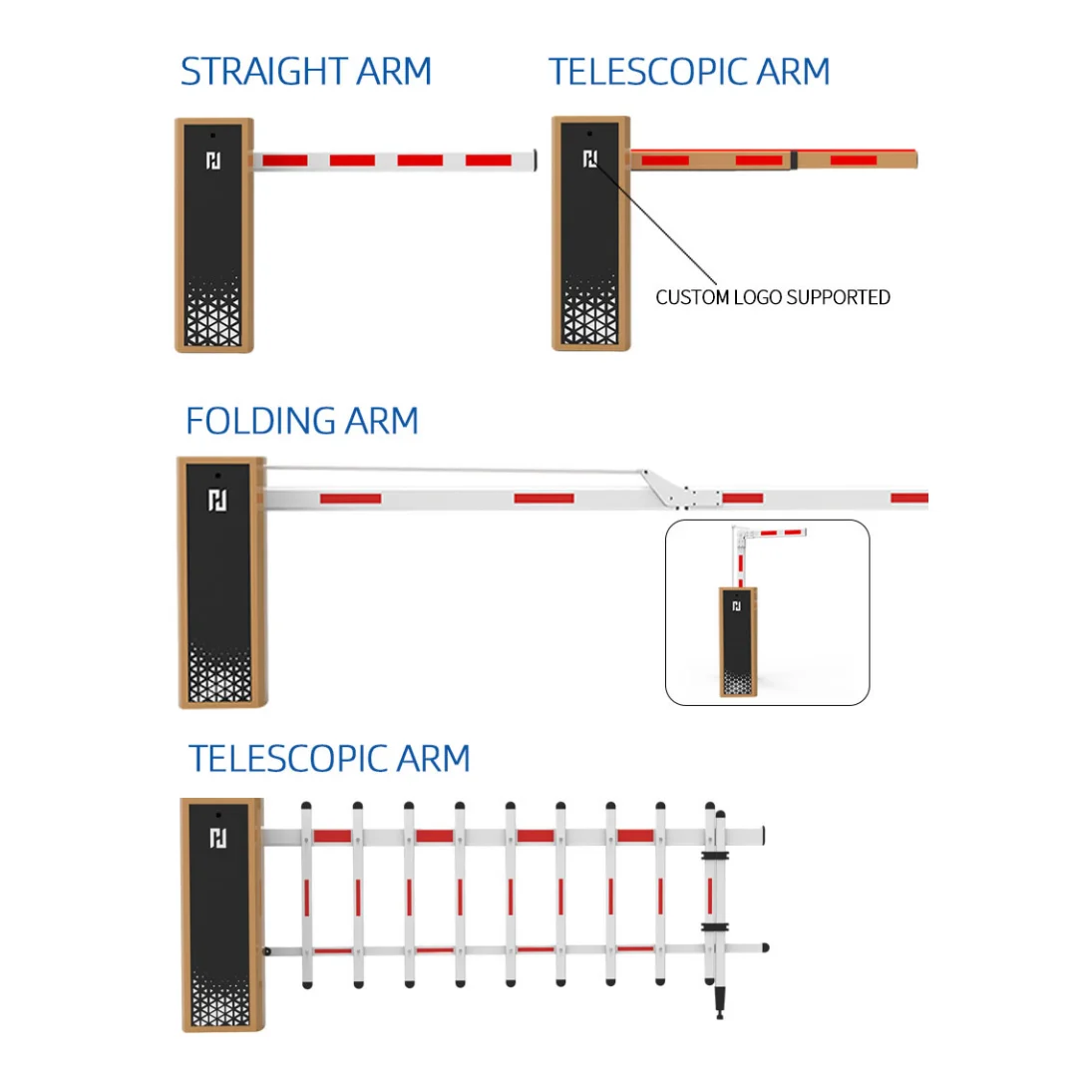
Common configurations include:
- Straight boom arm: Suitable for many standard open-air entrances where there is sufficient vertical clearance.
- Folding boom arm: Useful in underground car parks, covered ramps and entrances with low ceilings. BAROXON lists folding configurations, including 90° and 180° options on applicable models.
- Fence-style boom arm: Can provide a more substantial physical barrier across a lane or perimeter entrance. Two-rail or three-rail options may be available depending on the product configuration.
BAROXON's commercial range lists configurable boom lengths from 1 m to 6 m for the referenced product family. Other models may have different limits. Confirm the maximum compatible length, arm weight, support requirements and wind exposure with the exact model datasheet. Do not assume that every motor can operate every arm type or length.
4. Evaluate Cabinet Strength, Finish and Outdoor Protection
A heavy-duty parking barrier is often installed outdoors and may be exposed to rain, dust, road spray, UV radiation, frost or coastal conditions. Inspect the cabinet material, panel construction, coating, seals, cable entries and the protection of electrical components.
BAROXON's commercial barrier product information lists cabinet material options such as cold-rolled steel, stainless steel and zinc alloy, together with outdoor powder-coating finishes. The published range also lists IP54, IP65 and IP66 protection options across different configurations. These ratings are not interchangeable and should not be assumed to apply to every model or every accessory.
Before ordering, ask:
- What is the cabinet material and panel thickness for the quoted model?
- Which ingress protection rating applies to the complete cabinet?
- Are the motor, control board and cable entries protected to the same level?
- What operating temperature range is specified?
- Is a special coating or corrosion-resistant material recommended for coastal or industrial sites?
- What cleaning and inspection routine is required?
For European outdoor installations, consider local rainfall, freeze-thaw conditions, wind exposure and the possibility of road salt or de-icing chemicals. A high IP rating alone does not confirm suitability for every environment.
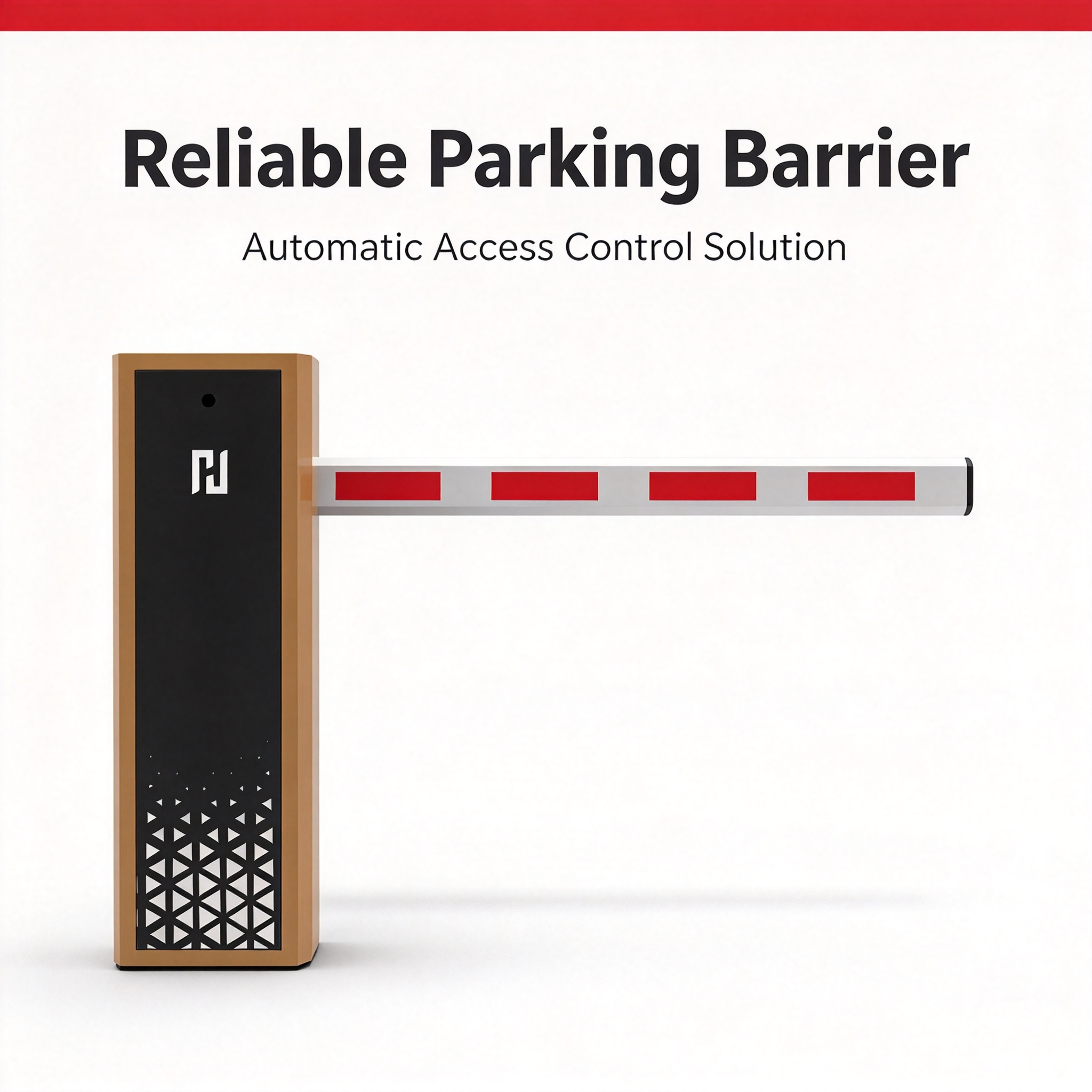
5. Make Safety Devices Part of the Specification
A heavy-duty barrier must be selected as part of a safe vehicle-access installation. The boom arm should not close onto a vehicle or person in the protected area. Depending on the controller and project design, safety equipment may include:
- Inductive vehicle loop detectors
- Infrared photocells
- Radar vehicle detectors
- Obstruction detection and automatic reverse functions
- Emergency manual release arrangements
- Warning lights or audible alerts where required
BAROXON's published product information describes anti-collision rebound or auto-reverse functions, loop-detector compatibility, photocell inputs and manual clutch release on applicable systems. Confirm which functions are built into the quoted model and which require additional external devices.
Ask for a wiring diagram and a commissioning checklist. The installer should test each safety input, confirm the response to a detector fault and verify that the boom does not close while a vehicle remains in the detection zone. Risk assessment, suitable positioning and maintenance remain essential; electronic safety features do not replace safe lane design or pedestrian segregation.
6. Confirm Integration with RFID, ANPR/LPR and Parking Software
Many commercial sites need more than a stand-alone barrier. The access-control system may need to identify registered vehicles, validate visitors, issue tickets or exchange data with a parking management platform.
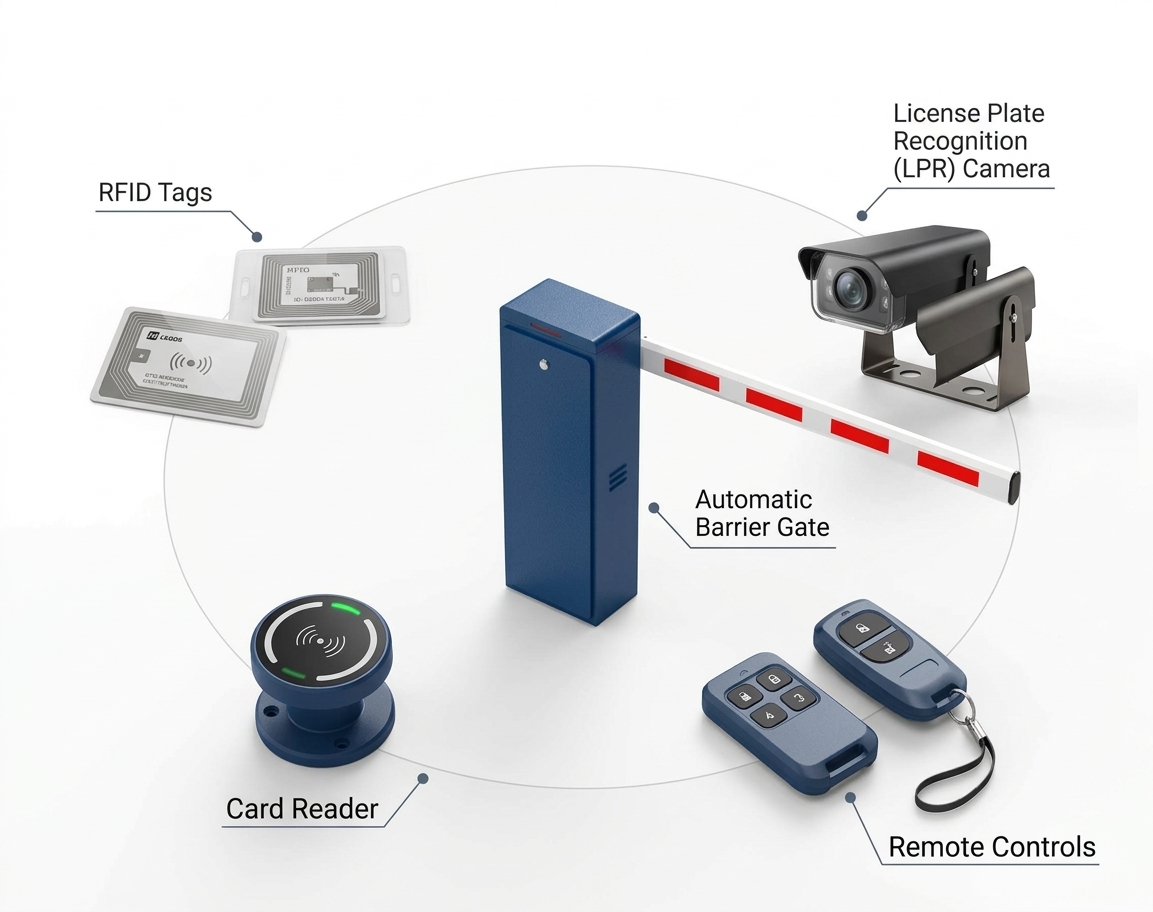
Common integration options include:
- RFID: Card, tag or long-range UHF identification for authorised users and fleet vehicles.
- ANPR/LPR: Automatic number plate recognition for registered vehicles, season parking or ticketless workflows.
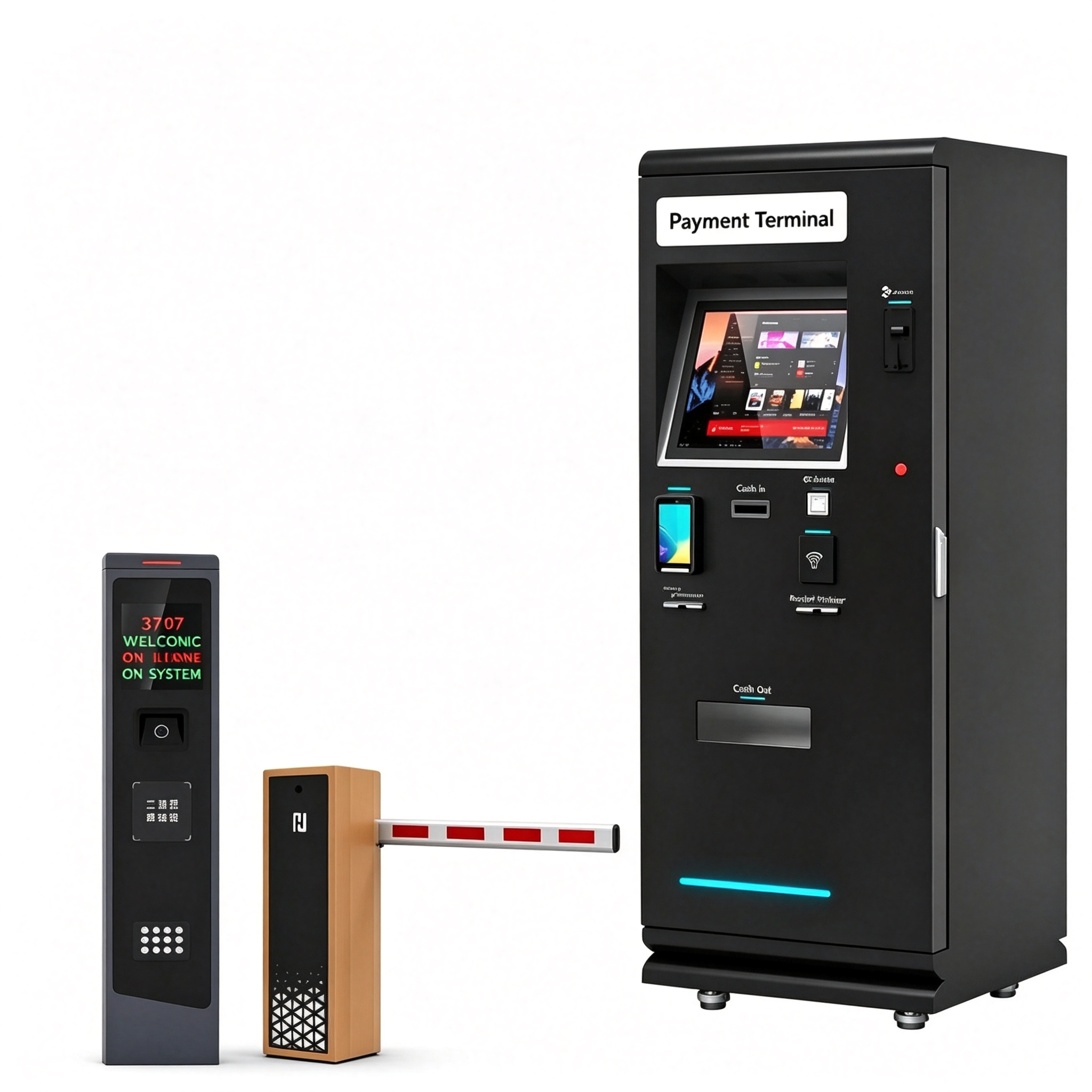
- Ticketing equipment: Entry tickets and payment validation for public car parks.
- Intercom or keypad: Visitor authorisation and manual access workflows.
- Parking management software: Centralised permissions, records, tariffs and reporting.
BAROXON's European product information describes integration with LPR/ANPR cameras, UHF RFID readers, ticket dispensers, loop detectors and third-party parking software, using interfaces such as dry-contact relay and RS485 on supported configurations. Interface availability varies by controller. Confirm the protocol, terminal layout, trigger logic and responsibility for integration with each supplier before purchase.
7. Match Opening Speed to the Site, Not Just the Sales Specification
Fast opening can help reduce queues, but the fastest setting is not automatically the best choice. The required speed depends on the boom length, arm profile, motor, traffic flow, safety arrangement and the distance between the barrier and the vehicle stopping point.
BAROXON product pages list adjustable speed options, with published figures varying by model and configuration. Ask for the opening and closing times for the exact arm length and motor being quoted. Also consider smooth acceleration and deceleration, noise, vibration and the effect of repeated operation.
For a busy logistics gate, a well-planned vehicle approach lane and reliable access authorisation may reduce waiting more effectively than simply choosing the fastest motor setting. For a public car park, predictable operation and safe vehicle detection may be more important than a fraction of a second.
8. Consider European Power, Compliance Documentation and Installation Requirements
For a European project, confirm the electrical supply and documentation before placing the order. BAROXON's Europe site describes European supply versions using 230 V / 50 Hz input and 24 V DC low-voltage control circuits. However, the correct supply and wiring must be confirmed for the exact model and destination country.
Ask the supplier for the relevant technical file, declaration or conformity documentation, wiring diagram, installation manual and maintenance instructions. Check that the documents apply to the actual product configuration being supplied. Where the project has specific national, site-owner or tender requirements, confirm them with the responsible consultant or competent authority rather than relying on a generic product statement.
Also plan the foundation, cable routes, drainage, vehicle approach area, pedestrian route and maintenance access. A robust barrier can still underperform if the base is unstable, the arm is poorly balanced or the lane geometry is unsuitable.
9. Compare Total Cost of Ownership, Not Purchase Price Alone
The initial quotation is only one part of the cost. A useful comparison should include:
- Barrier cabinet, motor, boom arm and controller
- Required safety sensors and access-control devices
- Foundation work, cabling and installation
- Software configuration and third-party integration
- Spare parts, routine servicing and technician visits
- Shipping, lead time and warranty conditions
- Expected downtime and the cost of manual traffic management
Ask each supplier to quote the same arm length, motor type, duty requirement, safety equipment and interface scope. Check which items are included, which are optional and which are supplied by third parties. A lower purchase price may not represent better value if essential sensors, installation support or replacement parts are excluded.
10. Check Spare Parts, Maintenance and After-Sales Support
A heavy-duty barrier is part of the site's operational infrastructure. Before purchase, establish how faults will be diagnosed and how quickly essential parts can be supplied.
Ask about the availability of motors, control boards, boom arms, springs, balancing components, remotes and safety sensors. Confirm whether the supplier provides wiring diagrams, parameter-setting guidance, remote commissioning assistance and operator training. Clarify warranty coverage, exclusions, response channels and whether local support is available through a distributor or installation partner.
A practical maintenance plan should include visual inspection, checking arm balance and fixings, testing loops and photocells, inspecting cable entries and electrical connections, and reviewing unusual noise or movement. The interval should follow the manufacturer's instructions and reflect actual traffic intensity and exposure.
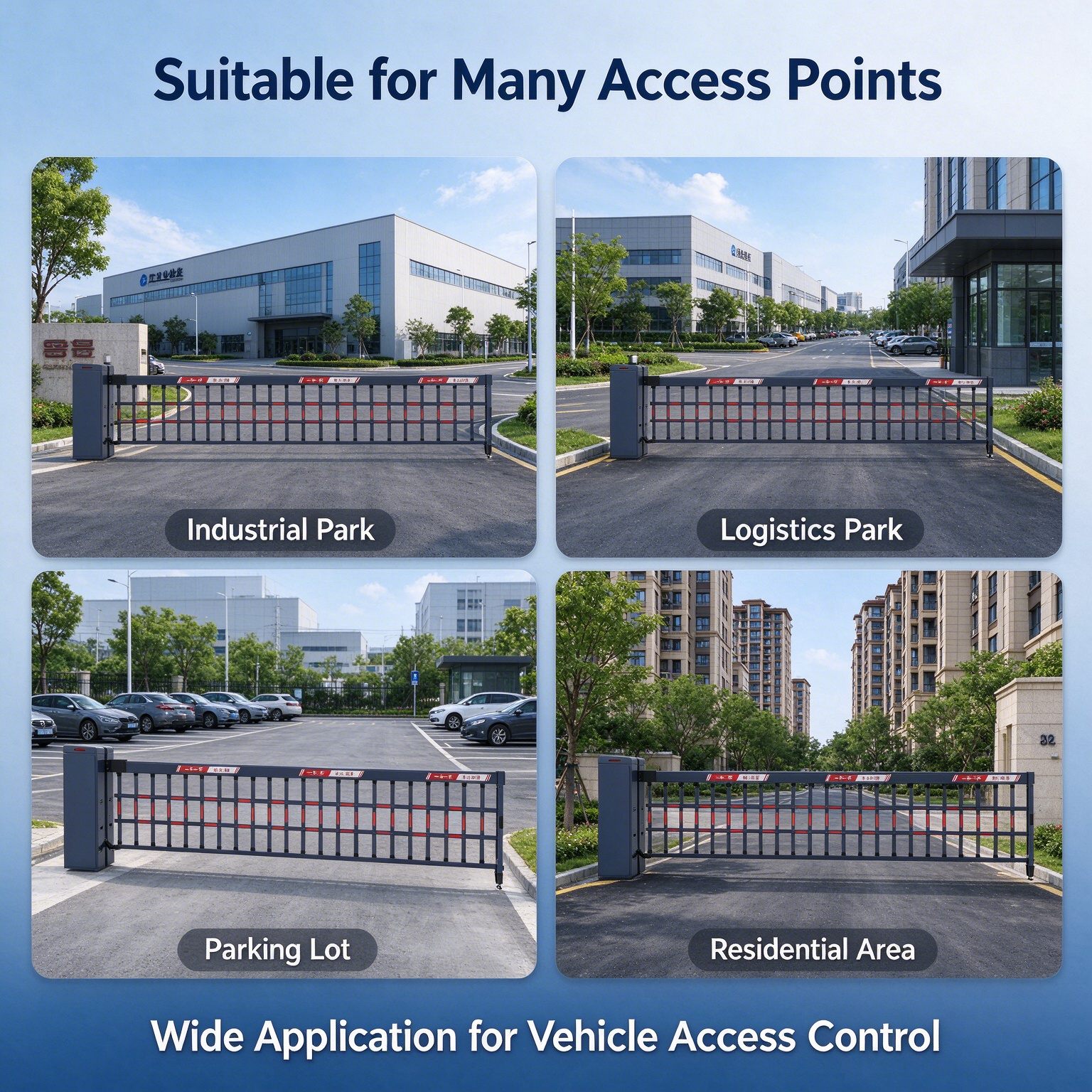
11. Which Heavy-Duty Barrier Configuration Suits Your Site?
Use the application as a starting point, then confirm the final selection against the site survey and model datasheet.
| Site type | Main buying priorities | Configuration points to review |
|---|
| Logistics depot or distribution centre | Frequent cycles, reliable detection, HGV lane geometry | Duty rating, motor, arm length, loop/radar detection |
|---|
| Commercial car park | Queue control, ticketing and payment integration | RFID or ANPR/LPR, controller interfaces, opening time |
|---|
| Industrial estate | Outdoor durability, access permissions, serviceability | Cabinet material, coating, IP rating, spare parts |
|---|
| Residential development | Quiet operation, visitor access, safe pedestrian movement | Motor/drive, intercom, folding arm if clearance is limited |
|---|
| Toll or controlled checkpoint | Throughput, monitoring and integration | Speed matched to arm, access platform, safety logic |
|---|
A project specification should state the expected cycles, lane width, boom type, motor and supply, operating environment, safety devices, access-control interfaces, documentation and after-sales requirements. This gives suppliers a clear basis for recommending a model and preparing comparable quotations.
Frequently Asked Questions
What makes a parking barrier heavy-duty?
A heavy-duty barrier is selected for higher traffic frequency, demanding operating conditions or a more robust installation. Assess the motor and drive assembly, duty-cycle rating, boom compatibility, cabinet construction, safety equipment and service support. The term “heavy-duty” alone is not a measurable specification.
How many cycles per day should a heavy-duty barrier support?
There is no single figure for every site. Estimate actual daily movements and peak demand, then select a model with a duty rating suitable for that operating profile. Ask the manufacturer to confirm the rating for the exact configuration.
Is a brushless DC motor better for a high-traffic barrier?
A brushless DC motor can be a suitable choice for frequent operation and controlled movement, but it is not automatically the best option for every project. Compare the motor, gearbox, controller, arm load, duty rating, power supply and maintenance requirements as a complete drive system.
Which boom arm is suitable for a wide entrance?
The answer depends on the clear lane width, arm profile, wind exposure and compatible drive system. Confirm the maximum arm length for the selected model and whether a support post or additional safety equipment is required.
Can a heavy-duty parking barrier integrate with ANPR/LPR?
Yes, where the barrier controller, camera and parking software support compatible interfaces and trigger logic. Confirm the connection method, data exchange, vehicle detection sequence and responsibility for commissioning before ordering.
What protection rating should an outdoor barrier have?
Choose the rating according to the actual exposure and the manufacturer's specifications. Check whether the stated IP rating applies to the complete cabinet, electrical components or only a specific enclosure. Also consider temperature, corrosion, drainage and maintenance.
Conclusion: Specify the Complete System Before You Buy
Buying a heavy-duty parking barrier is a system-selection decision. Traffic volume, operating duty, motor and gearbox, boom length, cabinet protection, safety devices, access-control integration and after-sales support all affect long-term performance.
For a European commercial or industrial site, begin with a site survey and a written operating profile. Then compare suppliers against the same technical requirements and verify every performance claim against the datasheet for the exact model. BAROXON's European range includes commercial barrier configurations with different motors, arm types, protection options and access-control interfaces; the right configuration should be confirmed for the lane and operating conditions rather than selected from a headline specification alone.
For current datasheets, model configuration and project support, see the BAROXON Europe parking barrier and access control range.
Frequently Asked Questions
What makes a parking barrier heavy-duty?
A heavy-duty barrier is selected for higher traffic frequency, demanding operating conditions or a more robust installation. Assess the motor and drive assembly, duty-cycle rating, boom compatibility, cabinet construction, safety equipment and service support. The term “heavy-duty” alone is not a measurable specification.
How many cycles per day should a heavy-duty barrier support?
There is no single figure for every site. Estimate actual daily movements and peak demand, then select a model with a duty rating suitable for that operating profile. Ask the manufacturer to confirm the rating for the exact configuration.
Is a brushless DC motor better for a high-traffic barrier?
A brushless DC motor can be a suitable choice for frequent operation and controlled movement, but it is not automatically the best option for every project. Compare the motor, gearbox, controller, arm load, duty rating, power supply and maintenance requirements as a complete drive system.
Which boom arm is suitable for a wide entrance?
The answer depends on the clear lane width, arm profile, wind exposure and compatible drive system. Confirm the maximum arm length for the selected model and whether a support post or additional safety equipment is required.
Can a heavy-duty parking barrier integrate with ANPR/LPR?
Yes, where the barrier controller, camera and parking software support compatible interfaces and trigger logic. Confirm the connection method, data exchange, vehicle detection sequence and responsibility for commissioning before ordering.
What protection rating should an outdoor barrier have?
Choose the rating according to the actual exposure and the manufacturer's specifications. Check whether the stated IP rating applies to the complete cabinet, electrical components or only a specific enclosure. Also consider temperature, corrosion, drainage and maintenance.
Latest News
Baroxon® | Leading Boom Barrier Manufacturer
Advanced Security Access Control and Intelligent Parking Solutions.
Company Strength
Adequate Inventory
Fast Shipping
Our Products
CONTACT US
Address: No. 2 Wanshou Road, International Innovation Industrial Park, Jinan, Shandong, China






© COPYRIGHT 2025 Baroxon® | Leading Boom Barrier Manufacturer
Point your camera here to open WhatsApp chat
Scan with WeChat to add our engineer
Chat with us directly
Scan the QR code with your phone to start a WhatsApp or WeChat conversation with the Baroxon Europe export team — quotations, drawings and lead times answered by engineers, not bots.

Contact Us
Professional Manufacturer of Vehicle Barriers & License Plate Recognition Cameras,Smart Parking Access Control Solutions for Global Clients,Reliable Barrier Gates + LPR Systems, Customized to Your Project,From residential communities, commercial shopping malls, industrial parks to highway toll stations, our matched barrier & LPR sets can realize automatic license plate identification, automatic gate lifting, real-time access records, automatic charging and remote management.