
What Is the Best Parking Barrier for a Small Car Park?
Release time:
2026-11-05
Conclusion: the best barrier for a small car park is a right-sized system, not the most powerful model. A compact boom barrier with simple RFID or keypad access usually fits a narrow entrance and modest traffic, provided lane width, arm length, duty rating, safety sensors and maintenance access are confirmed on the drawing.
A small car park does not necessarily need a large or complicated parking-control system. A private residential parking area, a small office car park, a clinic, a boutique hotel or a limited-capacity commercial site may only have one entrance lane and a modest number of daily vehicle movements. The best parking barrier is therefore the one that fits the available space, handles the real traffic demand and gives the operator the level of access control the site actually needs.
BAROXON Europe's product range includes a compact mini boom barrier solution for space-constrained facilities, as well as automatic boom barriers and RFID and licence plate recognition options. For a small car park, start by assessing the entrance layout and expected vehicle movements. Then choose the barrier, access method and safety equipment as one coordinated system rather than buying individual components without checking compatibility.
1. Start With the Size and Layout of the Entrance
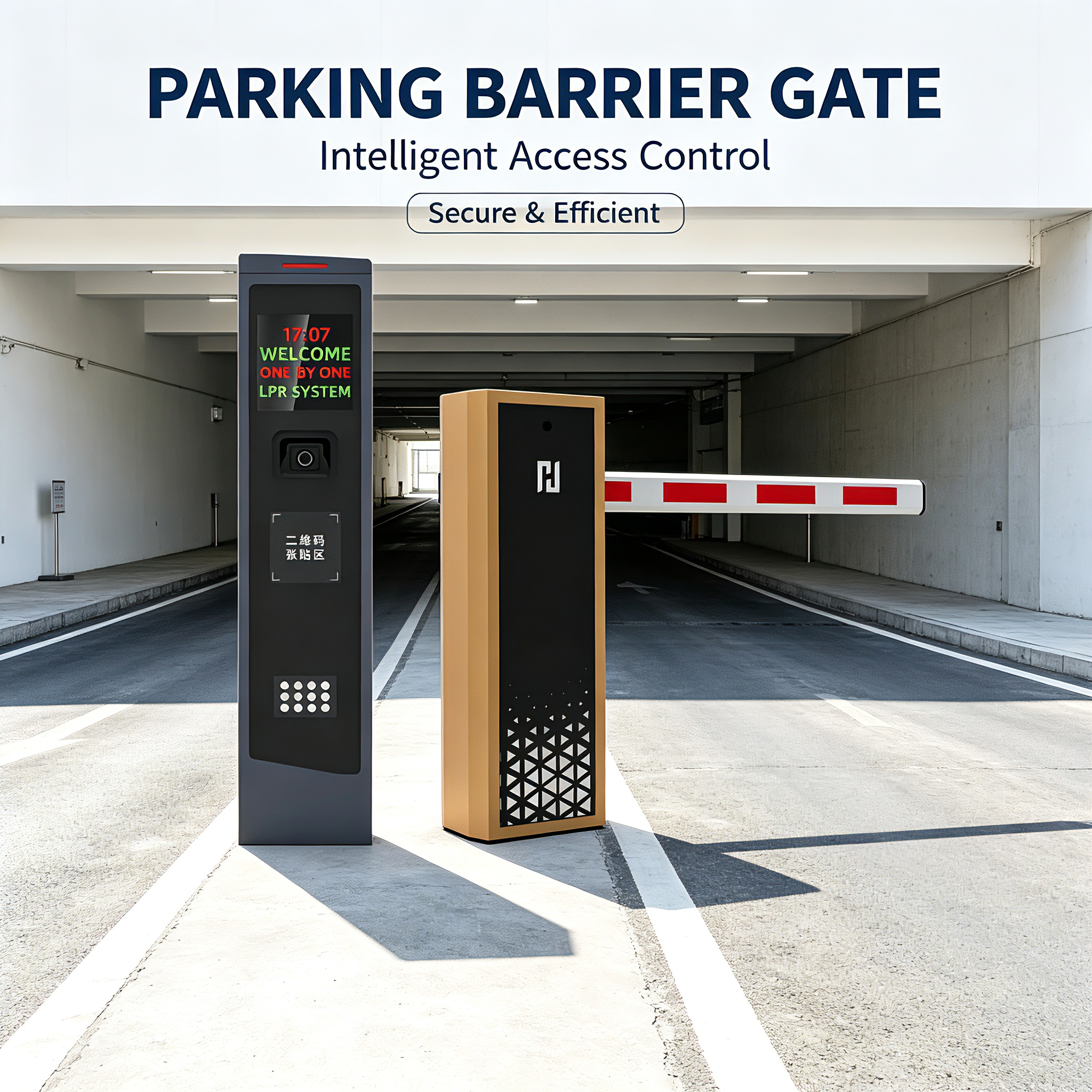
The first question is not how powerful the barrier should be, but whether the equipment will fit the entrance without making vehicle movements difficult. Measure the clear lane width, available cabinet position, kerb locations, turning space and distance between the barrier and the public road or internal driveway. Also note nearby walls, pillars, gates, pedestrian routes and any overhead restrictions.
A compact barrier can be useful where the entrance has limited installation space, but the term “compact” should not replace proper measurements. Confirm the cabinet dimensions, boom length, opening arc and maintenance clearance on the drawing for the exact model. A small site still needs enough room for the arm to move safely and for technicians to open the cabinet when servicing the equipment.
2. Consider a Compact Mini Boom Barrier for Space-Constrained Sites
For a small car park with a narrow entrance or limited space beside the lane, a compact mini boom barrier is worth considering. BAROXON lists a Smart Parking System and Mini Boom Barrier Gate for Compact Facilities, positioned for space-saving vehicle access control across residential, commercial and other restricted-area applications. The product page describes multiple access credential options and configurable motor and arm arrangements; the final specification should be confirmed for the quoted model.
A mini barrier is not automatically the right choice simply because the car park is small. Check whether the proposed model can cover the actual lane width, whether its operating speed matches the traffic pattern and whether its duty rating is appropriate for the expected number of daily openings. If larger vehicles use the entrance, include their dimensions and turning path in the site assessment.
3. Match the Barrier to the Number of Vehicle Movements
A small car park may have a low total capacity but still experience short periods of concentrated traffic. For example, residents may arrive together in the evening, employees may enter shortly before office hours, or customers may arrive in groups during a clinic's busiest appointment periods. Estimate both average daily movements and peak-hour demand before choosing the motor and operating speed.
Do not automatically specify the fastest barrier available. A very fast opening time may add cost without providing a meaningful benefit at a low-volume entrance. On the other hand, a barrier that operates too slowly can create unnecessary waiting if several vehicles arrive together. Choose a model and operating profile that balance throughput, safe vehicle spacing and the manufacturer's permitted duty cycle.
Ask the supplier to confirm the duty cycle and recommended traffic profile for the exact motor, controller and arm combination. Published cycle figures and opening times can vary between models and configurations; they should not be treated as a universal specification for every BAROXON barrier.
4. Choose a Simple Access-Control Method That Users Can Manage
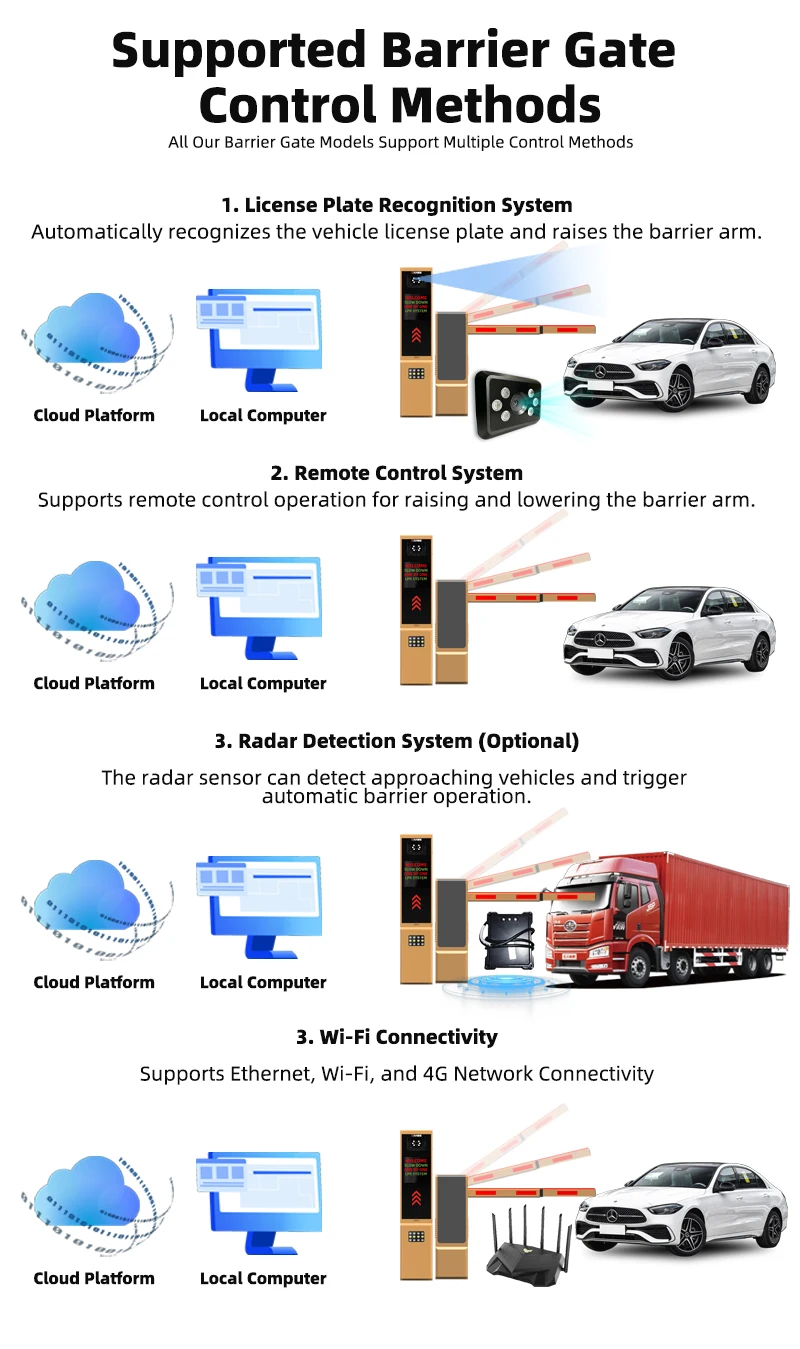
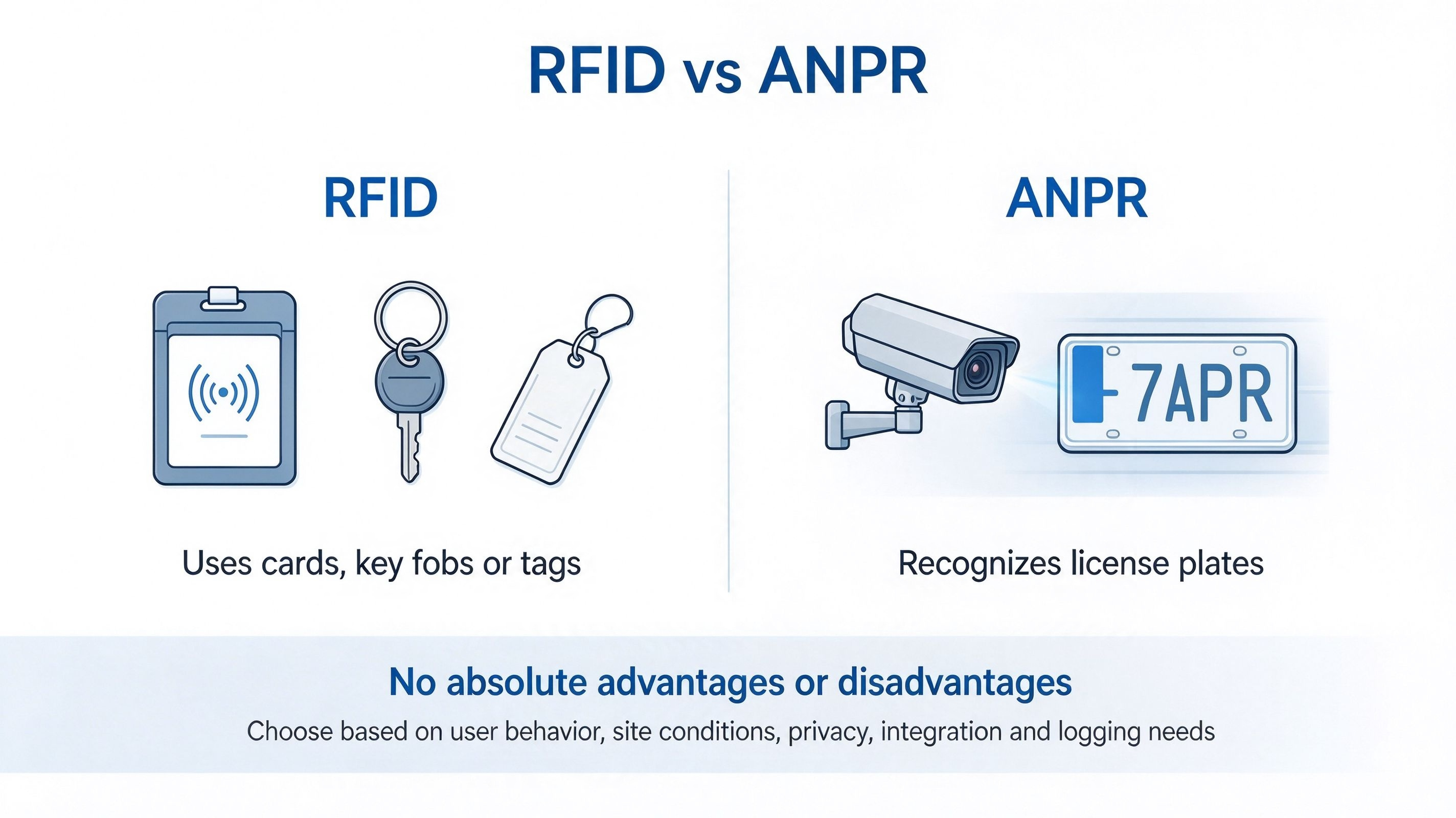
For a small residential car park, RFID cards or vehicle tags can provide convenient access for regular users. The operator can issue credentials to residents, employees or authorised tenants and deactivate them when access rights change. This is often easier to manage than a complex parking platform when the site has a small number of users.
A keypad, PIN code, remote control or intercom may be suitable for sites with occasional visitors. Consider how visitors request access, who approves entry and how the operator records or reviews access events. Avoid giving every visitor a permanent credential if temporary authorisation would be more appropriate.
For a small commercial car park with frequent repeat customers or registered vehicles, ANPR/LPR may reduce the need for physical cards. BAROXON's European product range includes licence plate recognition and parking-management options. Before selecting this route, check camera positioning, lighting, plate visibility, network availability and whether the software and barrier controller support the required integration.
5. Do Not Overlook Safety Devices at a Small Entrance
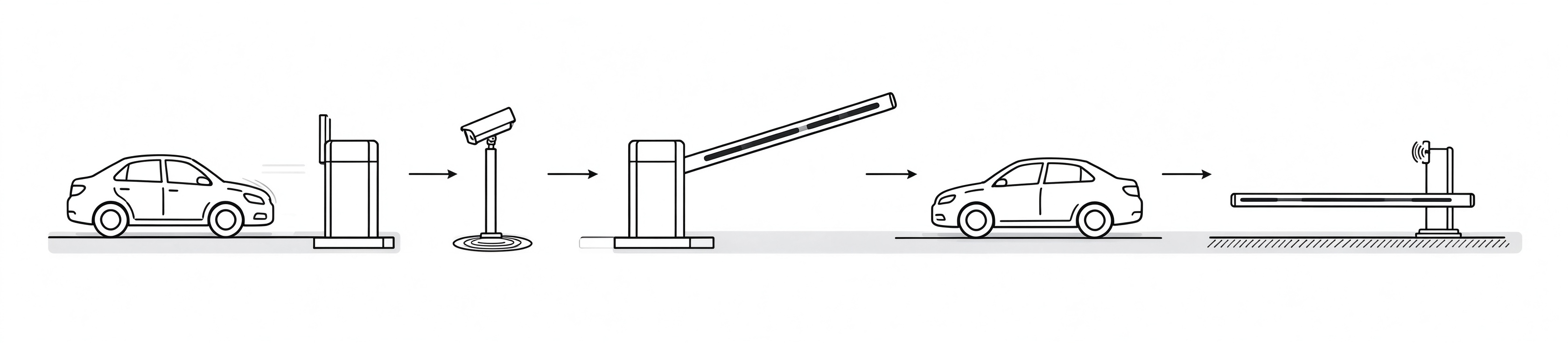
A single-lane entrance can be particularly sensitive to poor sensor placement because vehicles have limited room to manoeuvre. Consider vehicle loops, photocells, radar or other compatible detection devices according to the site layout and risk assessment. The selected controller must support the required devices and the installer must configure them correctly.
Check how the barrier responds when a vehicle stops beneath the arm, follows another vehicle closely, reverses or approaches while the arm is closing. Ask for the safety sequence to be demonstrated during commissioning. A barrier should not be treated as a substitute for a separate pedestrian route, clear signs or appropriate lighting.
6. Select the Right Boom Arm for the Lane
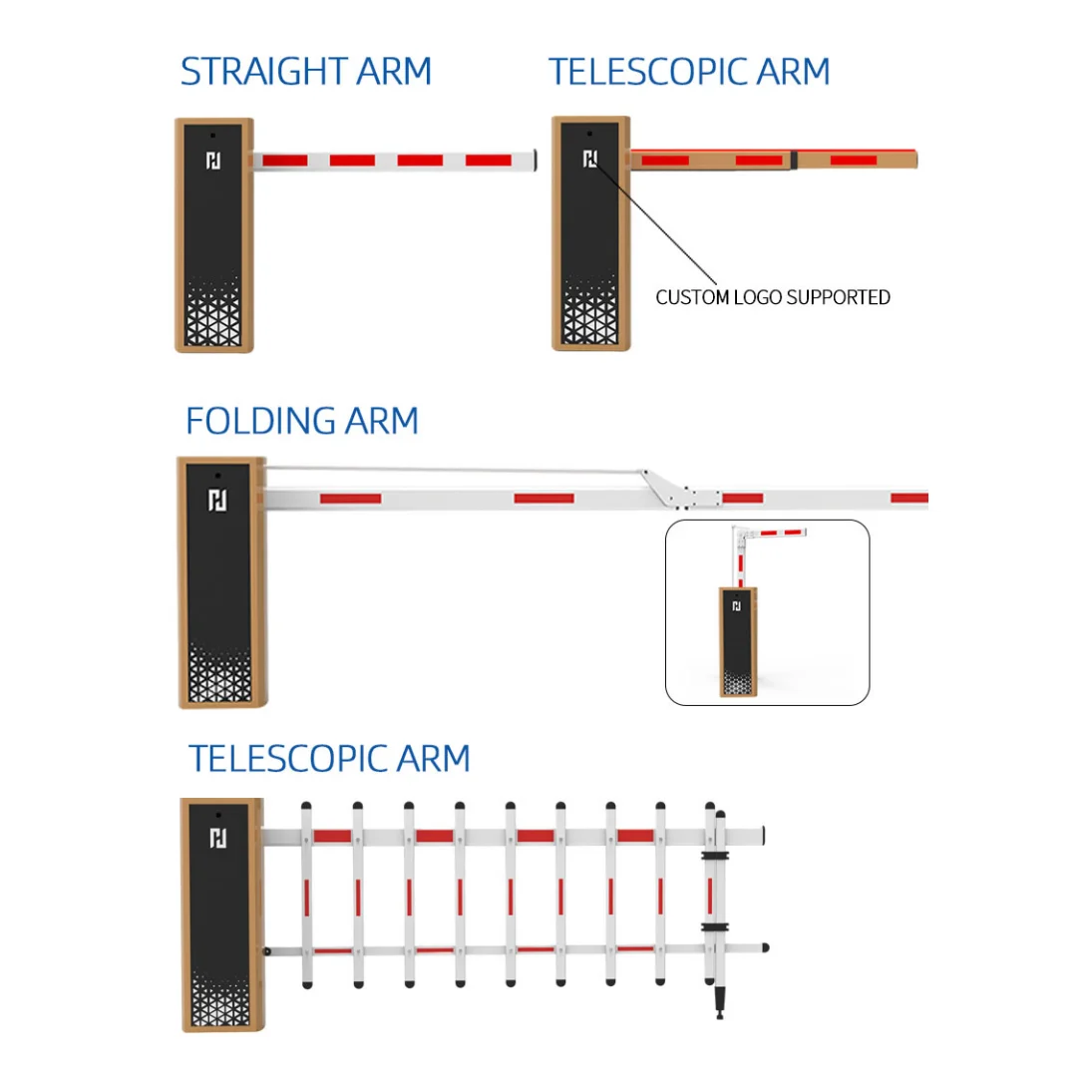
For many small car parks, a straight arm is a practical option if the entrance has sufficient vertical clearance and a clear lifting path. The arm length should match the actual lane width and the installation drawing. Avoid choosing a longer arm than necessary, as the arm configuration affects the mechanical load and the required operating space.
Where the entrance has limited headroom or overhead obstructions, assess a folding or articulated arm. If the site needs additional visual deterrence or a more specific access arrangement, other arm configurations may be considered where available. The final selection should be based on the manufacturer's drawings, not just the appearance of a product photograph.
7. Compare the Total Cost, Not Just the Purchase Price
For a small car park, budget matters, but the cheapest barrier is not always the least expensive option over its working life. Compare the equipment price, access-control readers, safety sensors, foundations, cabling, installation, software licences, commissioning, maintenance and replacement parts. Ask whether the quotation includes all items required for a working system.
A simple RFID arrangement may be more economical for a small resident-only site, while ANPR/LPR may be worthwhile where the operator needs ticketless access or centralised vehicle records. The right choice depends on staffing, user numbers, visitor frequency and the value of automated administration. Avoid paying for software functions that the site will not use.
8. Make Sure the System Can Be Maintained Easily
A small car park may not have an on-site maintenance team. Choose a layout that allows the operator or service technician to inspect the cabinet, controller, motor, boom arm and safety devices without dismantling surrounding structures. Keep the wiring diagram, installation manual, model details and supplier contact information in the site maintenance records.
Ask about the recommended inspection schedule, availability of replacement parts and the procedure for manual release during a power failure. The operator should know how to secure the entrance and manage vehicles if the barrier becomes unavailable. Maintenance intervals should follow the manufacturer's instructions and reflect the actual traffic level and environment.
9. Which Type of Small Car Park Is It?
The best configuration depends on the site's operating model. Use the following comparison as a starting point, then confirm the exact model and access-control compatibility with the supplier.
| Small car park type | Configuration to assess | Why it may fit |
|---|
| Private residential parking | Compact boom barrier + RFID cards or tags | Straightforward access for regular residents |
|---|
| Small office car park | Automatic barrier + RFID or PIN | Manageable staff access and visitor authorisation |
|---|
| Clinic or small hotel | Barrier + intercom / PIN / remote release | Supports occasional visitors and reception approval |
|---|
| Small paid car park | Barrier + ANPR/LPR or parking software | Can support registered plates and managed entry |
|---|
| Narrow or restricted entrance | Compact barrier; folding arm if clearance requires it | Helps address space constraints when confirmed by drawings |
|---|
10. Questions to Ask Before Ordering
Before accepting a quotation, ask the supplier:
- What are the cabinet dimensions and required installation clearances?
- What boom lengths and arm configurations are available for the selected model?
- What traffic level and duty cycle is the exact configuration designed for?
- Which RFID, PIN, intercom or ANPR/LPR devices are supported?
- Which safety sensors are included, optional or supplied separately?
- What electrical supply and protective devices are required?
- Does the quotation include installation accessories, commissioning and user training?
- What are the warranty terms, spare-parts arrangements and maintenance recommendations?
- What is the manual-release procedure during a power or system failure?
Frequently Asked Questions
What is the best parking barrier for a small car park?
The best option is usually a barrier that fits the entrance dimensions, handles the expected vehicle movements and supports a manageable access-control method. BAROXON's compact mini boom barrier is one option to assess for space-constrained facilities. The final model should be selected after checking lane width, arm length, duty cycle and safety requirements.
Is a mini boom barrier suitable for a residential car park?
It can be suitable if the model covers the entrance width and meets the expected operating frequency. RFID cards or vehicle tags can provide convenient access for residents. Confirm the barrier's dimensions, duty rating and compatible safety devices before ordering.
Does a small car park need ANPR/LPR?
Not necessarily. RFID, PIN codes or intercom access may be sufficient for a small site with a limited number of regular users. ANPR/LPR becomes more relevant when the operator wants ticketless entry, registered-vehicle recognition or integration with parking-management software.
How wide can the lane be for a compact parking barrier?
There is no single lane-width figure that applies to every compact barrier. The usable width depends on the selected model, boom length, cabinet position and site layout. Ask the supplier for the dimensioned drawing and confirm the clear opening required for the vehicles using the site.
Should I choose the fastest barrier for a small car park?
Not automatically. The required operating speed should reflect peak traffic, safe vehicle spacing and the model's permitted duty cycle. A balanced configuration may provide better value than paying extra for speed that the site does not need.
Conclusion: Keep the System Right-Sized for the Site
The best parking barrier for a small car park is not necessarily the most powerful or feature-rich model. It is the system that fits the entrance, handles the actual traffic demand, provides suitable safety detection and makes daily access easy to manage. For a space-constrained site, BAROXON's compact mini boom barrier is a useful product option to assess alongside the wider automatic barrier and access-control range.
Before requesting a quotation, prepare the entrance width, photographs, expected daily and peak-hour movements, preferred access method and any site restrictions. BAROXON can then help identify a suitable product configuration for the project. Confirm all dimensions, motor specifications, duty ratings, interfaces and safety functions against the current datasheet and written quotation for the exact model.
For current datasheets, model configuration and project support, see the BAROXON Europe parking barrier and access control range.
Frequently Asked Questions
What is the best parking barrier for a small car park?
The best option is usually a barrier that fits the entrance dimensions, handles the expected vehicle movements and supports a manageable access-control method. BAROXON's compact mini boom barrier is one option to assess for space-constrained facilities. The final model should be selected after checking lane width, arm length, duty cycle and safety requirements.
Is a mini boom barrier suitable for a residential car park?
It can be suitable if the model covers the entrance width and meets the expected operating frequency. RFID cards or vehicle tags can provide convenient access for residents. Confirm the barrier's dimensions, duty rating and compatible safety devices before ordering.
Does a small car park need ANPR/LPR?
Not necessarily. RFID, PIN codes or intercom access may be sufficient for a small site with a limited number of regular users. ANPR/LPR becomes more relevant when the operator wants ticketless entry, registered-vehicle recognition or integration with parking-management software.
How wide can the lane be for a compact parking barrier?
There is no single lane-width figure that applies to every compact barrier. The usable width depends on the selected model, boom length, cabinet position and site layout. Ask the supplier for the dimensioned drawing and confirm the clear opening required for the vehicles using the site.
Should I choose the fastest barrier for a small car park?
Not automatically. The required operating speed should reflect peak traffic, safe vehicle spacing and the model's permitted duty cycle. A balanced configuration may provide better value than paying extra for speed that the site does not need.
Latest News
Baroxon® | Leading Boom Barrier Manufacturer
Advanced Security Access Control and Intelligent Parking Solutions.
Company Strength
Adequate Inventory
Fast Shipping
Our Products
CONTACT US
Address: No. 2 Wanshou Road, International Innovation Industrial Park, Jinan, Shandong, China






© COPYRIGHT 2025 Baroxon® | Leading Boom Barrier Manufacturer
Point your camera here to open WhatsApp chat
Scan with WeChat to add our engineer
Chat with us directly
Scan the QR code with your phone to start a WhatsApp or WeChat conversation with the Baroxon Europe export team — quotations, drawings and lead times answered by engineers, not bots.

Contact Us
Professional Manufacturer of Vehicle Barriers & License Plate Recognition Cameras,Smart Parking Access Control Solutions for Global Clients,Reliable Barrier Gates + LPR Systems, Customized to Your Project,From residential communities, commercial shopping malls, industrial parks to highway toll stations, our matched barrier & LPR sets can realize automatic license plate identification, automatic gate lifting, real-time access records, automatic charging and remote management.